We’re here for you
Make an appointment for a non-binding consultation or if you have any questions, just give us a call.

header.search.error
With just one click, the new scooter is delivered to your door. Online shopping can tempt children to buy more than planned. Here’s how to help your child order safely online and avoid getting into debt.
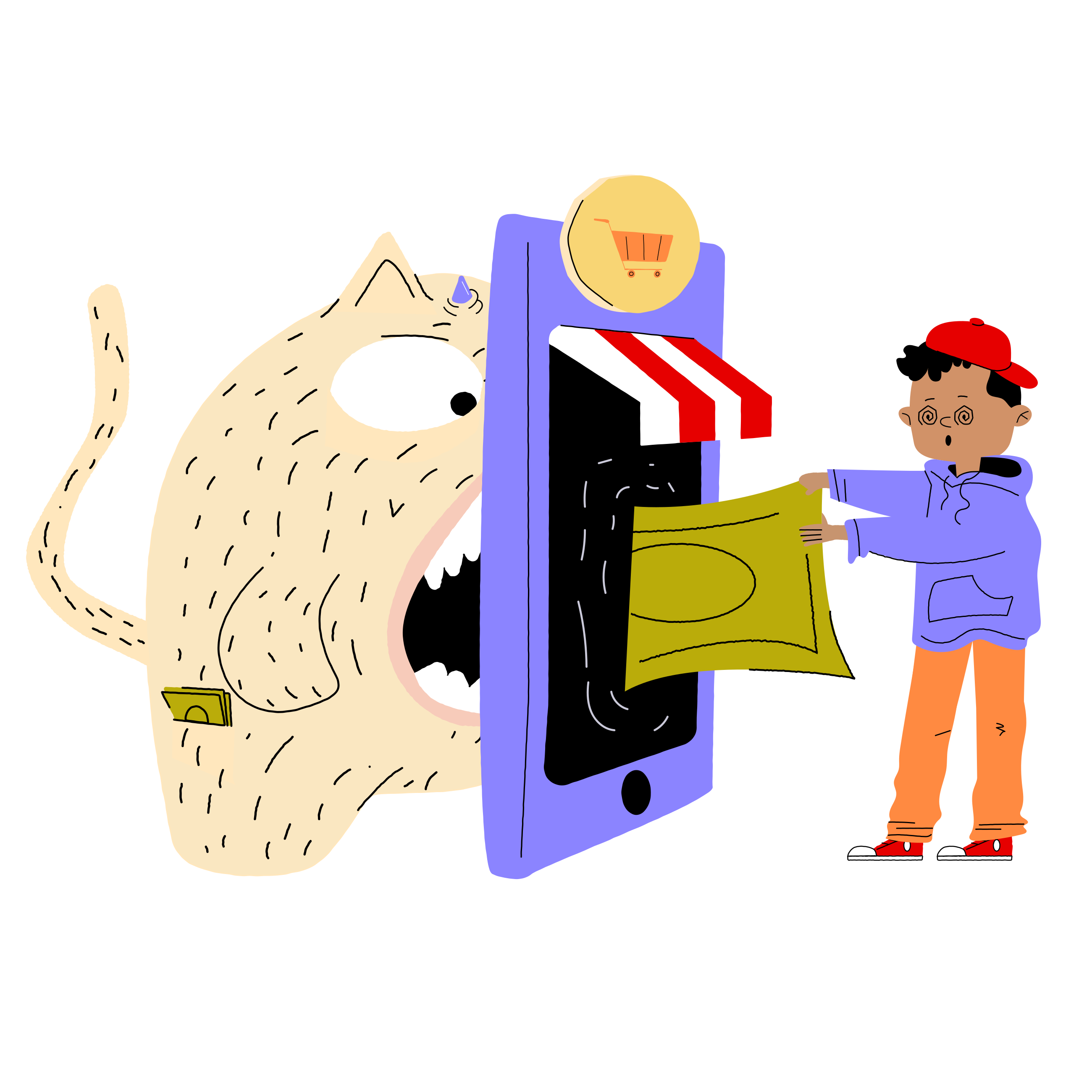
Whether football boots, personalized socks or face masks, online shopping is part of everyday life these days, and is a matter of course for children. Shopping on a laptop or mobile phone often starts as early as lower or middle school. It’s therefore important for parents to think about it. When children pay at a physical store, they develop a sense of the cost and might think twice about their purchase. This feeling is lost when paying online, which increases the risk they will spend more than they can afford or even get into debt.
As parents, you may prefer to prohibit your children from making online purchases altogether. However, explaining and supervising often have a more lasting effect in protecting children from wasting money than simply prohibiting online purchases.
As soon as your child gets their first smartphone or comes into contact with social media, learning about online shopping becomes important.
Shopping online has many advantages. It’s easier to compare prices, there is significantly more choice than at a store, and everything is available 24/7 from the comfort of your sofa.
Paying is also convenient. With TWINT, on account or by credit card, you can pay with just a few clicks, sometimes even if you don’t have the money in your account. But convenience can also tempt you to buy more than you really need, not least because advertising and social media influencers create pressure to buy, especially among teenagers.
This is compounded by other risks, from hidden costs such as shipping or customs duties to fake shops that never deliver the items paid for, and inadequate age checks.
Under 18-year-olds are generally not allowed to enter into major contracts without the consent of their parents or guardians. However, teenagers capable of sound judgment are allowed to shop independently online with their own wages or pocket money. In Switzerland, there is also no general right of withdrawal for online purchases. Many retailers voluntarily offer a return policy or a money-back guarantee. The terms and deadlines are stated in the general terms and conditions.
Tip: In the “Media Competence” brochure from the platform “Youth and Media” (in German), you will find information on what parents should pay attention to when their children shop online and how to support them in a meaningful way.
Parents should support their children step by step. Responsibility should be transferred gradually so they are not overwhelmed. Discuss, for example, how to order something and how to pay a bill.
The following six tips show how you can improve your child’s digital skills when shopping online:
Children learn best when they are allowed to watch and give their own input. Consciously involve your child when you order something online yourself. Say your thoughts out loud, for example:
If you share your thoughts with your child during the ordering process, they will get a sense of how to make responsible decisions when shopping online. This will help them learn to think critically before ordering something on the internet.
Scam online shops use every trick in the book to encourage impulsive purchases. But often, nothing arrives after you pay, or you get a fake or low‑quality product. That’s why it’s important for children to learn how to spot unsafe shops. It’s best to check them together before your child buys something for the first time. Look out for these warning signs – they can mean the shop is a fake:
If you’re unsure, you can check the shop together with your child using the German Consumer Advice Center’s Fakeshop-Finder (in German). It checks for key warning signs and points out where you should take a closer look.
Check your child’s account balance or the amount in your child’s piggy bank together before placing the order. Ask your child if they have enough money to pay for the items. If they already have their own account, you can do this step in E-Banking.
For children aged 6 to 11 who have their own debit card, parents receive an overview of all transactions in their UBS Digital Banking. From the age of 12, the child can grant their parents authorization. This allows the parents to see how the child is spending their money.
Important: Until the child turns 18, they can only grant authorization to their legal representatives – for example, their parents. (Step parents or foster parents may not always meet this requirement.)
Tip: In the UBS Mobile Banking app, your child can request authorization for you directly and also adjust it at a later time.
Make your child’s first online purchase together. Use the opportunity to compare prices, delivery times and return policies among different providers together. Before completing the order, you should also look at the total costs in detail, including shipping and customs duties. Explain what the terms and conditions are, why you need to accept them and in which fields you can leave the checkbox unchecked.
Children should also learn how returns work. Involve your child when you order an item of clothing in the wrong size and need to return it. Show them how to prepare a return and drop it off at the post office. Explain that constantly ordering packages, only to have to return them, is not very sensible.
Responsible shopping also means regularly checking what you have spent your money on. Review the account statements with your child and discuss whether their purchases still seem reasonable in hindsight. This is how they will learn to categorize expenses and identify their own spending patterns.
It’s helpful if you openly address your own mistakes. Tell them about an online purchase you regretted and what you would now do differently. This way, your child will learn that mistakes are normal and that we can learn from them.
Children need to learn that although ordering online is super convenient, if something doesn’t fit, you have to take the package back to the post office. This is part of taking responsibility.
Purchasing on account requires special attention. You receive the product, but you haven’t yet paid for it. This delay makes it difficult for children to get their heads round payment obligations. In the worst case, they can get into debt because they order more and more on account, without being able to pay for it.
With purchases on account, the obligation to pay is out of sight and out of mind. This reduces the learning effect and increases the risk of getting into debt.
Explain to your child as early as possible how this principle works and that each bill comes with an obligation to pay.
It’s especially important that your child learns to pay bills on time. Otherwise, late fees will apply, which can quickly become expensive. Or there may be other consequences. For example, if they don’t pay for their phone subscription, they won’t be able to call or text.
With clear rules, helpful security features and by selecting the right payment method, you can make online shopping much safer for your children and stop them getting into debt. Explain fraud risks and data privacy and remind them to never share their passwords or PIN codes. Also talk about how to recognize fake shops and scams and how to be cautious when paying by card online. Establish clear rules: for example, a spending limit above which your child is only allowed to shop with your consent and the maximum amount they can spend per month or week. This will teach them how to plan their spending.
You can reduce spending even further by blocking in-app purchases or streaming subscriptions, for example, using parental controls. A prepaid card with a limited balance can also be a good option: no more credit, no more shopping. This protects you from any late-payment fees and helps your child manage their budget responsibly.
Note: Ask for help if you are unsure how to address the topic with your child. The parental advice provided by Pro Juventute (in German), the parental hotline or cantonal debt advisory agencies can help.


Make an appointment for a non-binding consultation or if you have any questions, just give us a call.
Disclaimer
This publication is for personal information purposes only within Switzerland and is not to be understood as a recommendation, offer or solicitation of an offer for investment or other specific products and services. It is not intended to form investment, legal or tax advice and should not be used as the basis for financial decisions. Before making a decision, you should obtain professional advice.
All the information and opinions contained in this publication come from reliable and trustworthy sources. Nonetheless, UBS does not accept any contractual or implied liability for any incorrect or incomplete information. The views of non-UBS authors are their own opinions and do not necessarily reflect the views of UBS AG and its affiliates. Complete or partial reproduction without the express consent of UBS is not permitted.
© UBS 1998 - 2026. All rights reserved. The key symbol and UBS are among the registered and unregistered trademarks of UBS.