We’re here for you
Make an appointment for a non-binding consultation or if you have any questions, just give us a call.

header.search.error
How much pocket money makes sense for children? And how does pocket money work in the digital age – do you still give your child coins? Find out everything you need to know about pocket money here.
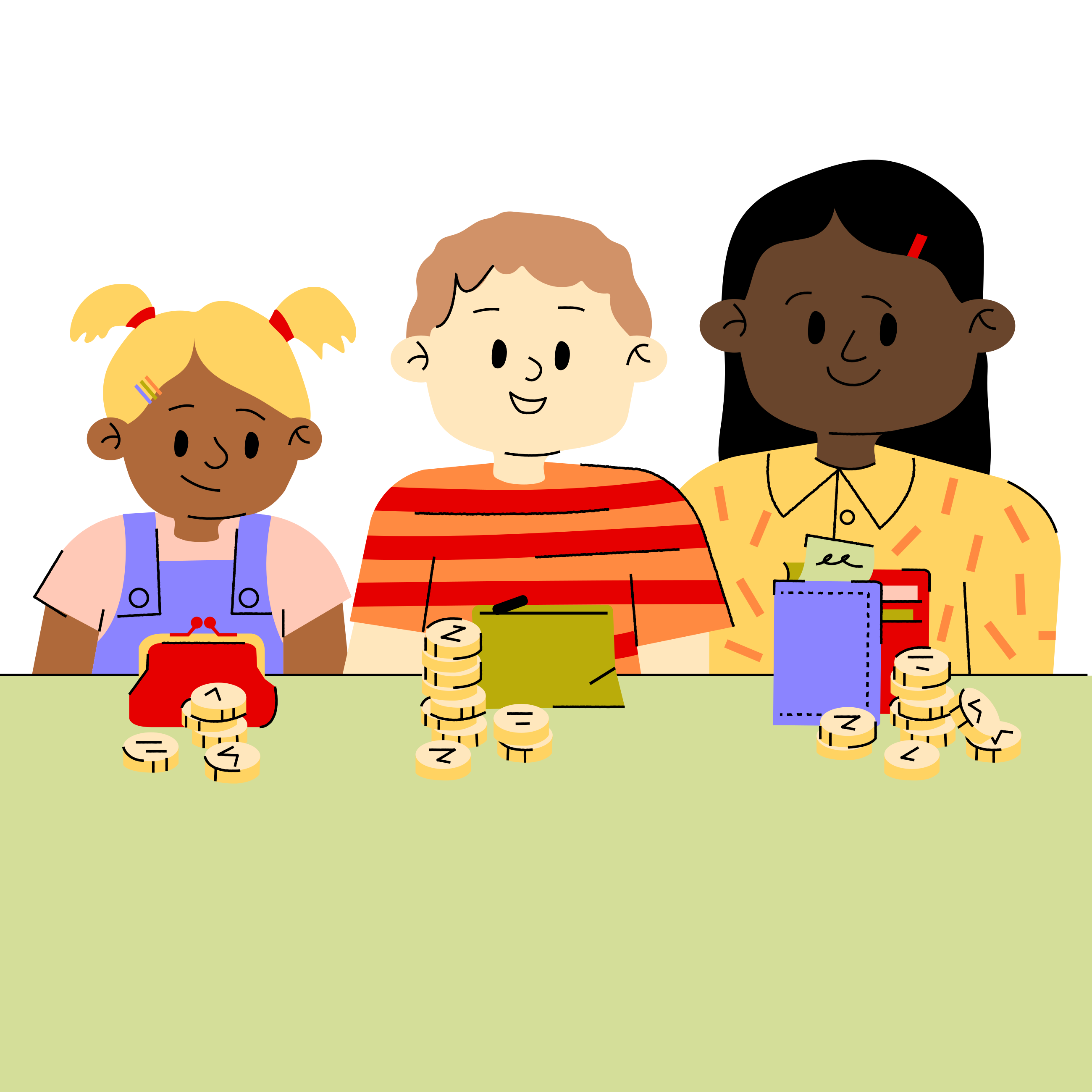
“Mom, Dad! Why does Melanie get pocket money and not me?” Many parents and guardians have probably heard this question in one form or another. There is no clear right or wrong answer. As parents, you know what’s right for your family and what your child needs. After all, pocket money is voluntary and must fit your family’s budget. Nevertheless, pocket money can be an effective tool for encouraging your child’s financial literacy. It also enables them to practice managing money in a fun way.

Pocket money is a clearly defined amount that is paid to a child or young person regularly and that they are free to use as they see fit. This makes it the perfect training ground for teaching children how to handle their finances. Children who receive pocket money have to manage the money themselves, learn to set priorities and save up for their – sometimes incomprehensible – wishes. This strengthens your child’s personal responsibility and independence in the long term.
Before starting to give your child pocket money, it’s important to explain the three basic functions of money.
If a child is allowed to manage their own money at an early age, it will be easier for them to make their own financial decisions later in life.
In principle, you should start with small amounts and increase the pocket money as your child gets older and becomes more responsible. Paying pocket money regularly is more important than the exact amount.
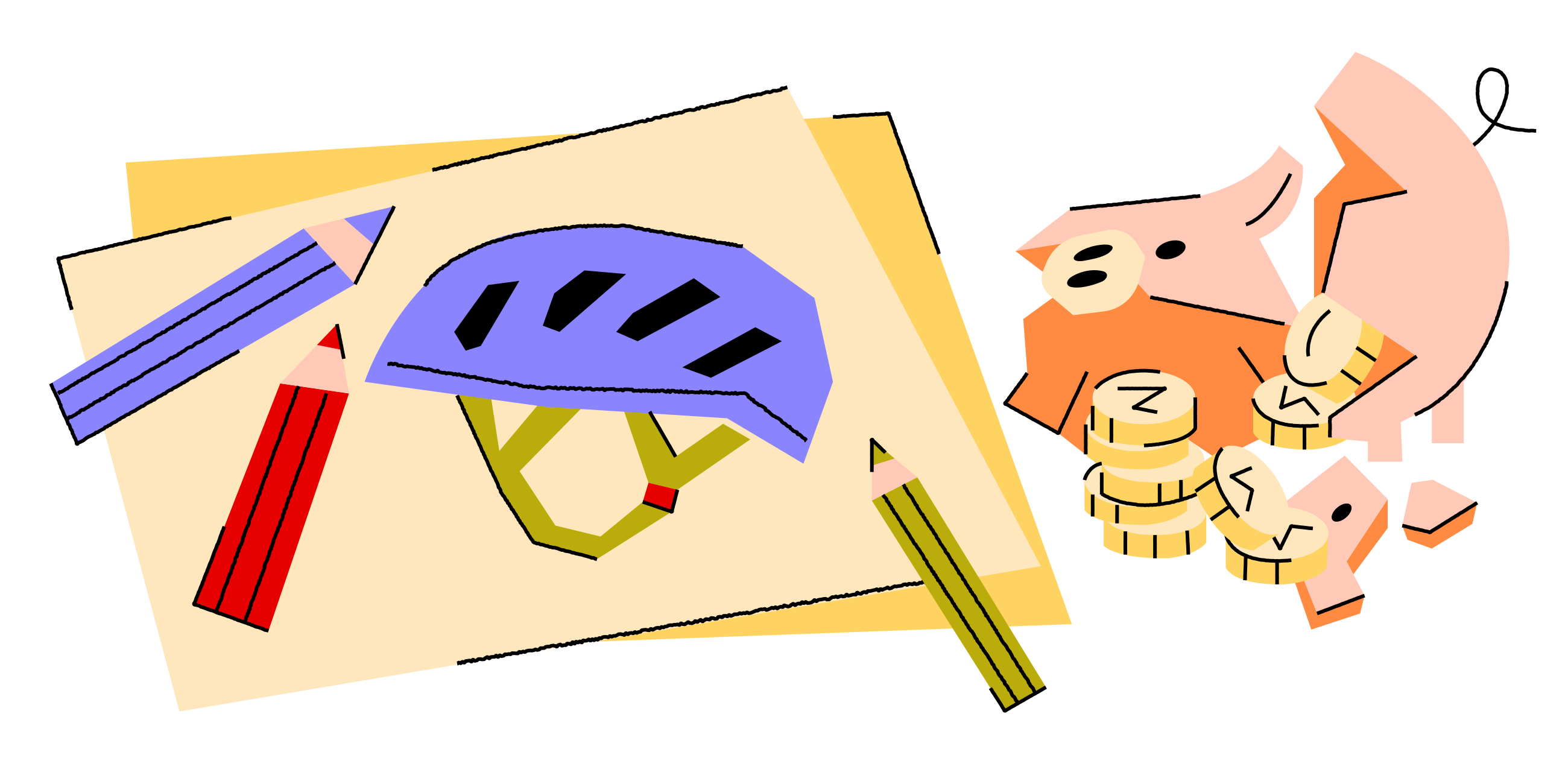
Younger children learn more effectively if they receive their pocket money at short intervals. It’s a good idea to start with weekly payments in primary school (age 6–8). From around 10 to 12 years of age, it’s advisable to pay pocket money once a month. This will enable older children to learn how to make their money last longer and how to budget. It’s best to be there to guide your child during this stage. For example, would they like to save up for a new rucksack, a glitter pony or the skateboard that’s the latest trend in the playground? Then work out how many weeks it will take for them to reach the necessary amount. This way, your child always has their goal in mind and learns that anticipation can be a good thing, too.
When deciding how much pocket money to give their child, many parents follow the recommendations of Budgetberatung Schweiz (in German) .
.
Important:The amounts stated here are recommendations – every family and every child is different. The amount of pocket money that is appropriate always depends on your financial means and on the needs and maturity of the child.
| School level | Age | Freely available amount per month | Payment | Savings |
|---|---|---|---|---|
Primary school | 6 | CHF 12 | CHF 3 / week | CHF 3 / month |
Primary school | 7 | CHF 16 | CHF 4 / week | CHF 4 / month |
Primary school | 8 | CHF 20 | CHF 5 / week | CHF 5 / month |
Primary school | 9 | CHF 30 | CHF 15 / 2 weeks | Contribution depending on savings goal |
Primary school | 10 | CHF 35 | CHF 18 / 2 weeks | Contribution depending on savings goal |
Primary school | 11 | CHF 40 | CHF 20 / 2 weeks | Contribution depending on savings goal |
Secondary I | 12 | CHF 50 | N/A | Contribution depending on savings goal |
Secondary I | 13 | CHF 60 | N/A | Contribution depending on savings goal |
Secondary I | 14 | CHF 70 | N/A | Contribution depending on savings goal |
High school | 15 | CHF 80 | N/A | Contribution depending on savings goal |
High school | 16 | CHF 90 | N/A | Contribution depending on savings goal |
High school | 17 | CHF 100 | N/A | Contribution depending on savings goal |
High school | 18 | CHF 110 | N/A | Contribution depending on savings goal |
Source: Budgetberatung Schweiz | ||||
Of course, many children will want to add to their pocket money so that they have more money to spend on bigger things. In principle, there is nothing to be said against this – but the fixed pocket money amount should remain the same. Children can, however, earn money thanks to voluntary part-time jobs such as babysitting, tutoring, gardening or little vacation jobs. This is permitted in Switzerland from the age of 13. This teaches children that there are different ways to earn money and that hard work and dedication are important – and they can use the money they earn to buy the latest gadget if they want.
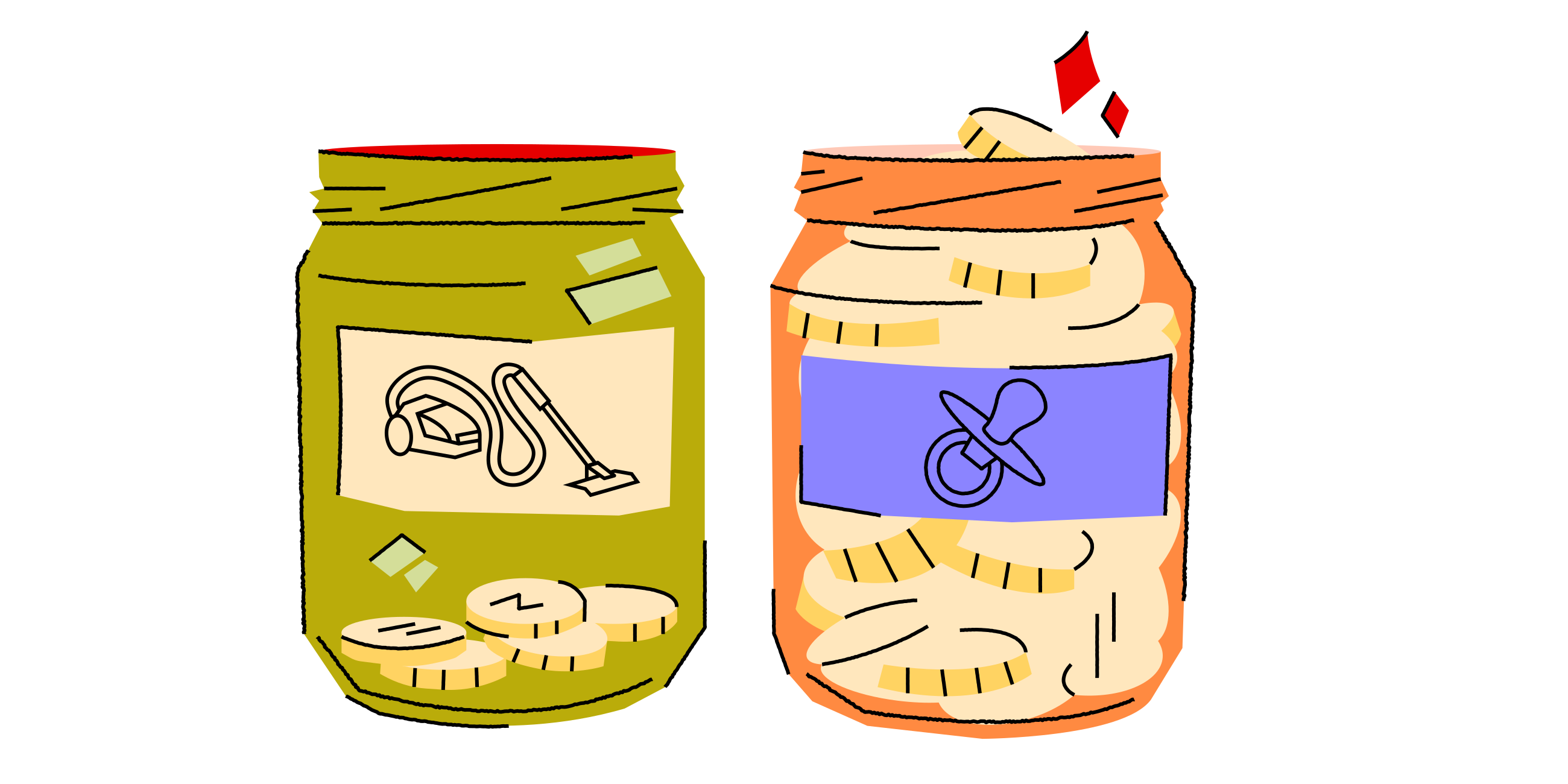
However, children shouldn’t receive extra money for doing chores around their own home. Whether it’s washing the dishes or cleaning up the mess in their bedroom – these are tasks that definitely shouldn’t be paid for. And parents shouldn’t give extra money for good grades either. Pocket money isn’t a reward system, but a learning environment.
Starting school brings with it many warm and exciting moments – for parents and children alike. And in most cases, it’s also a good time to start giving your child pocket money. For the first few years, the money should be given in cash, as this is also how children become familiar with the touch and feel of money. It can be a good idea to have a transparent cash box that children put their pocket money into. This way, the child can see how much money there is, and start to understand that when they spend some, it’s gone.
Young children in particular benefit from receiving physical money – holding a note or coin in their hands makes its value much more tangible.
When your child gets their first mobile phone, it’s a good opportunity to talk about digital money. Paying digital pocket money is recommended from the age of 12, but it depends on your child’s financial maturity. Once they have their own account, children can learn how to make cashless payments and track their spending digitally in the UBS Mobile Banking App.
Parents or guardians should provide active guidance for their children during this stage. For instance by going to the bank with their child to deposit cash into their account. This makes it easier for the child to understand how visible cash turns into an “invisible” balance in their bank account.
It isn’t possible for every family to give their children regular pocket money. That’s perfectly alright. Although it’s an ideal tool to strengthen financial education in everyday life, it isn’t the only one. Parents can use other ways to teach financial literacy. Examples include:
Pocket money needs fixed rules so that children get the most out of the learning opportunity. In addition, having clear rules helps to avoid conflicts. These tips could help you:
Set a “payday” with your child, for example every Saturday or the first Sunday of the month. This way, the child always knows in advance when they will receive their pocket money and can plan what they intend to use it for.
Younger children are better off receiving cash because they can see and touch it. In addition, the small scale of cash encourages them to save. If they have several coins, it is easier for them to split the amount and put some of it directly into their piggy bank.
Pocket money belongs to the child. Allow them to use it as freely as possible. But talk to them about what they want to buy. Pocket money is also a training ground: children can and should make mistakes. If they run out of money too soon, they learn the value of planning and having to go without something they want.
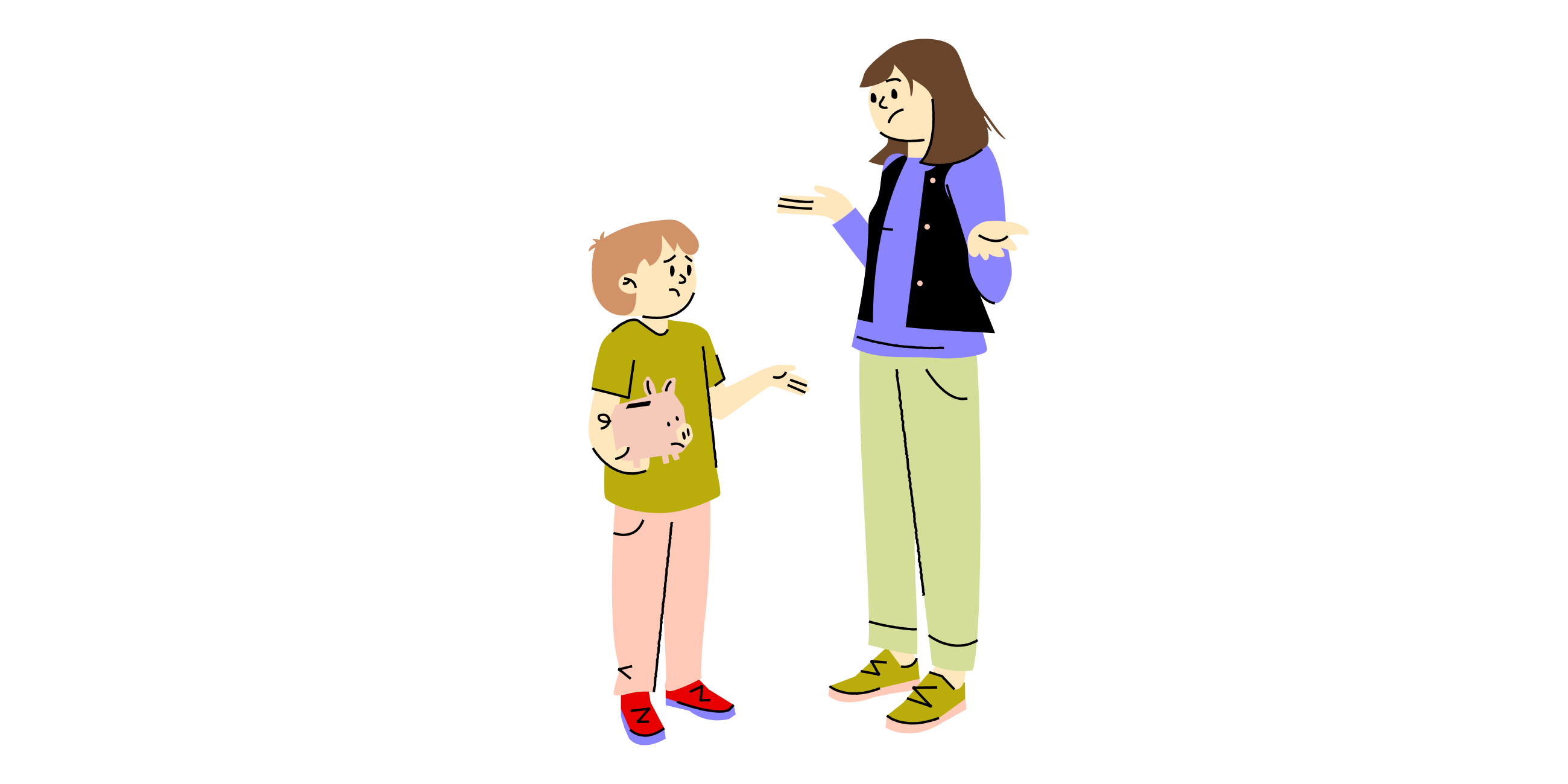
Children are very tempted to spend all of their money at once. If they don’t budget carefully enough and are never willing to go without anything, they will soon be broke. The obvious thing for smart kids to do is to simply ask their parents for a bit extra. But you will be doing your child a favor if you remain firm and don’t give in to their requests. Instead, talk to them about why they don’t have any money left. This gives them the chance to learn from it and do better next month.
No pocket money because the child hasn’t tidied their room? Or a bonus for a good grade at school? Let’s be honest: neither of these things is a good idea. Pocket money isn’t a means of education; the child should always receive it, regardless of grades or behavior. The aim is to allow children to practice handling money. This also means taking responsibility and managing their money – and planning is a key part of this.
Have open conversations as a family about what your child wants to buy with their pocket money and try to understand their wishes. Then identify ways to fulfill them or find alternatives rather than simply issuing blanket bans.
From around the age of 12, switching to a youth wage can be a good option – this also gives the child more responsibility. Paying a youth wage means that the parents transfer a higher amount to their child each month, which the child has to use to cover certain expenses. They may have to pay their own mobile phone bill and buy new clothes for themselves, for instance.
If you opt for a youth wage, you give your child more responsibility for their budget and they learn to manage larger expenses themselves. This requires even more personal responsibility and realistic planning.

Make an appointment for a non-binding consultation or if you have any questions, just give us a call.
Disclaimer
This publication is for personal information purposes only within Switzerland and is not to be understood as a recommendation, offer or solicitation of an offer for investment or other specific products and services. It is not intended to form investment, legal or tax advice and should not be used as the basis for financial decisions. Before making a decision, you should obtain professional advice.
All the information and opinions contained in this publication come from reliable and trustworthy sources. Nonetheless, UBS does not accept any contractual or implied liability for any incorrect or incomplete information. The views of non-UBS authors are their own opinions and do not necessarily reflect the views of UBS AG and its affiliates. Complete or partial reproduction without the express consent of UBS is not permitted.
© UBS 1998 - 2026. All rights reserved. The key symbol and UBS are among the registered and unregistered trademarks of UBS.