We’re here for you
Make an appointment for a non-binding consultation or if you have any questions, just give us a call.

header.search.error
Puzzled by where your children’s extraordinary buying ideas come from? It’s quite possible influencer marketing is the culprit.

In the past, you were influenced by your cool friends from school or the stars in “Bravo magazine”. Today, it’s largely idols from the digital world – known as “influencers” – who persuade young people to buy certain things. On social media and other platforms such as streaming apps, clothes, electronic gadgets and cosmetic products are presented as personal recommendations – often as if a friend were passing on a tip.
Many parents have no idea where their teenagers’ sometimes crazy-sounding buying ideas come from. No wonder: Parents see different content online and don’t surf the web the same way their kids do. While they may see ads for designer furniture or Tupperware, their teenage children see the latest face masks or sneakers they absolutely must have right now flashing across their screens. And not just as classic advertising banners, but as subtle product placements in influencer videos, stories or posts. At first glance, it doesn’t even look like advertising.

But aren’t influencers required to label their posts as advertising? Theoretically, yes. Switzerland has a law against unfair competition, which stipulates that advertising must be clearly recognizable. This also applies to influencers who promote products or services on social media.
Many profiles adhere to this rule and label paid content with notes like “advertisement”, “ad” or “paid partnership”. But the labeling is not always easy to see: it’s often written in small letters in the corner or lost among two million hashtags. And sometimes it’s missing altogether.
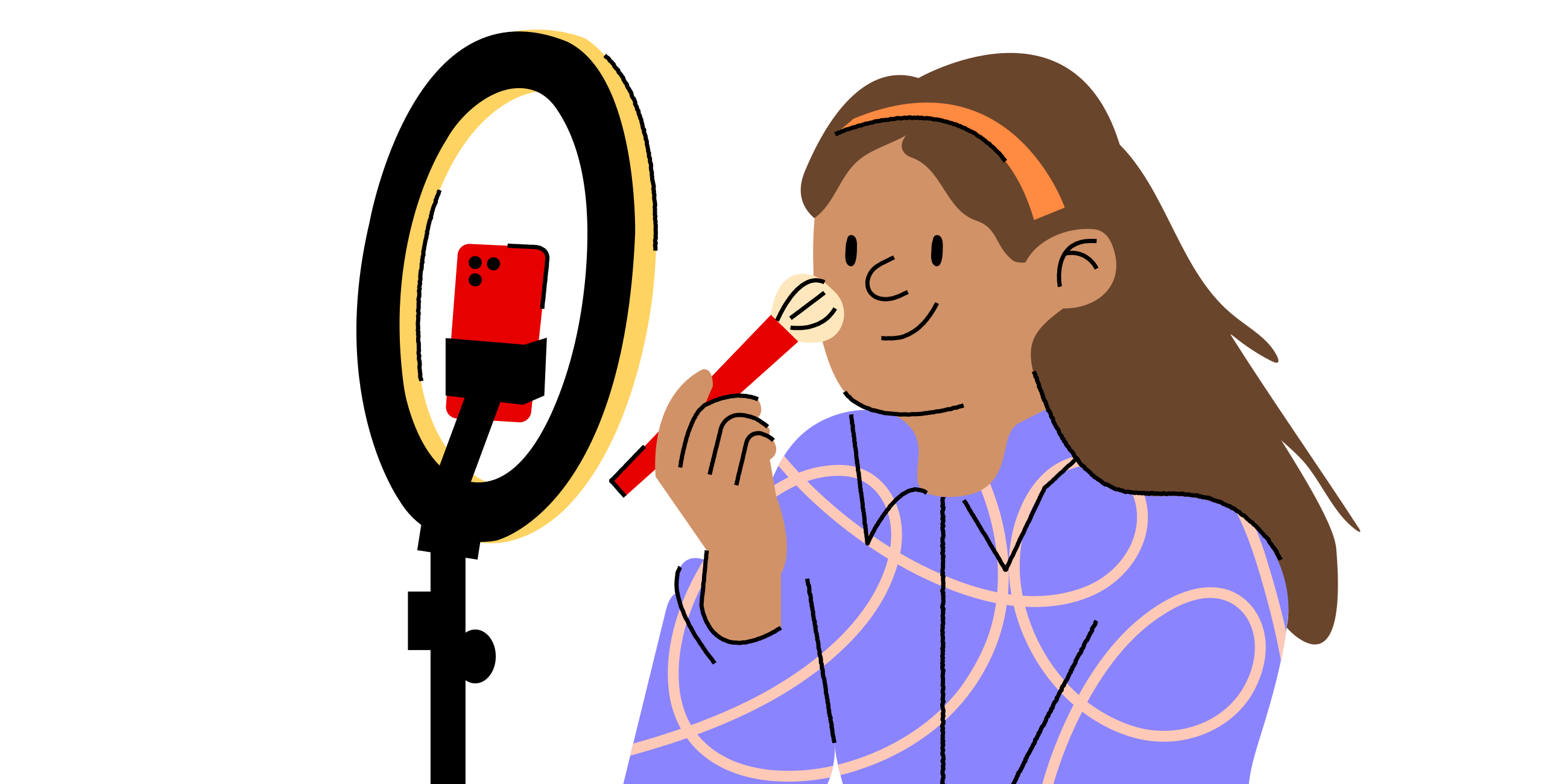
It’s understandable that such content may influence what your children want to buy. That even the most heartfelt recommendations from influencers are often paid placements for brands is not always apparent. And though many young people today have a better understanding of how advertising works on social media and streaming apps, the wants and needs it triggers don’t just fade away on their own.
Young people today are already quite well informed about influencers, though influencer marketing is often romanticized and oversimplified.
That’s why this type of advertising is so effective. It stirs up more desires than can possibly be satisfied in everyday life. Add to this promises that make a product look better than it actually is – for example, face creams that guarantee clear skin overnight.
This makes it all the more important for children and young people to develop financial and media literacy (in German) at an early age, so they can later distinguish advertising from neutral information and develop a sense of the agenda hiding behind a post or video.
Source: Zurich University of Applied Sciences (ZHAW), JAMES Study 2024 (in German)
Advertising today is also very specifically targeted at young people. It is therefore worthwhile to consciously talk about purchasing decisions at the family table. Only in this way will children learn to distinguish between needs and wants.
What’s important: As a parent, rejecting influencers outright is usually not very helpful. It’s more helpful if you take your child’s wishes seriously, show understanding for their perspective and at the same time encourage them to think critically about advertising and consumption.
Bans are usually ineffective; reflection and joint evaluation are more sustainable.
Below we offer tips on how to encourage your children to make thoughtful purchasing decisions:
Talk to your child about what influencers actually do. Explain that it is a profession and that they earn money with their content. Many posts and recommendations are part of collaborations with brands.
Look at profiles together and discuss where advertising is clearly labeled and where it is not. Also address the dark sides: Influencers must always deliver content, be constantly online and present, and are often under public pressure. This will give your child a realistic picture of what goes on behind the supposedly perfect scenes.
Take your child’s preferences seriously. That doesn’t mean you have to satisfy their heart’s desire. But ask them why they want that specific item. Are they interested in a new hobby, or will they feel excluded by friends if they don’t own the product?
Also talk about what you wish you could buy, why you really want something, and what you think about before you decide whether or not to buy it.
The older children get, the more they can evaluate advertising and content on their own. Encourage your child to view influencer profiles critically.
Reflect together: Who are you following? Why are you following this person? What fascinates you about them, and what do you find unpleasant or exaggerated? Which topics are covered, what imagery is used? This is how you can support your child step by step in becoming independent and learning how to recognize trustworthy content.
Watch a commercial or a video together, once with sound and once without. And then ask: What grabs your attention? What effect do the music, imagery and words have? Also address the idealized images and filters, especially regarding beauty and the body. Discuss together whether this representation corresponds to reality and what effects such ideal images can have on self-image.
Children measure themselves against ideal images. This idealized world is a very important topic when it comes to mental and physical health.
How do you yourself proceed before making an important purchase decision? Maybe you sleep on it for a night or wait a week. Talk to your child about this and agree on a waiting period before buying something expensive.
Use this time to do some research together: How credible are the recommendations of influencers, and when is it worth considering additional product tests, reviews or the experiences of friends?
Wishes can also change or become less urgent during this phase. If the desire remains after a certain amount of time has passed, it is probably really important to your child.
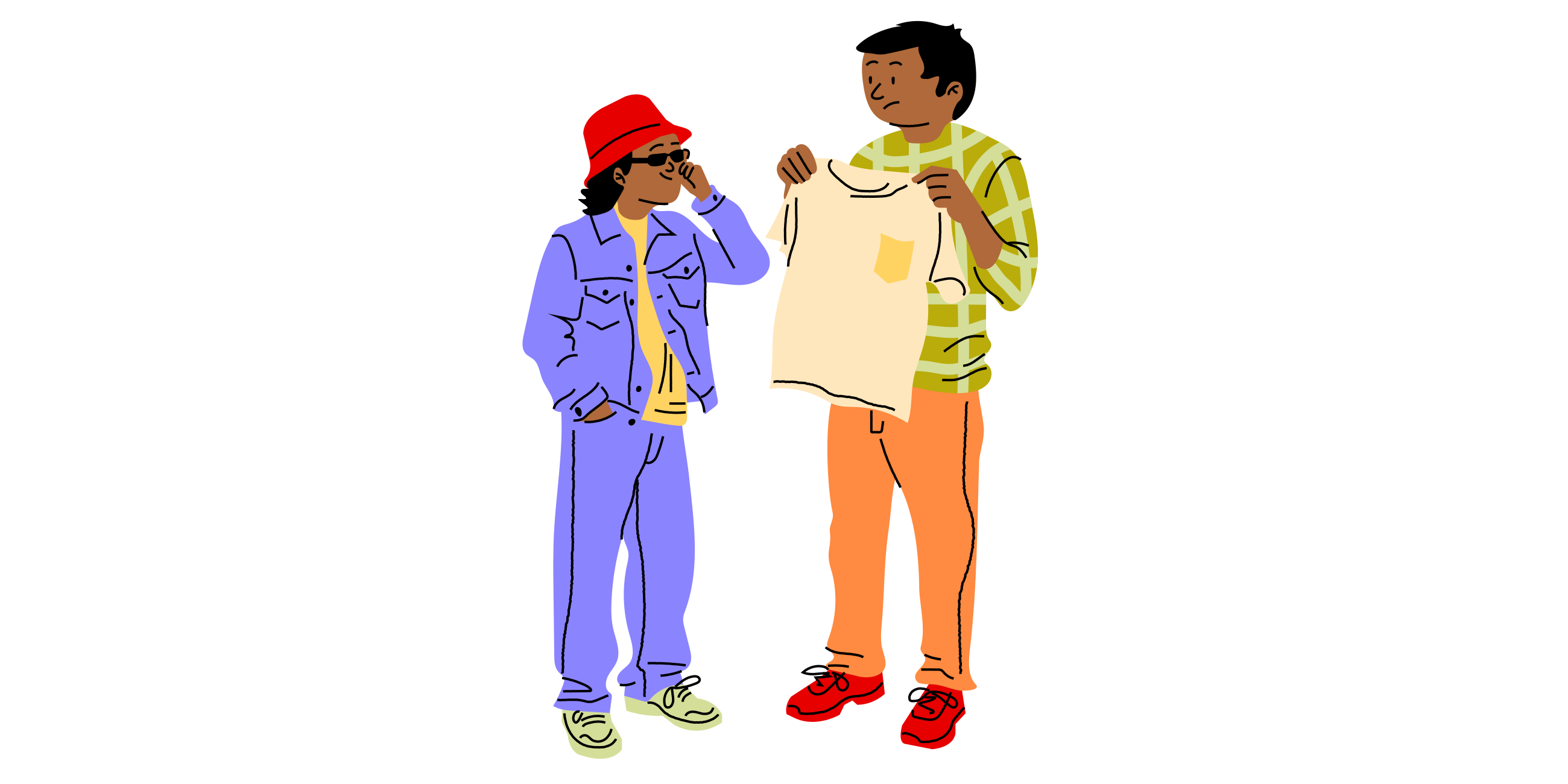
How often do you buy something you later regret? Maybe you also have an unworn sweater hanging in your closet. That’s part of life. Your child will also make bad purchases.
Look back together a few weeks later: How does your child feel today after spending all their pocket money on expensive sunglasses? Was it the right decision? Then you might also discuss which purchases were really important and which were just for fun. This will teach your child to make more deliberate decisions about how they want to spend their money.
Not all influence from social media is bad. Just as some content is problematic, there are also profiles that share knowledge, encourage responsible money management or advocate for social issues.
For example, consider offerings such as “Hanna Cash”, which teach financial literacy and economic concepts to secondary school students in an accessible and understandable way, thereby serving as positive role models. The key is how consciously young people choose who they follow and what content they consume on a regular basis.
Instead of simply prohibiting access, you can work with your child to follow channels that offer well-researched, neutral and educational content. Talk to your child about the interests behind each channel and which information may be biased or incomplete.


Make an appointment for a non-binding consultation or if you have any questions, just give us a call.
Disclaimer
This publication is for personal information purposes only within Switzerland and is not to be understood as a recommendation, offer or solicitation of an offer for investment or other specific products and services. It is not intended to form investment, legal or tax advice and should not be used as the basis for financial decisions. Before making a decision, you should obtain professional advice.
All the information and opinions contained in this publication come from reliable and trustworthy sources. Nonetheless, UBS does not accept any contractual or implied liability for any incorrect or incomplete information. The views of non-UBS authors are their own opinions and do not necessarily reflect the views of UBS AG and its affiliates. Complete or partial reproduction without the express consent of UBS is not permitted.
© UBS 1998 - 2026. All rights reserved. The key symbol and UBS are among the registered and unregistered trademarks of UBS.