

We’re here for you
Make an appointment for a non-binding consultation or if you have any questions, just give us a call.

header.search.error
Thanks to our educational principles, parents can accompany their children step by step on the path to financial literacy.

Financial education is necessary so that children can acquire financial literacy. Financially literate children and young people are able to handle money responsibly. This assumes that children know and understand the concept of “money” and its three basic functions. When parents and guardians actively support their children in this process, this is financial education.
Use moments in everyday life to explain the three basic functions of money to your child:
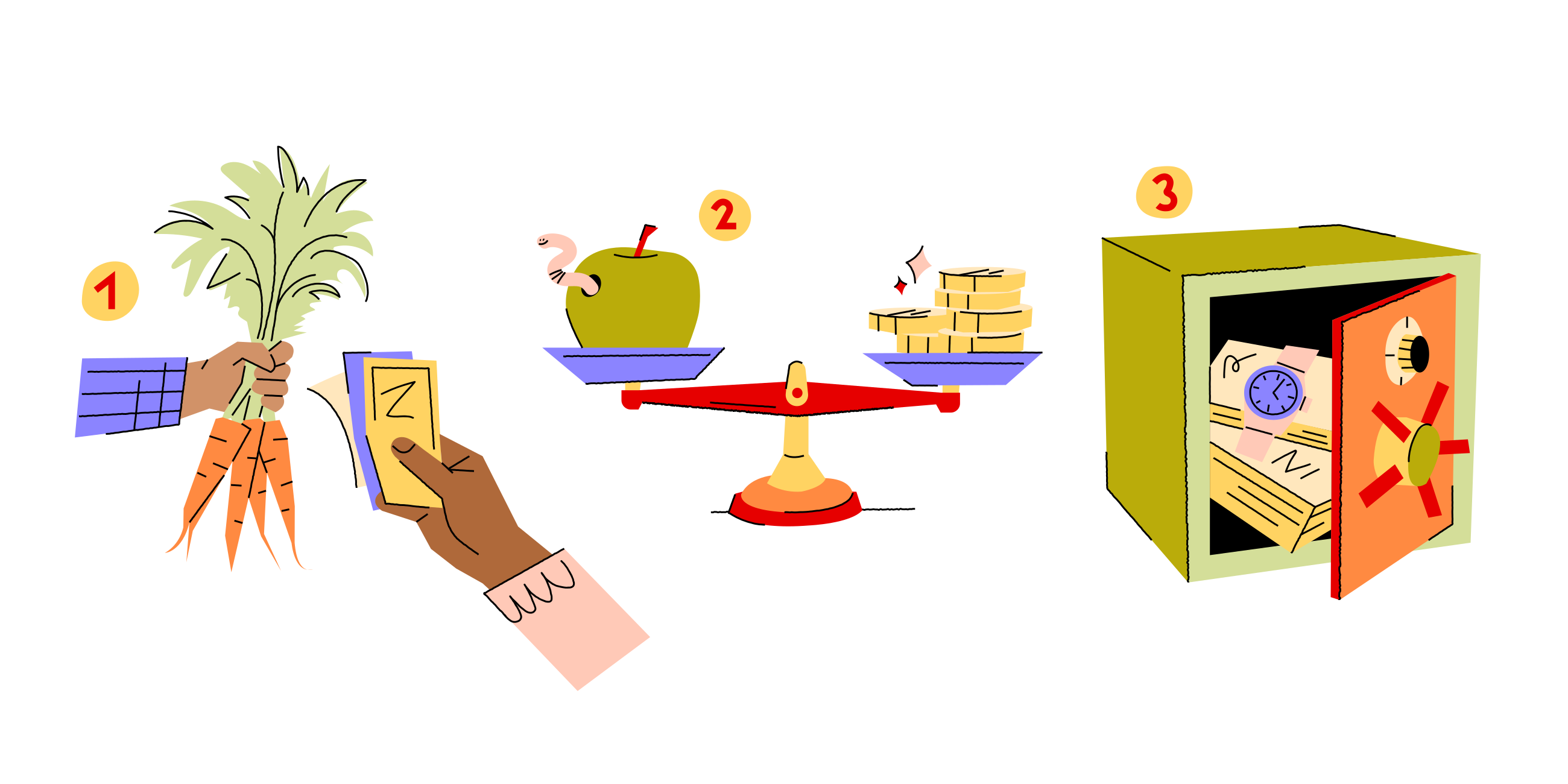
Means of payment: Money is a means of exchange and payment. It can be used to pay for and buy products and services, which facilitates trade.
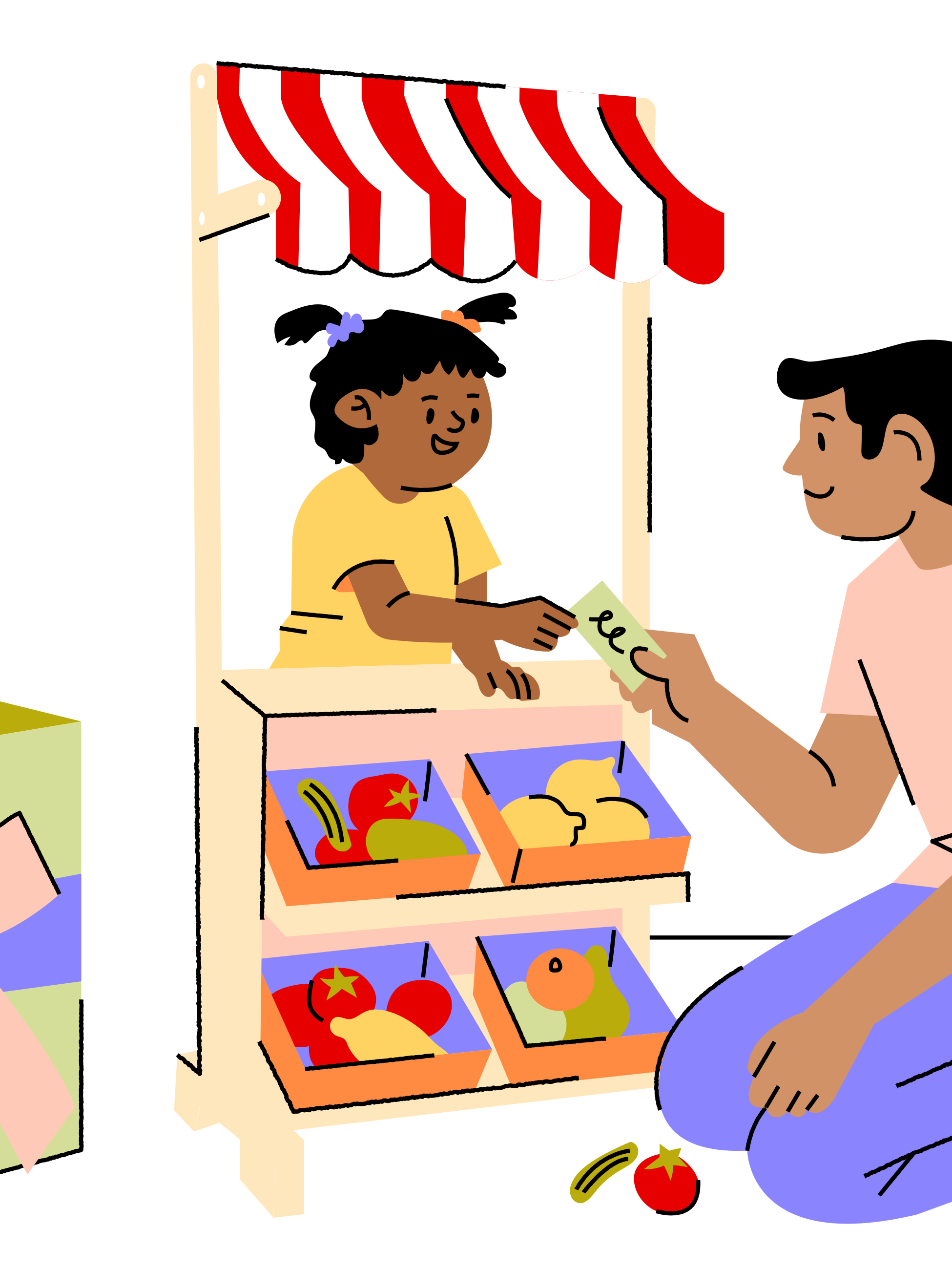
Example: Invent a pretend shop so that you can “play store” with your child: give your child play money that they can pay with just like in a real store.
Calculation unit: Money is a calculation unit and can be used to measure and compare the value of goods, services and assets in a standardized way.
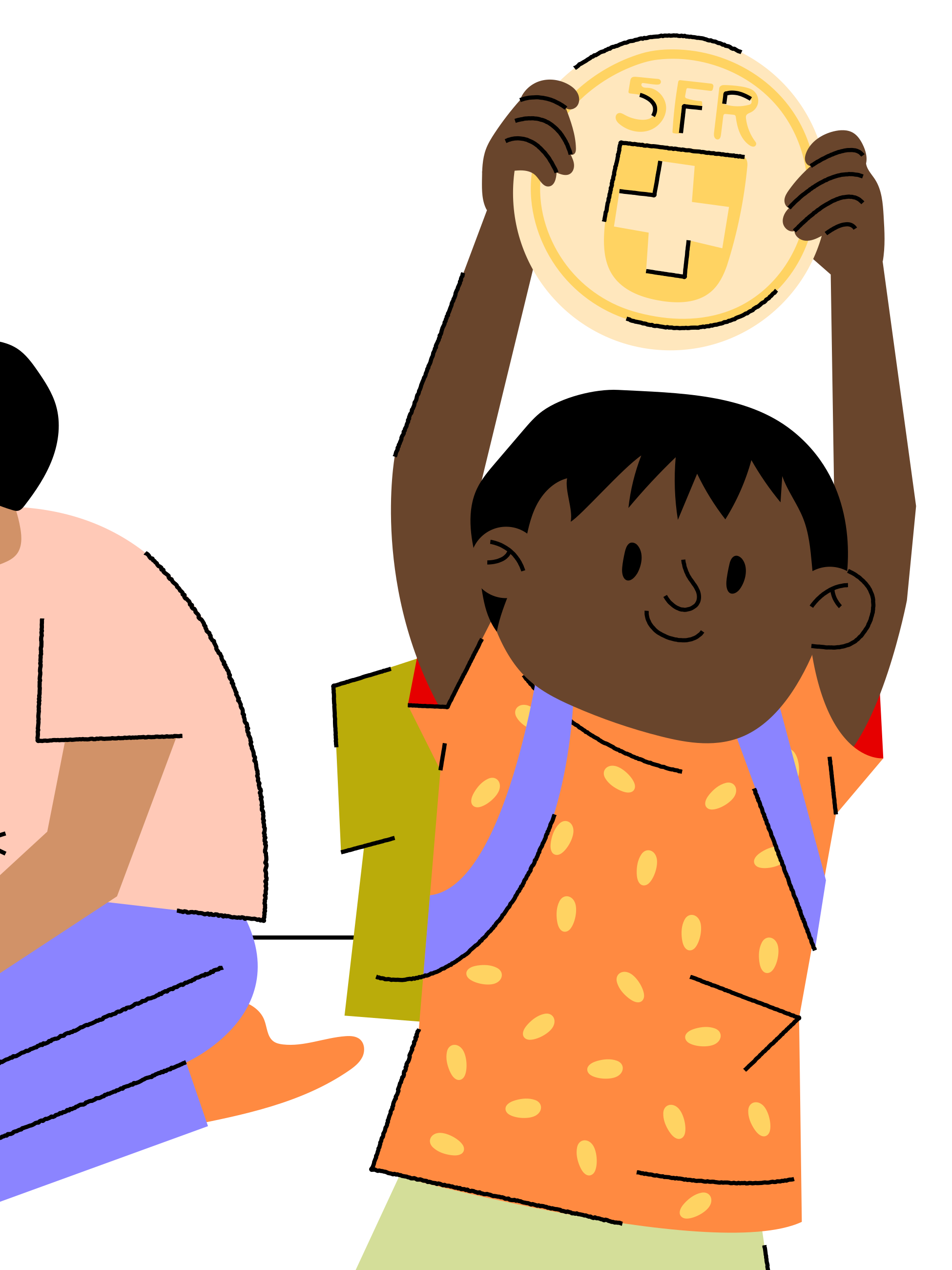
Example: Let your child pick out the coins at the checkout and pay for your purchases. Estimating and comparing prices in stores will also help them to understand the value of money.
A way to store value: Money can be kept and used at a later date, which means that it is a way to store value.
Example: Introduce a “piggy bank” that your child can fill with real money or play money. Ideally, it should be transparent and have several containers for different savings goals. You can also simply use empty glass jars.
Advertising, social media and digital payment methods tempt us to spend money without thinking. Even in adolescence, this can lead to debt. It’s easy to spend more than you had planned to, especially when using a credit card or shopping online. Financial education is an effective way to counteract this. It helps children and young people in the following areas:
Parents and guardians play a vital role on the path to financial literacy. Children learn mainly by observing, by asking questions – and by participating actively in everyday life. Listen attentively to your child and take the time to answer their questions to ensure the ideal conditions for a successful learning process. Take advantage of your child’s natural curiosity – especially in early childhood when they are always asking questions – and make the most of learning windows to introduce sustainable financial education. The most effective way for children to learn is through play: role-playing games such as “playing store” help children to understand financial concepts and are fun at the same time.
Our educational principles have been developed by experts and will help you to provide your child with appropriate guidance and make targeted use of learning windows.

A positive learning atmosphere is established by communicating with respect, listening actively to your child and taking a genuine interest in them. Children learn by observing – which is why it is crucial that you as a parent set a good example with your values in everyday life, especially when it comes to consumption, responsibility and cooperation.

A constructive error culture is created when errors are permitted and reflected on together instead of simply being corrected. If you openly address your own mistakes – even when it comes to spending money – you can set an example and establish trust. This generates learning situations that show children how they can take responsibility and grow from their experiences.
Learning windows for financial education arise when children show interest of their own accord – for example by asking questions such as “Why does it cost so much?” – or when children express consumer wishes in everyday life. Rather than forcing lessons on children, take advantage of situations of this kind as a natural opportunity to talk about money, values and decisions in a way that is appropriate for the age of the child. There are different learning windows that can be used effectively for financial education depending on the child’s age and development.
Learning has a lasting impact when children are allowed to actively do things for themselves – whether it’s dividing up their pocket money, paying at the checkout, saving toward a goal or going to the bank for the first time – because by actually doing, deciding and experiencing things, they develop a direct understanding of money, increase their self-confidence and discover what they are capable of.

Children develop financial literacy best when they are guided step by step from simple to complex concepts – from saving up for a small toy through to long-term planning for bigger items on their wish list. It’s crucial to set learning goals that are appropriate for the child’s age, to let them have everyday experiences and to take their questions and actions seriously – because if you underestimate your child and don’t trust them, you will miss out on valuable learning opportunities as a parent.
Make an appointment for a non-binding consultation or if you have any questions, just give us a call.
Disclaimer
This publication is for personal information purposes only within Switzerland and is not to be understood as a recommendation, offer or solicitation of an offer for investment or other specific products and services. It is not intended to form investment, legal or tax advice and should not be used as the basis for financial decisions. Before making a decision, you should obtain professional advice.
All the information and opinions contained in this publication come from reliable and trustworthy sources. Nonetheless, UBS does not accept any contractual or implied liability for any incorrect or incomplete information. The views of non-UBS authors are their own opinions and do not necessarily reflect the views of UBS AG and its affiliates. Complete or partial reproduction without the express consent of UBS is not permitted.
© UBS 1998 - 2026. All rights reserved. The key symbol and UBS are among the registered and unregistered trademarks of UBS.