We’re here for you
Make an appointment for a non-binding consultation or if you have any questions, just give us a call.

header.search.error
A youth wage turns children into budget experts – and strengthens personal responsibility and financial independence. Find out from what age it makes sense to pay a child a youth wage, how much to give them per month and what it covers.

Samir and Tina, who are both 12, receive money from their parents – but in completely different ways. Samir gets CHF 50 a month in pocket money and usually spends it pretty quickly: “I spend most of it in the first week when I’m out with my friends,” he says. “But my mobile phone bill is paid by my parents.”
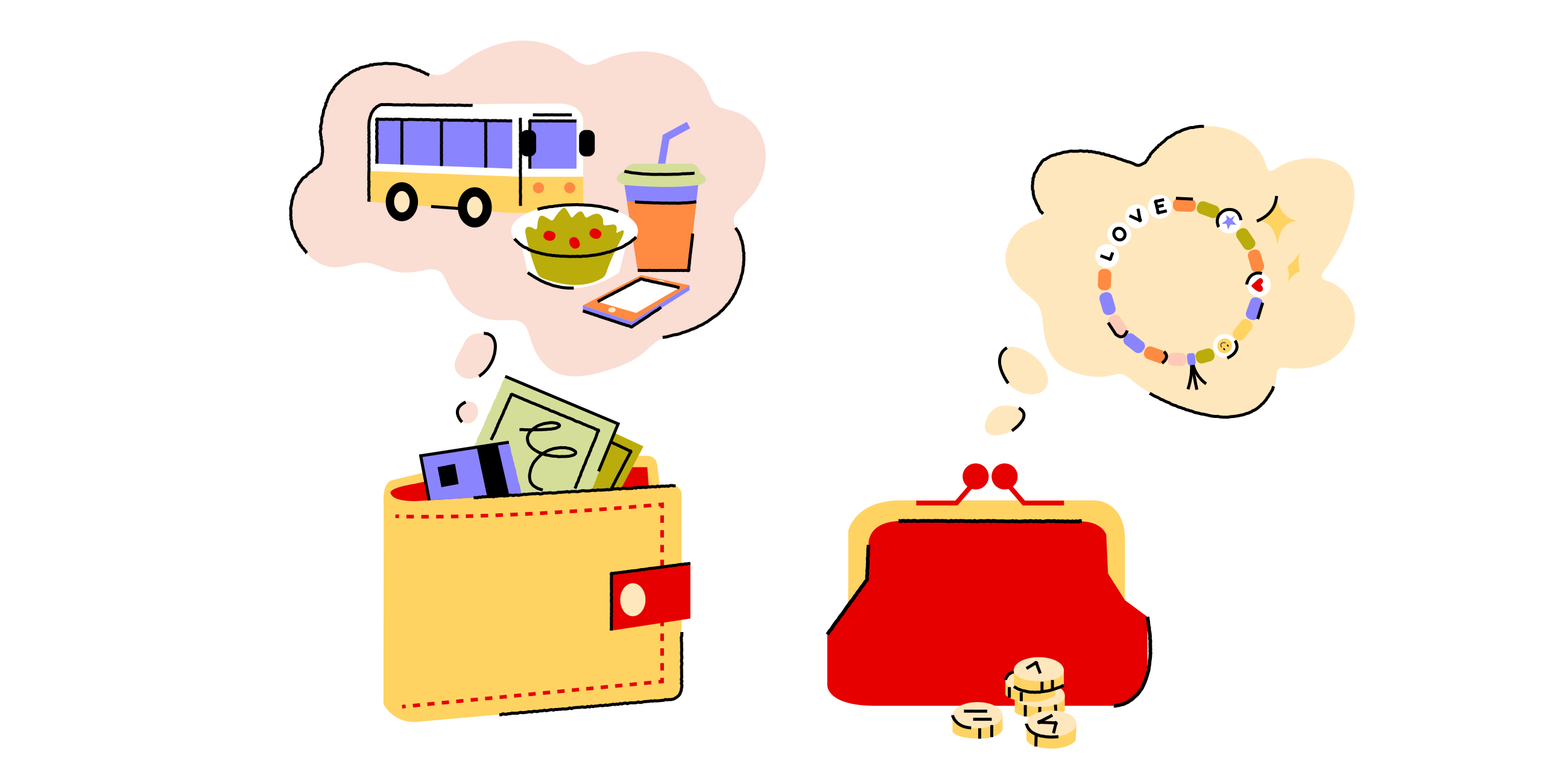
That’s not the case for Tina. She receives CHF 300 a month as a youth wage. “My youth wage not only has to cover my mobile phone bill, but also my lunch at school and the bus ticket home,” she explains. “In the end, there’s usually not much left for shopping and so on. If I really want to buy myself a particular bracelet I’ve seen, I have to save up for a while.”
The principle of a youth wage is simple. The parents or guardians give their child a much higher amount each month than they previously received as pocket money. However, the child then has to use this money to cover some of their everyday expenses themselves. Depending on what you decide on, this may include clothing, their mobile phone subscription, leisure activities or a bus or train pass.
As parents, you will still spend roughly the same amount of money overall, but at the same time you are handing over responsibility for part of the family budget to your child.
While pocket money is mainly intended to introduce your child to handling money and cover smaller personal expenses, a youth wage is for paying regular living costs independently. A youth wage offers a much greater learning opportunity for young people. They can practice distinguishing between things they want and things they really need, and learn how to prioritize their spending.
A youth wage teaches young people to weigh up their wants and needs and set priorities.
The right time for a youth wage is as individual as each child. Maturity is the key factor: if your child can plan for themselves and can make do without something they want from time to time, they will probably be prepared to take more responsibility for their own budget.
The Jugendlohn association (in German) recommends switching from pocket money to a youth wage at the age of 12. At this age, children usually have the skills they need to plan and prioritize their money independently. And of course they also increasingly feel the need to make their own decisions about certain things and don’t always want to have to ask their parents about everything.
A youth wage gives children this freedom. But they also have to decide whether to spend their money on new jeans or go to the movies with friends. It’s important for parents or guardians to closely accompany the process. Support for the child is particularly valuable in the initial phase.
The step from pocket money to a youth wage should not be a leap in the dark, but should be consciously prepared and closely accompanied by parents or guardians.
Decide with your child what expenses their youth wage will cover before you give it to them for the first time. The Jugendlohn association recommends that a youth wage should only cover expenses that are intended for personal use. This usually applies to the following:
You should also include all expenses that were otherwise paid for out of the child’s pocket money. This is integrated into the youth wage.
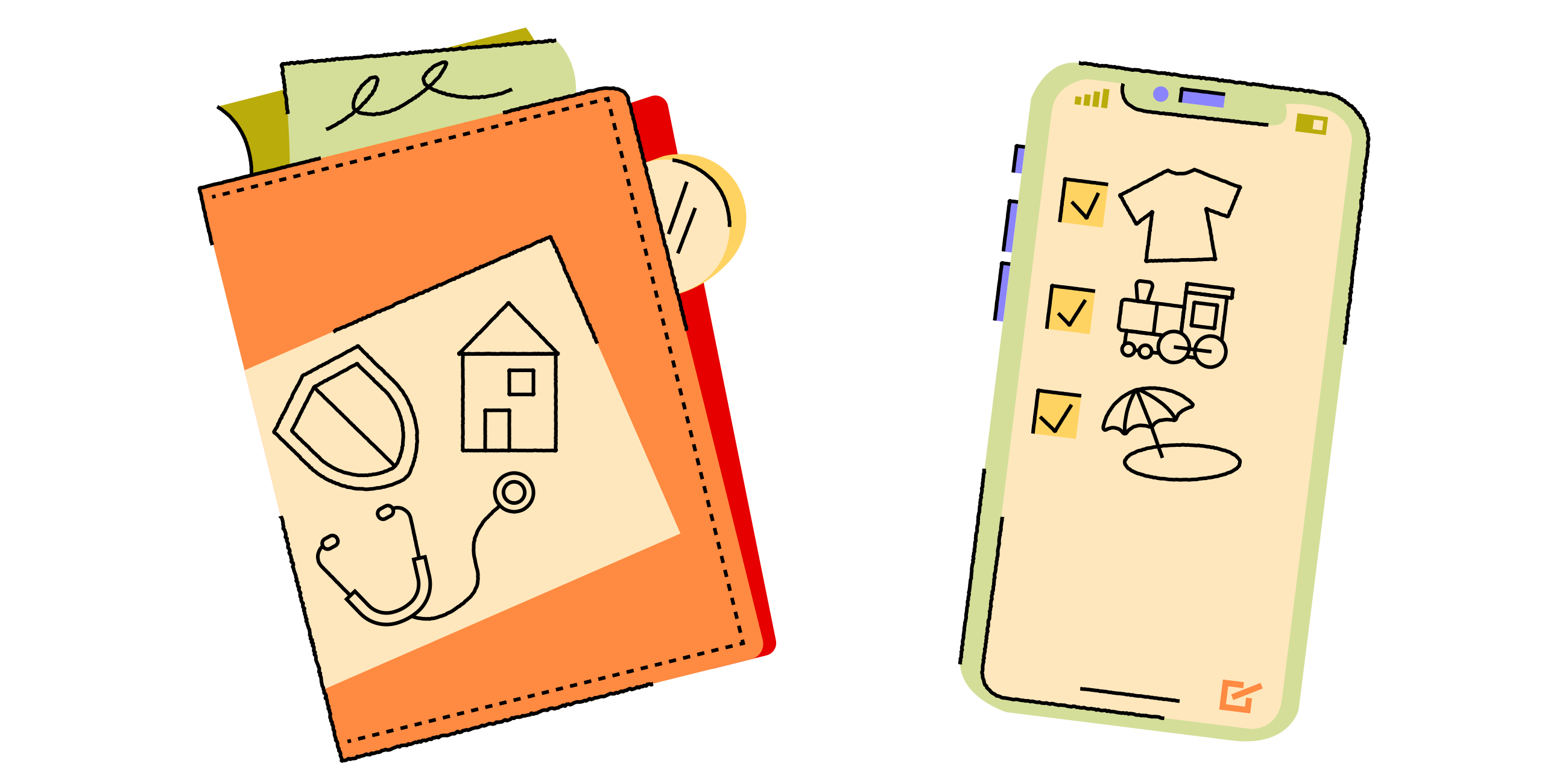
You should bear in mind that not all costs are incurred on a regular basis. For example, clothing costs can be much higher in winter if the child needs a new winter jacket or shoes. You should therefore plan the amount of the youth wage in advance.
It’s also important to note that all the expenses that are borne by the family anyway should generally be excluded from the youth wage. Your teenager should not be paying their own rent or buying daily food, let alone paying for insurance and school fees. Joint family activities are often still financed by the parents as well. Ultimately, the aim is for young people to have the freedom to choose what to spend their money on, but only within clearly defined limits.
The amount to be paid as a youth wage is different for every family. Firstly, the family’s income must be taken into account – after all, the youth wage is intended to supplement the family budget, not to place an excessive strain on family spending. Secondly, it depends on the expenses that have to be covered by the youth wage and the maturity of the child. The youth wage must always be calculated realistically and be based on the child’s previous spending.
This means that the monthly amount to be received by each child is not set in stone. Wait and see how much they actually spend over the first few months and discuss the amount with them.

To determine an appropriate youth wage, first consider the following points:
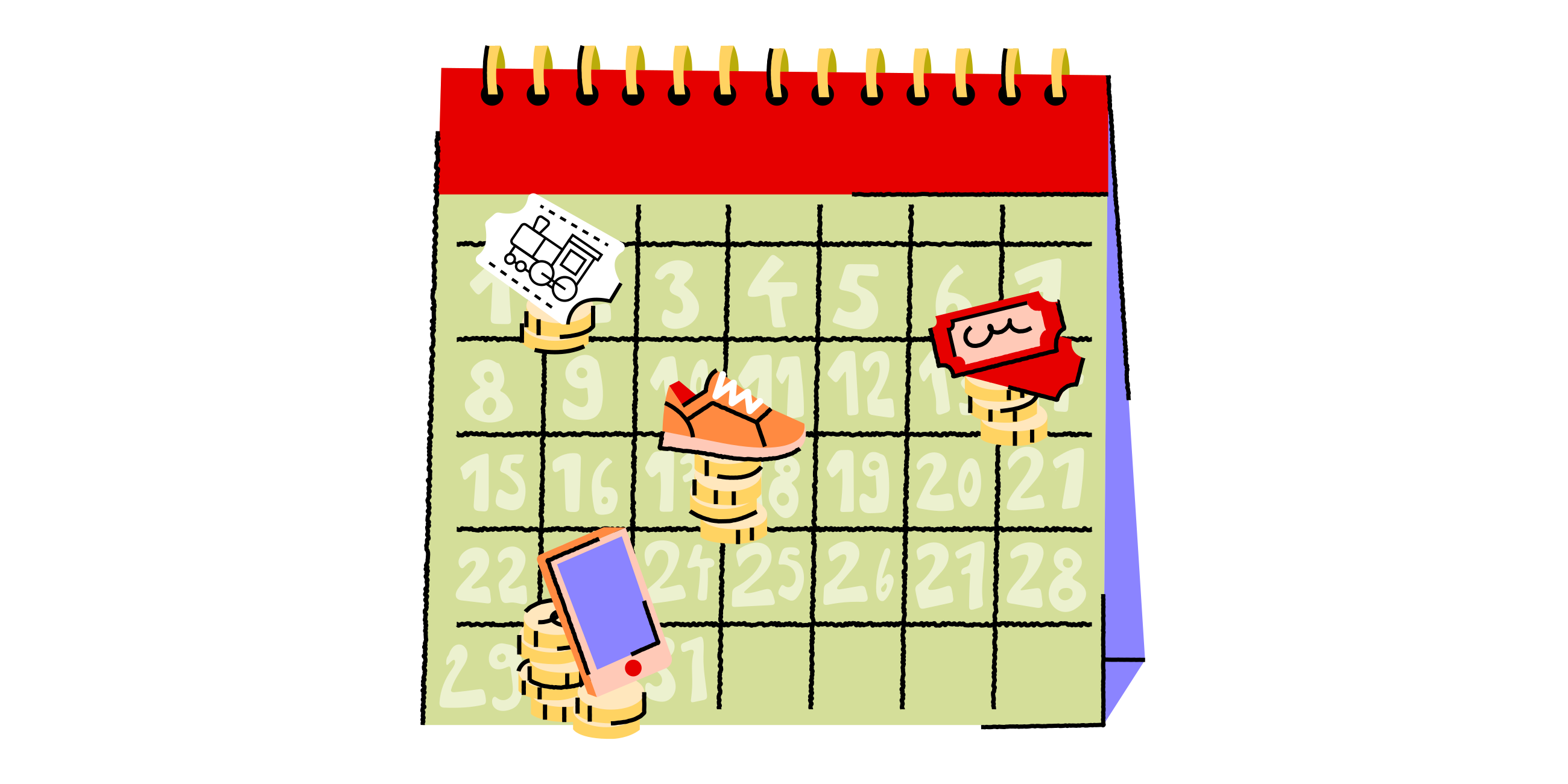
The second step is to calculate the amount of the youth wage. The best way to do this is to record or estimate the annual costs for everything you want your child to be responsible for. If you aren’t sure how much you should estimate for certain costs, you can use the guidelines from Budgetberatung Schweiz (in German) to help you.
Divide the total by 12 to get the monthly youth wage. Some parents even decide to give their child a 13th youth wage for winter clothing in November or December. If you want to do the same, you must add another month to your annual estimate. You can then record the amount in writing and transfer the money to your child’s account on a fixed date each month.
To make it easier to calculate a suitable youth wage, the Jugendlohn association offers two free templates to download (in German). One for a full youth wage and one specifically for a monthly clothing allowance.
Example: Tina and her parents used the following table to calculate her youth wage of CHF 300. Together, they defined certain costs (wherever CHF 0 appears in the budget) as fixed costs that will continue to be borne by Tina’s parents.
| Category | Costs per year | Costs per month |
|---|---|---|
Clothes | 960 | 80 |
Shoes | 360 | 30 |
Hairdresser | 240 | 20 |
Bicycle/scooter (maintenance/repairs), public transport | 720 | 60 |
Specific hygiene articles | 0 | 0 |
Sports equipment, sportswear and accessories | 0 | 0 |
Mobile phone, computer and other digital devices (purchase) | 0 | 0 |
Mobile phone subscription / prepaid SIM card | 240 | 20 |
Stationery, pencil pouch, diary and similar items | 0 | 0 |
Pocket money: movies, concerts, disco, pocket-money treats, magazines, etc. | 480 | 40 |
Meals away from home | 600 | 50 |
Total | 3,600 | 300 |
These five tips will make it easier to introduce a youth wage:
1. Establish clear conditions: Get together as a family and discuss whether a youth wage is an option for you. This gives your child the opportunity to express their fears and ask questions at an early stage. You should also be transparent about what the youth wage will consist of. This teaches your child which expenses are incurred where. Once all family members have decided on a youth wage, you should put the agreement in writing. You can draw up a family contract to formulate clear and simple rules that give your child the necessary guidance and freedom, for instance on topics such as online shopping.
2. Set up an account: Your child needs access to a bank account of their own so that they can learn how to handle real money. Help your child to set up the account, discuss what they need to pay attention to, and transfer the money to the account by standing order.
3. Have regular discussions about the youth wage: Children generally make impulse purchases much more frequently than adults. They could rapidly be tempted to buy a new online game instead of the new jacket they really need for the winter. The youth wage is designed precisely to help your child make this kind of decision. It encourages them to learn from their own mistakes. Talk to your child regularly and share your own experiences with them. These conversations should not be used to exert control over your child, but to give them feedback that they can learn from.
4. Don’t give your child any extra money: The real aim of a youth wage – to teach children how to handle money – is lost if they know that they can rely on their parents once they have used up all their money on things they don’t really need. Even if it’s difficult, try not to help out financially right away. If your child has run out of money, give them the opportunity to explain how it happened. You can then decide together what measures to take – better planning, a part-time job or an increase in the youth wage.
5. Even address uncomfortable topics: It’s important to talk to your child about the fact that they are responsible for all their actions. For example, if a 16-year-old is caught on the train without a ticket and doesn’t pay the fine, they are the ones who will be prosecuted, not the parents. This can have long-term consequences.
When they receive a youth wage, young people learn to look after their money more independently. They have to take on more responsibility and learn that sometimes, they have to go without things.
They benefit from the following specific advantages:
Handing over responsibility for certain spending to their child can seem strange and worrying for parents at first. However, introducing a youth wage has various advantages, even for parents:

Tina: “Well, when I compare myself with my friends, I have the feeling that I think more carefully about how I spend my money. This means that I can sometimes still afford something when the others are already broke. I wasn’t so good with money when I was younger. So I’m definitely in favor of the youth wage.”


Make an appointment for a non-binding consultation or if you have any questions, just give us a call.
Disclaimer
This publication is for personal information purposes only within Switzerland and is not to be understood as a recommendation, offer or solicitation of an offer for investment or other specific products and services. It is not intended to form investment, legal or tax advice and should not be used as the basis for financial decisions. Before making a decision, you should obtain professional advice.
All the information and opinions contained in this publication come from reliable and trustworthy sources. Nonetheless, UBS does not accept any contractual or implied liability for any incorrect or incomplete information. The views of non-UBS authors are their own opinions and do not necessarily reflect the views of UBS AG and its affiliates. Complete or partial reproduction without the express consent of UBS is not permitted.
© UBS 1998 - 2026. All rights reserved. The key symbol and UBS are among the registered and unregistered trademarks of UBS.