We’re here for you
Make an appointment for a non-binding consultation or if you have any questions, just give us a call.

header.search.error
A new instrument, sports equipment or riding lessons. How much should children’s hobbies cost?

“I really want to play floorball!” says Laura firmly. That’s not surprising – her best friend is in the club. Her parents are of course pleased, because there’s nothing wrong with sport. On the contrary. But they soon have a few questions:
And what if Laura doesn’t feel like playing floorball anymore in two months’ time?
In general, most children develop an initial interest in hobbies and want to try out different activities from kindergarten age. And that’s a good thing – after all, hobbies are extremely valuable for children. They make a welcome change from everyday school life and help them to discover interests, develop talents and boost self-confidence. In addition, team sports in particular can promote social skills and enable children to make new friends.
If a child wants to try a particular hobby, parents and guardians should take their request seriously. However, if the hobby is associated with high costs, the child’s wish doesn’t have to be fulfilled immediately.
It’s great for parents to see their children practicing a hobby and developing new skills in the process. But it’s true that some hobbies can be very expensive. The cost of riding, tennis or violin lessons can quickly add up. Club sports or scouts are usually much less expensive.
So the main question is: How expensive should a hobby be? An upper limit should be set in the family budget. It’s important to discuss the topic openly with your child. Use it as a learning opportunity and discuss value for money: “How much will it cost – and what will you get out of it?” This involves weighing up what kind of activity makes sense for the child at what age, and how much money should be spent on it. This will allow you to explain to your child early on that money is not unlimited.
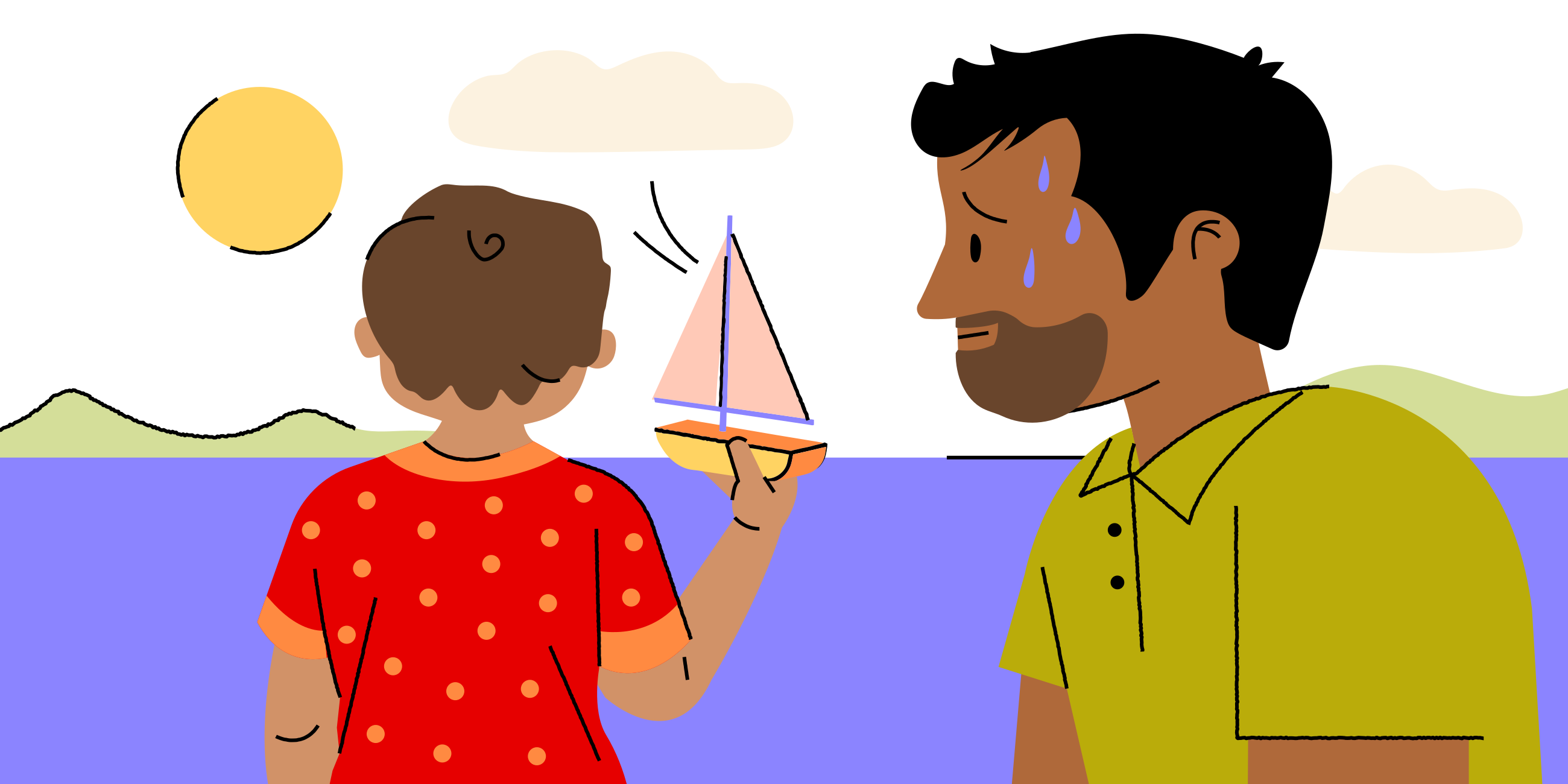
So the main question is: How expensive should a hobby be? An upper limit should be set in the family budget. It’s important to discuss the topic openly with your child. Use it as a learning opportunity and discuss value for money: “How much will it cost – and what will you get out of it?” This involves weighing up what kind of activity makes sense for the child at what age, and how much money should be spent on it. This will allow you to explain to your child early on that money is not unlimited.
Not every hobby is financially viable for every family in the long term.
This teaches your child that financial decisions are important and can influence other things. Does your child dream of having their own photographic equipment? Or would your teenager love to compete in motorsport races? Then you need to think about whether and how you can afford these expensive activities – without having to give up anything else, such as family vacations.
Important: if the whole family has to tighten their belts to enable one of the children to pursue their dream hobby, this decision should be discussed as a family and supported by all those affected.
Does your child really want to play golf? Why? First of all, find out why your child wants to take up this particular hobby in the first place. Are they really interested in it themselves, or is it only because of peer pressure or the influence of social media?
You should also explain to your child that although a hobby is mainly about having fun, it also represents a commitment. Once they take up an activity, they will have to keep going to training or music lessons regularly, even if they would rather stay at home on the sofa.
It’s best to stay by trying out the hobby with a taster course and borrowed equipment. After a while, you can establish together whether your child will enjoy the activity in the long term.
Make it clear to your child that if they start an expensive hobby, they will have to pursue it regularly. That’s all part of it.
A wish list can also be helpful. As a parent or guardian, this shows that you are taking your child’s wishes seriously but are not willing or able to satisfy them immediately. If the desired hobby remains on the list for a long time, this indicates genuine, long-term interest and is more likely to justify major expenditure.
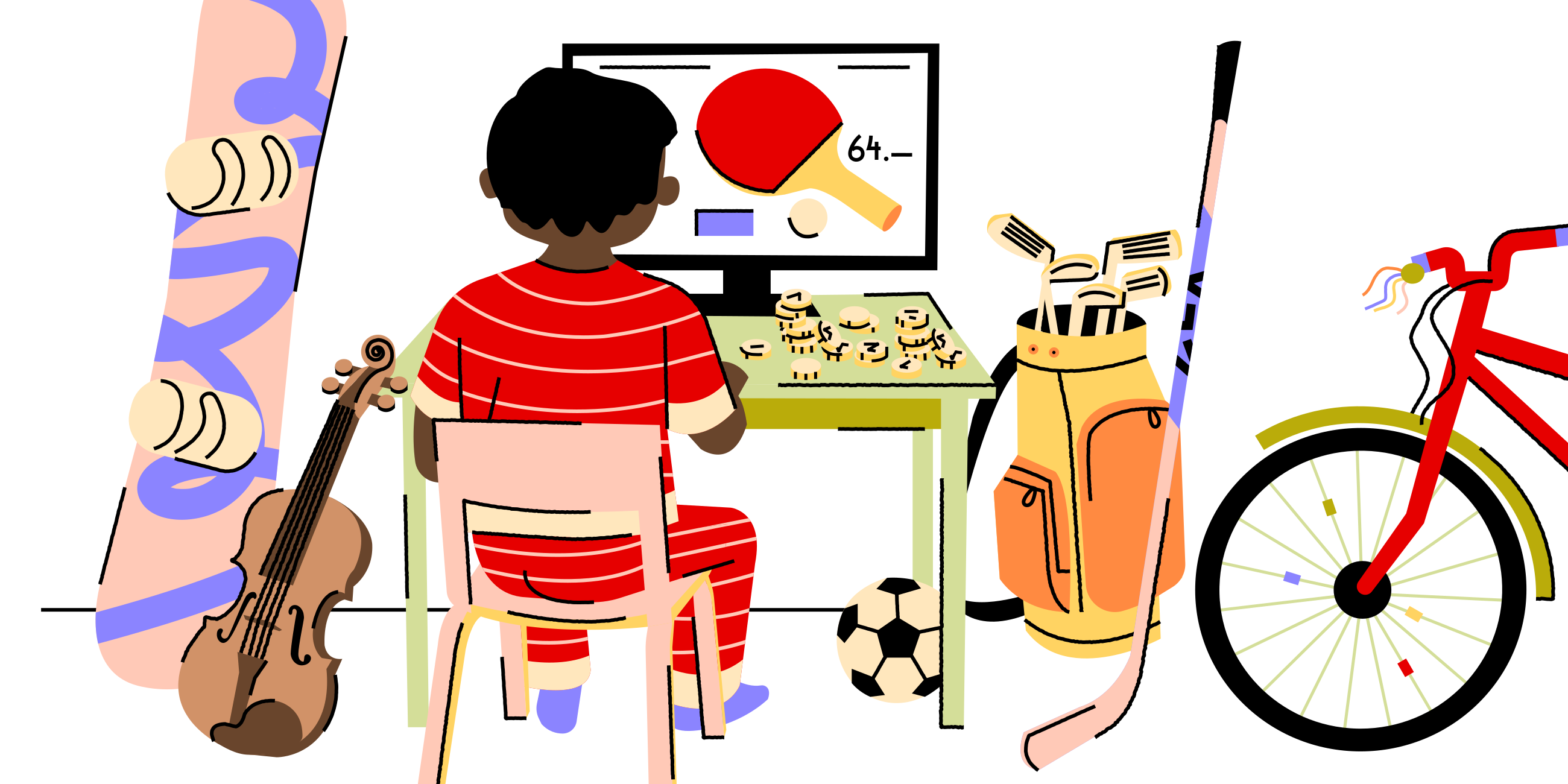
If your child already has an expensive hobby and wants to start another one, you have to set priorities. If they already play an expensive musical instrument and take lessons, for example, then they don’t have to play an expensive sport at the same time. And the following applies to hobbies in general: less is often more. Children benefit if they only have one or two hobbies that they can pursue with enough time and dedication.
Today, children sometimes have such busy schedules that they have little time for their own ideas and creativity.
Is the family budget insufficient to finance the hobby in the long term? This doesn’t always mean that the child has to give up on it completely. It is often possible to find a compromise that everyone is happy with. For example by choosing a similar but less expensive activity for the child. Or getting the child to pay a proportion of the costs themselves. There are various options:
This can have a positive side effect: children who share the costs of their hobby not only learn what it means to take financial responsibility, but often take their activity more seriously than if they weren’t participating in the costs.
If the hobby is still too expensive, it is important that you, as a parent or guardian, talk to your child about it as equals. This means not just saying “no”, but listening to your child and explaining the situation.

For families with more than one child, the cost of hobbies can also lead to friction, for example if your son’s riding lessons cost 2,300 francs a year, but your daughter’s soccer training only costs 300 francs.
Certain rivalries between siblings are completely normal. Ultimately, it is about the desire for affection and recognition from parents. If a child realizes that you are spending a lot more money on a sibling, they may become angry and demand fairness.
But does fairness mean that all hobbies must have the same cost? Or is it fairer if every child can choose the activity they want to do? Deciding on a hobby usually simply depends on whether it corresponds to the child’s wishes and whether it is available nearby.
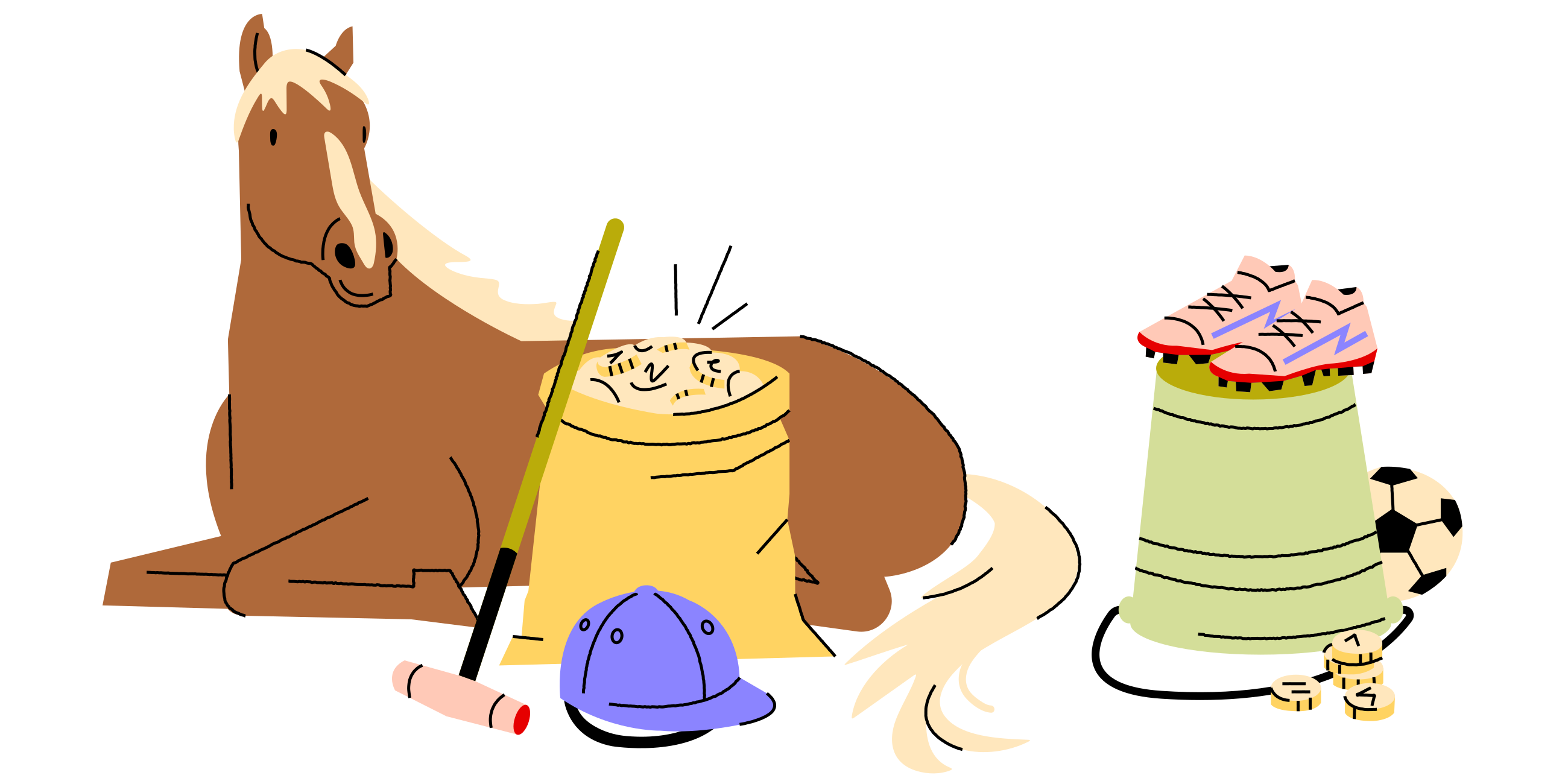
These ideas of fairness can be discussed as a family at the dinner table. It’s important that you maintain open dialog and address inequalities so that jealousy doesn’t build up. Don’t focus on the costs, but on each child’s enjoyment of their activities.
It’s impossible to avoid treating siblings unequally from a financial point of view at one stage or other. Perhaps one child will go to a more selective high school and be dependent on more financial support, while the other will do an apprenticeship and have to contribute to household costs.
Make an appointment for a non-binding consultation or if you have any questions, just give us a call.
Disclaimer
This publication is for personal information purposes only within Switzerland and is not to be understood as a recommendation, offer or solicitation of an offer for investment or other specific products and services. It is not intended to form investment, legal or tax advice and should not be used as the basis for financial decisions. Before making a decision, you should obtain professional advice.
All the information and opinions contained in this publication come from reliable and trustworthy sources. Nonetheless, UBS does not accept any contractual or implied liability for any incorrect or incomplete information. The views of non-UBS authors are their own opinions and do not necessarily reflect the views of UBS AG and its affiliates. Complete or partial reproduction without the express consent of UBS is not permitted.
© UBS 1998 - 2026. All rights reserved. The key symbol and UBS are among the registered and unregistered trademarks of UBS.