We’re here for you
Make an appointment for a non-binding consultation or if you have any questions, just give us a call.

header.search.error
Are you trying to save money as a family? Children learn responsibility when they are allowed to have a say in the family budget. Use these simple methods to explain the topic in an age-appropriate way.

The last few years have been financially challenging for many families. Some families have had to make do with a lower family budget due to economic changes such as inflation. Although inflation in Switzerland is often moderate by international standards, Swiss households are still feeling the effects of price increases, particularly for rent, food and energy. But happy events such as a new addition to the family or a professional training opportunity can also have an impact on the family budget.
Many parents may think: “I don’t want my child to be involved in the family budget.” But children can sense very clearly when adults are preoccupied – even when it comes to money. By talking about the financial situation honestly and in a child-friendly way, you give your child the chance to understand that a budget can change – sometimes upward, sometimes downward.
Children learn by observing and participating. This is no different when it comes to saving and budgeting. Giving your children an early insight into family finances encourages their sense of responsibility and their understanding of money and its value.
It makes sense to start gradually in everyday life, for example by setting short-term savings goals and letting your child make small decisions themselves to help achieve the goals. For example, your child could choose the snack that fits into the family budget when shopping for the week.
Even when children have a say: the overall responsibility for the family budget always lies with the parents or guardians.
But how do you explain the family budget to children? It is usually the family’s fixed expenses, such as rent or health insurance premiums, that make up the largest part of the budget.
It’s worth explaining the difference between fixed costs and variable costs clearly and comprehensibly: “The rent is always due, no matter what. But watching TV at home instead of going to the movies is something we can influence.” This shows children that some expenses are unchangeable, while others remain flexible.
It’s important not to overtax your child. They shouldn’t need to worry about not being able to pay the mortgage or the rent. How transparent you are about specific financial details is always a balancing act and depends a great deal on the maturity of the child. For example, it may not be a good idea to disclose your exact income if you are unsure whether or not the child will share the figures with their peers at school.
Transparency about the family budget is a balancing act. Parents should be guided by the maturity and responsibility of the child.
If family expenses have to be reduced, parents should decide where savings should be made and explain the reasons to the children openly. For example, you could tell them: “The rent has gone up, so we won’t be able to eat at restaurants as often.” This helps children understand the situation. It takes the pressure off and at the same time shows them how to set priorities. And to balance things out, you could add: “We won’t be going out for pizza, but instead, we could have a cozy pizza party at home every Sunday.”
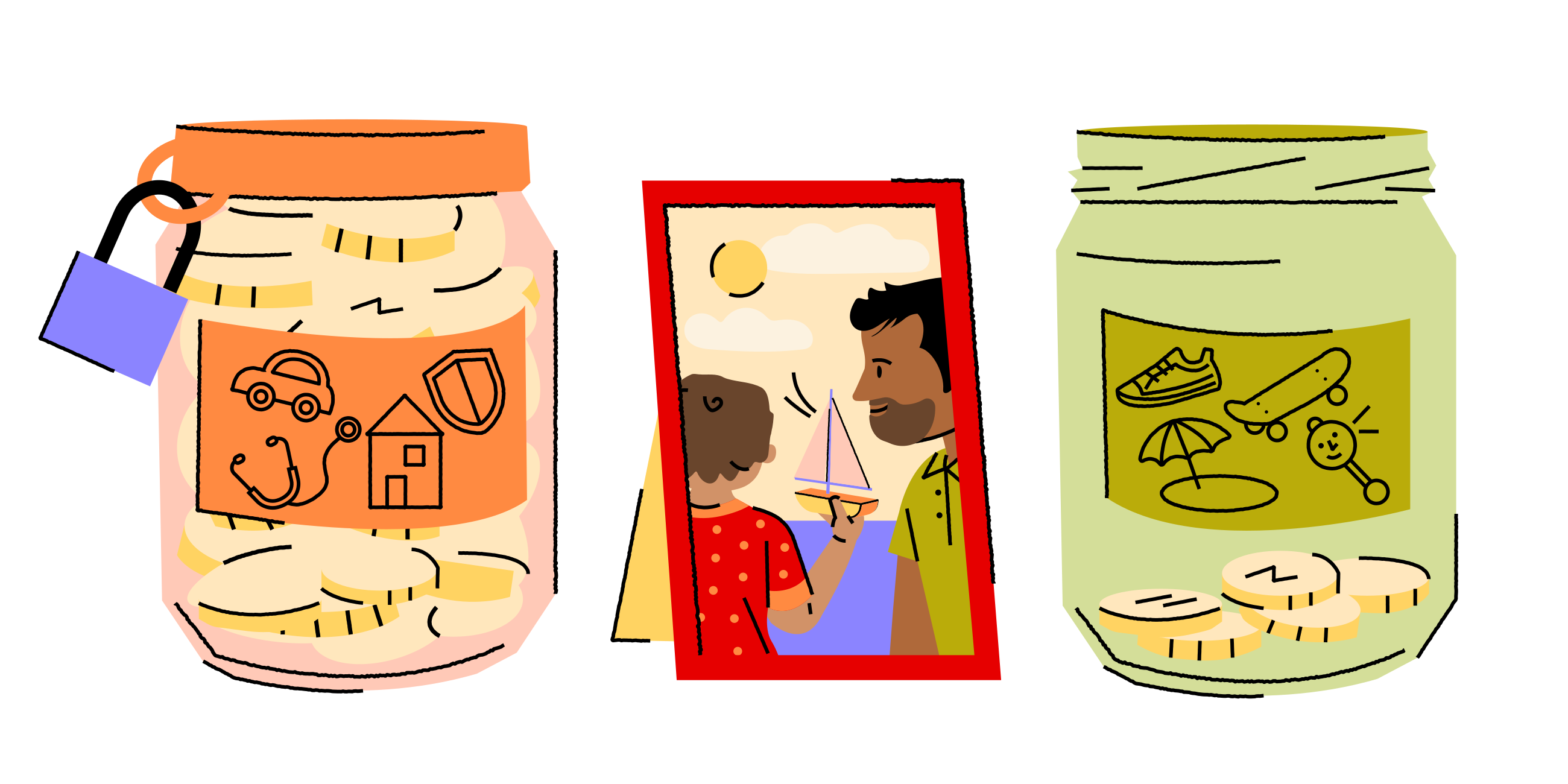
Once the priorities have been set, you can define savings goals for the whole family together. It helps if you illustrate the goals, for example by setting up a special family money box and pinning up a drawing of the savings goal next to it. This means that everyone can always see what they are saving for.

Children learn best in everyday situations. Take advantage of opportunities to make the topic of budgeting understandable and encourage saving. For young children, start with simple terms and questions, and increase the complexity as the child becomes older and more mature.
Young children are very curious and learn a lot by observing and imitating. You can therefore involve your child from pre-school age (1–3 years) – but only in very basic areas, for example by counting coins together and letting the child pay for their own chocolate bar at the checkout. In this way, they will learn step by step how payments work in everyday life.
At primary school age, children can be increasingly involved in planning the family budget.
You could prepare the weekly shopping trip together, for instance. Write a shopping list, compare prices and make sure that you stay within the budget. This is a direct way for children to learn that money is limited and that you have to set priorities. It’s also worth taking a look at how much the child’s hobby or certain leisure activities cost with them in order to explain that leisure time is also associated with expenses.
It’s also useful to look at individual invoices together from time to time. The quarterly electricity bill is a good example: it is regular and clearly shows that certain costs are incurred again and again. This teaches the child how fixed costs work and why you have to budget for them.

Teenagers can already play a much greater role in planning the family budget. If your child receives a youth wage, you can also include their own expenses in the discussion.
For example, you could examine fixed expenses such as their cell phone subscription together. Check the contract, think about which services are really necessary, compare offers and pay an initial bill together.

Make an appointment for a non-binding consultation or if you have any questions, just give us a call.
Disclaimer
This publication is for personal information purposes only within Switzerland and is not to be understood as a recommendation, offer or solicitation of an offer for investment or other specific products and services. It is not intended to form investment, legal or tax advice and should not be used as the basis for financial decisions. Before making a decision, you should obtain professional advice.
All the information and opinions contained in this publication come from reliable and trustworthy sources. Nonetheless, UBS does not accept any contractual or implied liability for any incorrect or incomplete information. The views of non-UBS authors are their own opinions and do not necessarily reflect the views of UBS AG and its affiliates. Complete or partial reproduction without the express consent of UBS is not permitted.
© UBS 1998 - 2026. All rights reserved. The key symbol and UBS are among the registered and unregistered trademarks of UBS.