We’re here for you
Make an appointment for a non-binding consultation or if you have any questions, just give us a call.

header.search.error
Whether it’s an upcoming birthday or a vacation, children often eagerly await special events with impatience. Turn impatience into joyful anticipation with these tips.

Do you still remember something you really looked forward to as a child? Your first Game Boy? Your best friend’s birthday party? And how did it feel when the event and the anticipation were over?
Of course it felt great to finally be able to play with your Game Boy or dance to your favorite songs at the party, but the tingly feeling of anticipation was gone.
The idea of waiting for something just isn’t in tune with the modern world. If our train is late, it’s a problem. It’s even worse if the train is delayed indefinitely. It’s easier for us to be patient if we at least know how long we will have to wait for.
This is particularly evident in children: “How much longer will it be?” ... and then five minutes later: “And now, how much longer will it be?” Children find it hard to wait for certain things. This impatience is normal, but it’s an ideal opportunity to teach children to be patient in a targeted manner. Waiting, or temporarily going without something, can have positive effects. Psychologists call it “deferred gratification”. This means giving up something today in order to receive a greater reward after a certain period of time.
‘Being patient’ also means temporarily going without.
When children learn to be patient, they also develop self-control. They discover how to manage their feelings more effectively, even when it’s difficult because they would prefer to have something immediately. This self-control is beneficial later in life because it ensures more conscious consumption and better social interaction.
So if you teach your child to be patient in everyday life, you will not only help them to overcome frustration, but also allow them to develop important skills for school and everyday life. But how can you actually help your child to wait?

Time is something abstract, and children first need to learn how it works. Waiting is very difficult for children, especially toddlers. It is quite normal that they are not yet very patient. They often simply don’t understand what “soon”, “tomorrow” or “next week” means.
It’s important for parents to realize that a proper understanding of time only develops gradually; many children are only able to classify time periods in relation to each other from primary school onwards (6–8 years).
Consciously experiencing a period of time can help. It makes sense to teach your child the principle of days, weeks, months and years. The easiest way to illustrate this is with a calendar or a clock: “This is today, this is in three days’ time.” This will give your child a point of reference to guide them and make it easier for them to be patient.
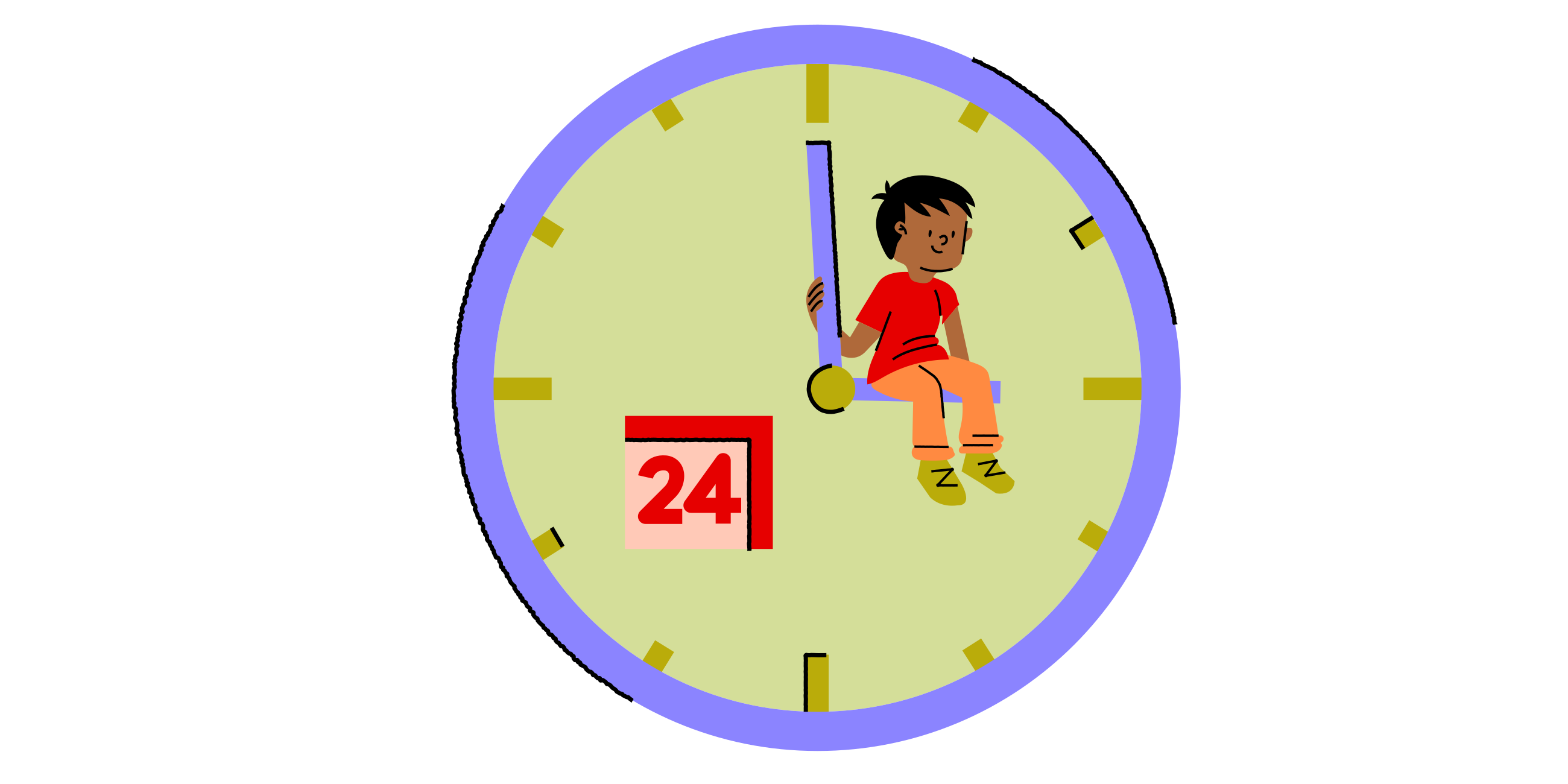
Make sure that you teach children to wait in a way that is appropriate for their age. Avoid overtaxing younger children because they live very much in the moment and aren’t very good at grasping the concept of longer periods of time. For small children, divide long periods into shorter stages and teach them to wait in short, manageable time slots. The older a child gets, the better their planning skills – and therefore also their patience.
When teaching children to be patient, make sure that you don’t put any pressure on the child – waiting should be learned through play. And it’s not just about waiting for material things like gifts or toys. Waiting for an outing, a party or a visit from their godparents is also a good way to encourage children to be patient and build up a sense of anticipation.
Children shouldn’t just wait for material things. Experiences and joint excursions are often more motivating.
Celebrate the anticipation of an event with your child by marking off the days on a calendar. This gives your child a sense of how time passes. They see what “today”, “tomorrow” and “soon” mean and learn to be patient one step at a time.
Fill a jar with marbles you have counted in advance and let your child take one out every day until the long-awaited event finally arrives and the jar is empty. This will enable your child to see how time passes and experience it in a very practical way: every day, I get closer to my goal.
Talk to your child about the feeling of anticipation. You could draw a picture of the upcoming event together, for instance. Let your child explain how they imagine the day will go. This strengthens the sense of anticipation and helps to turn impatience into a positive feeling.
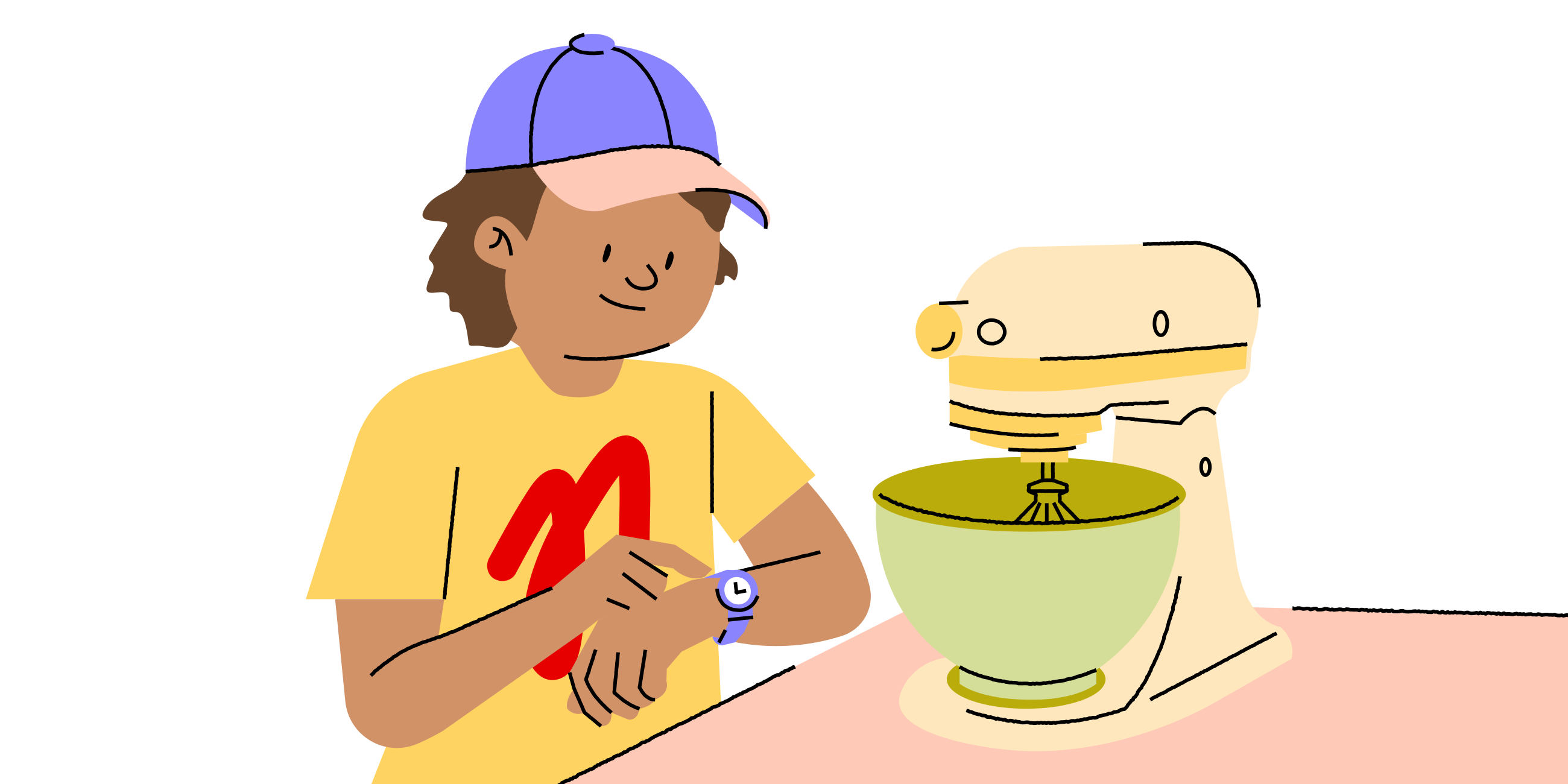
Many everyday situations are suitable for teaching children to be patient, for example when you are in the line at the checkout in a store, waiting for a train on the platform or baking a cake together. It’s important to explain why you have to wait, what will happen during this time and how your child can help fill the waiting time.
Learning to wait and saving can easily be combined in a fun way. Even when saving, children are giving up something specific (money) in the present in order to benefit from it later on. This teaches them in a very practical way that money is a store of value that can be put aside and used at a later date.
A money box and a children’s account go together perfectly: put small amounts of money in the money box together, regularly check the savings progress and then take the money to the bank with your child.
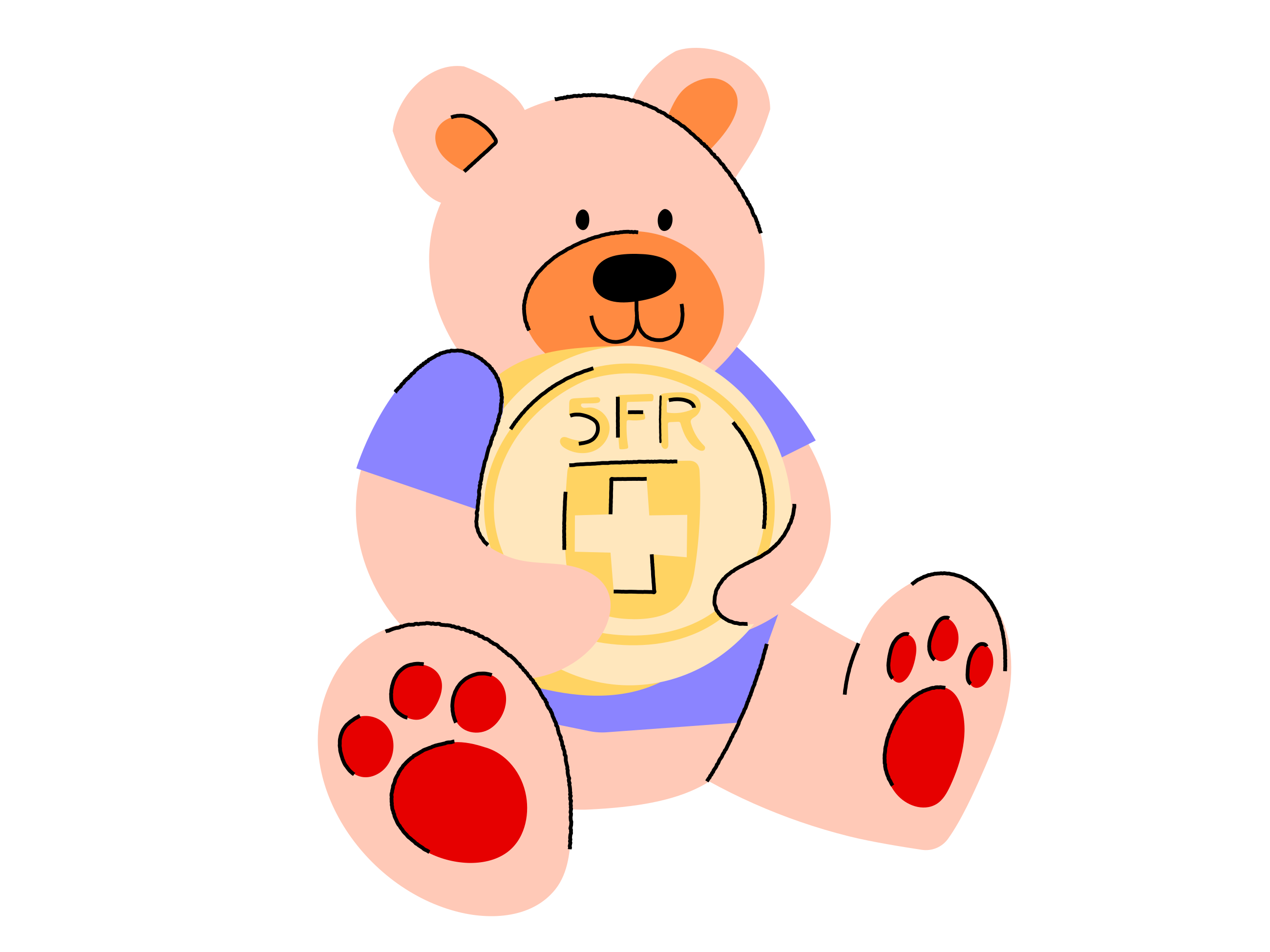
Patience doesn’t always mean rewards, but sometimes also involves accepting that you can’t have something right now.

Make an appointment for a non-binding consultation or if you have any questions, just give us a call.
Disclaimer
This publication is for personal information purposes only within Switzerland and is not to be understood as a recommendation, offer or solicitation of an offer for investment or other specific products and services. It is not intended to form investment, legal or tax advice and should not be used as the basis for financial decisions. Before making a decision, you should obtain professional advice.
All the information and opinions contained in this publication come from reliable and trustworthy sources. Nonetheless, UBS does not accept any contractual or implied liability for any incorrect or incomplete information. The views of non-UBS authors are their own opinions and do not necessarily reflect the views of UBS AG and its affiliates. Complete or partial reproduction without the express consent of UBS is not permitted.
© UBS 1998 - 2026. All rights reserved. The key symbol and UBS are among the registered and unregistered trademarks of UBS.