We’re here for you
Make an appointment for a non-binding consultation or if you have any questions, just give us a call.

header.search.error
In everyday life, you often don’t have enough cash to give your child the right amount of pocket money. So why not simply make a digital bank transfer?
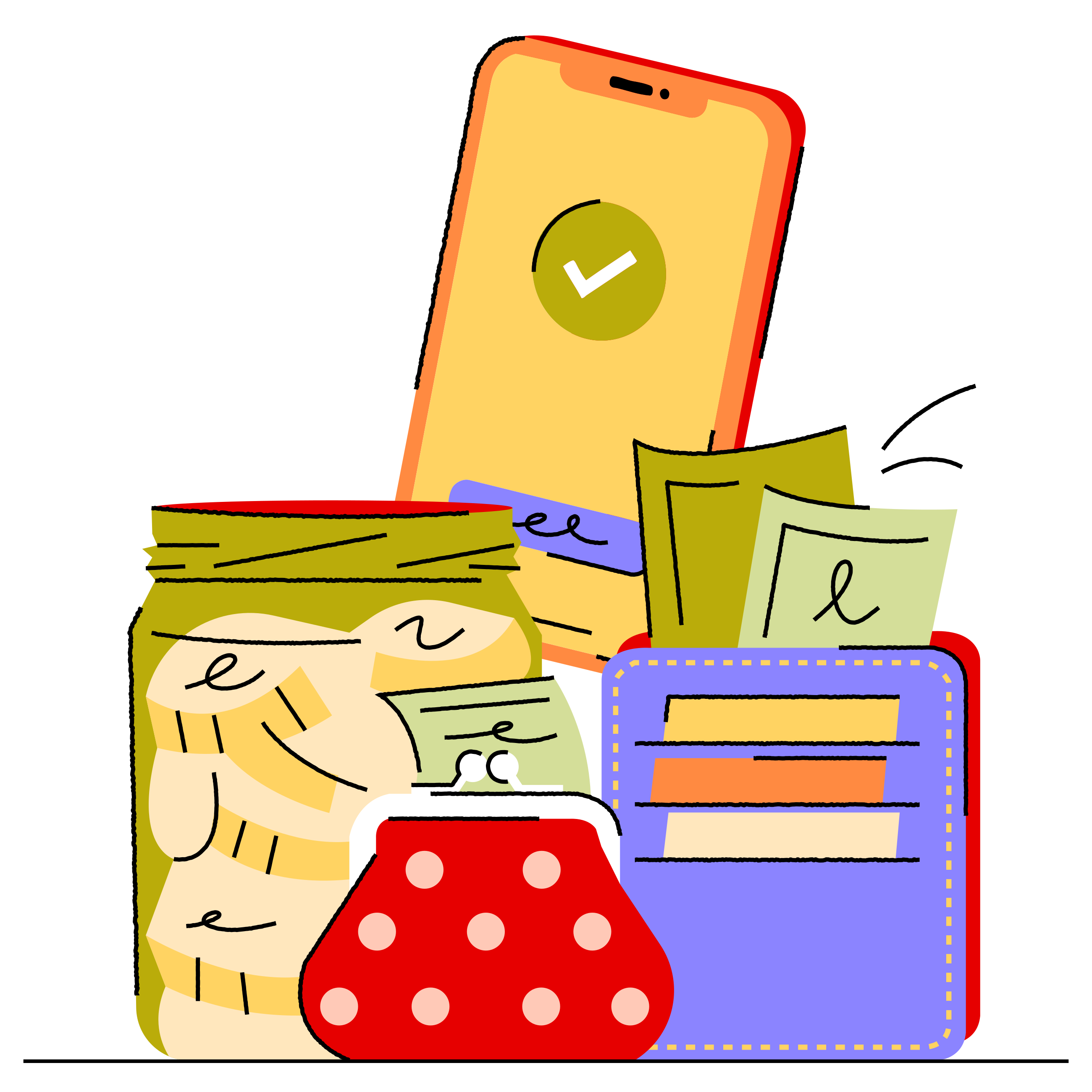
Are fewer and fewer people carrying cash these days? Many wallets no longer even have a coin compartment. However, if you have children, it’s worth having physical money to hand.
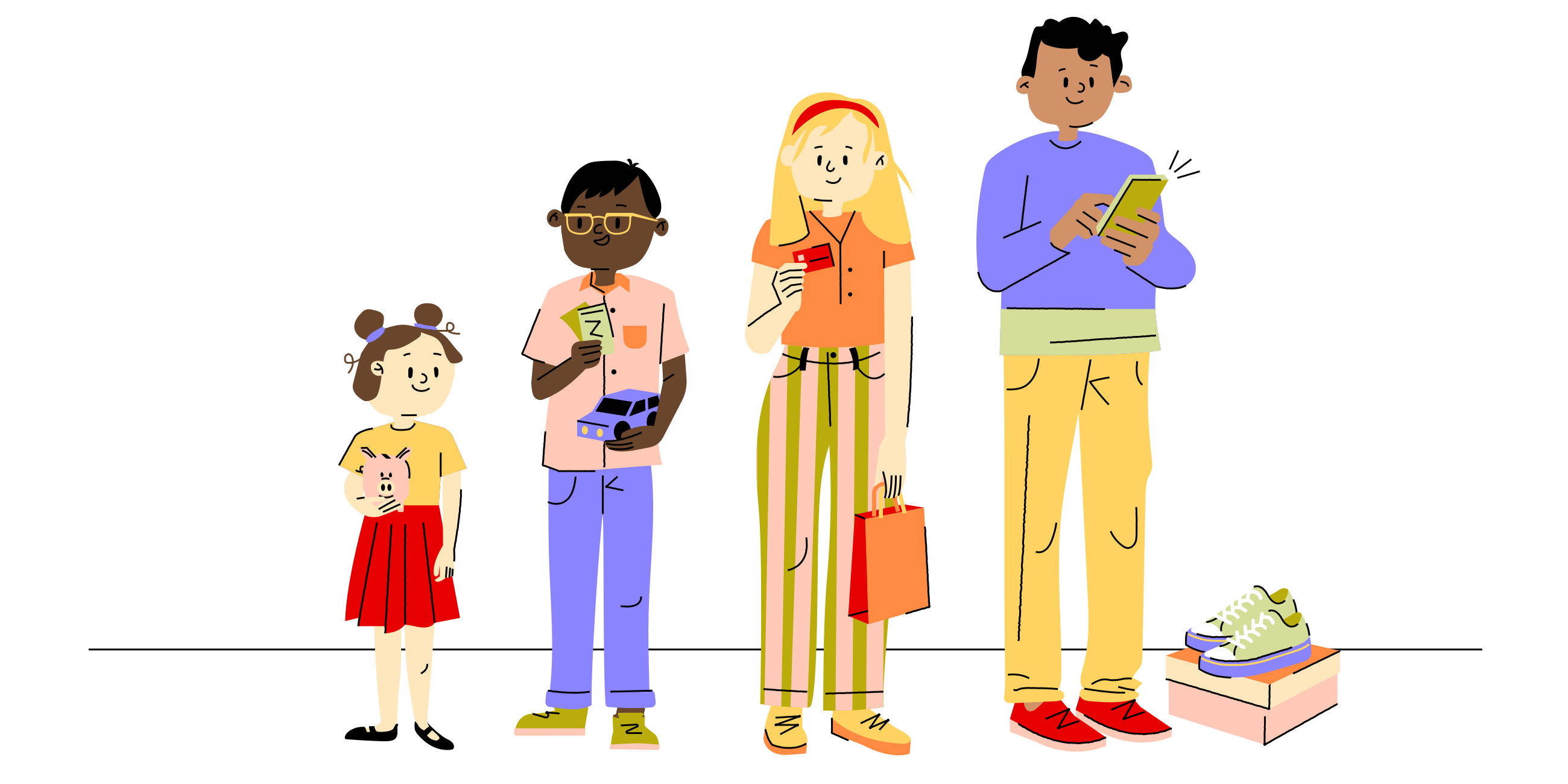
For children, numbers are abstract – only coins and notes make money tangible. You can touch them, look at them and also learn that the money is no longer there once you have bought something with it. In this way, cash helps children to understand the basic functions of money as a means of payment, a store of value and a unit of account.
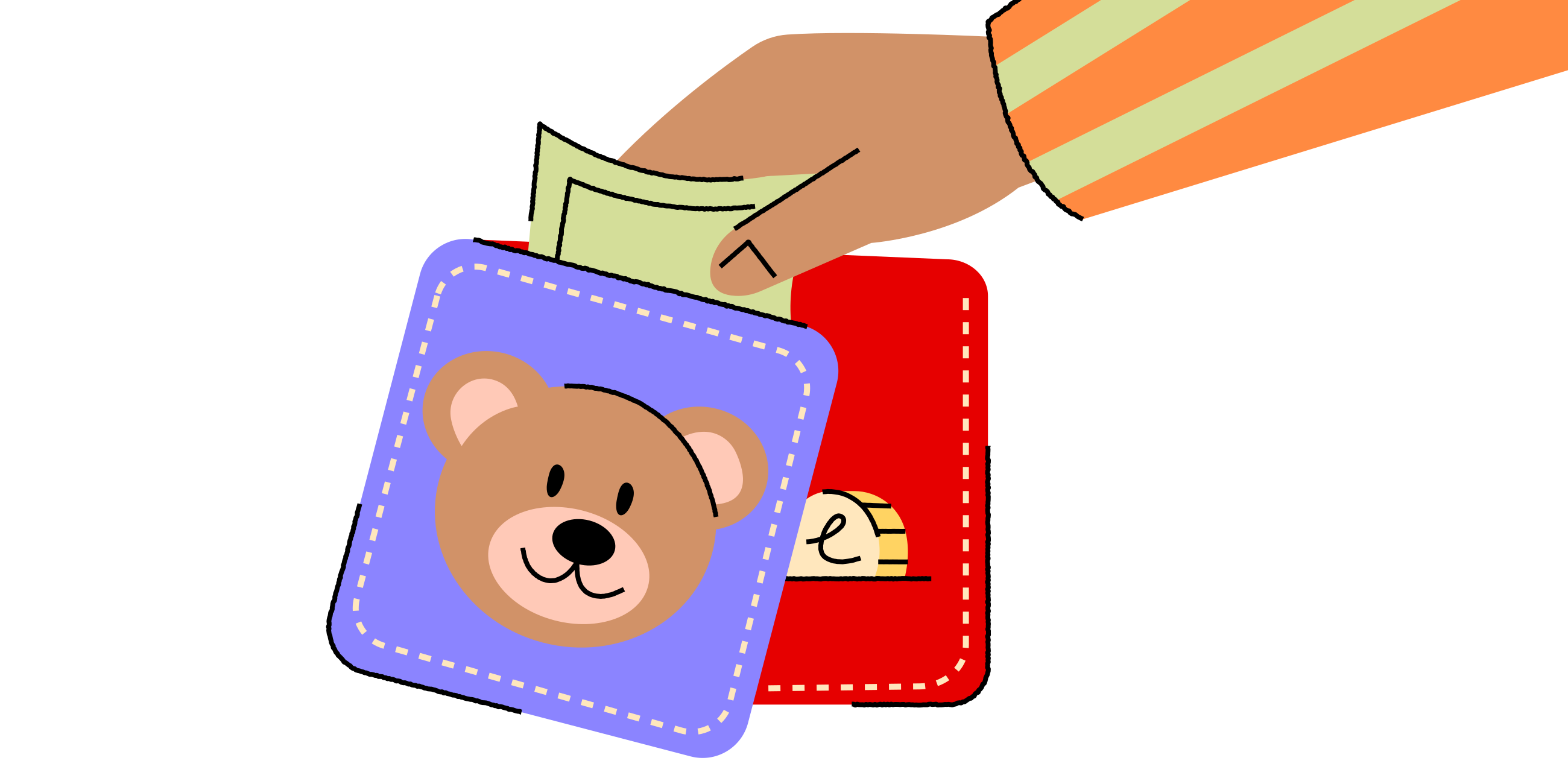
It’s a good idea to use cash to establish a basic understanding of numbers and money before you start giving your child pocket money digitally. A money box is the ideal learning aid. Help your child to count their cash balance and exchange coins for notes if necessary, for example.
Cash is an important learning tool, especially for young children. By touching and counting, they understand what money means.
Parents and guardians can also practice handling money with their child by using cash in everyday life. Try paying with coins and notes from time to time and show your child which note will be needed for a full shopping cart or a visit to the zoo.
But when is the right time to switch from cash to digital money? The most important factor is the maturity of the child. It usually makes sense to introduce digital money gradually between the ages of 12 and 13. At this stage, you can give the child more responsibility for their own budget and transfer the money to their bank account. If the child already understands how to handle cash at a young age, digital money can even be introduced at primary school age (6–11 years) – for example when the child comes into contact with the digital world for the first time. It’s important to educate your child about the risks of digital money.
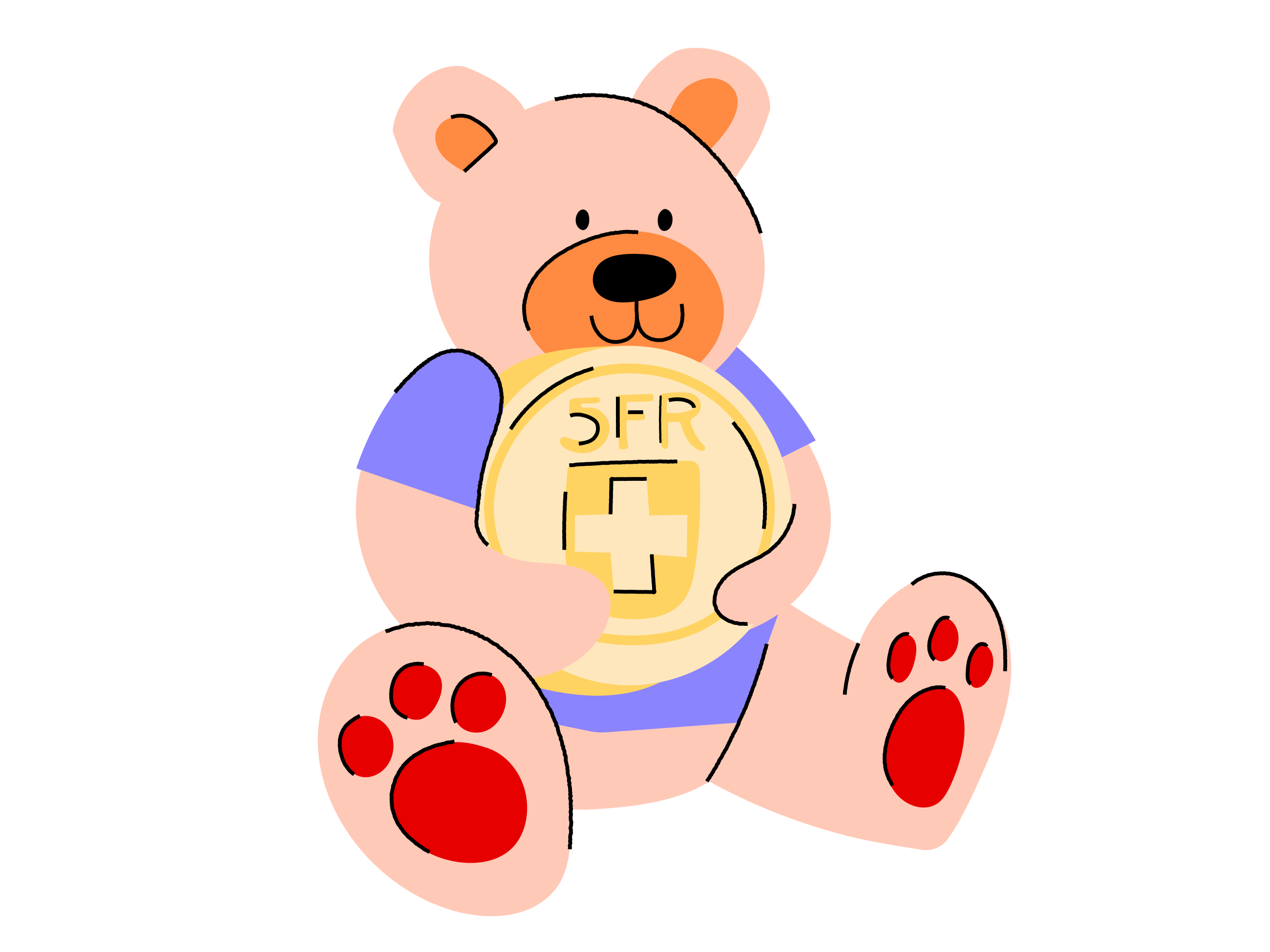
It also makes sense to combine the switch to digital money with the transition from pocket money to a youth wage. As a rule, the monthly amount your child receives increases when you start giving them a youth wage, and it’s worth opening an account with a debit card for them. At this point, you as parents can set up a standing order for the corresponding amount.
Don’t forget that even with digital pocket money, it’s important that your child can calculate and plan what they want to do with the money. You should therefore pay the amount regularly on the agreed date and avoid last-minute reductions or additional payments.
Even if you no longer pay pocket money in cash, close supervision remains important. The switch to digital money is a big change. Take the first steps with your child and make time for questions.
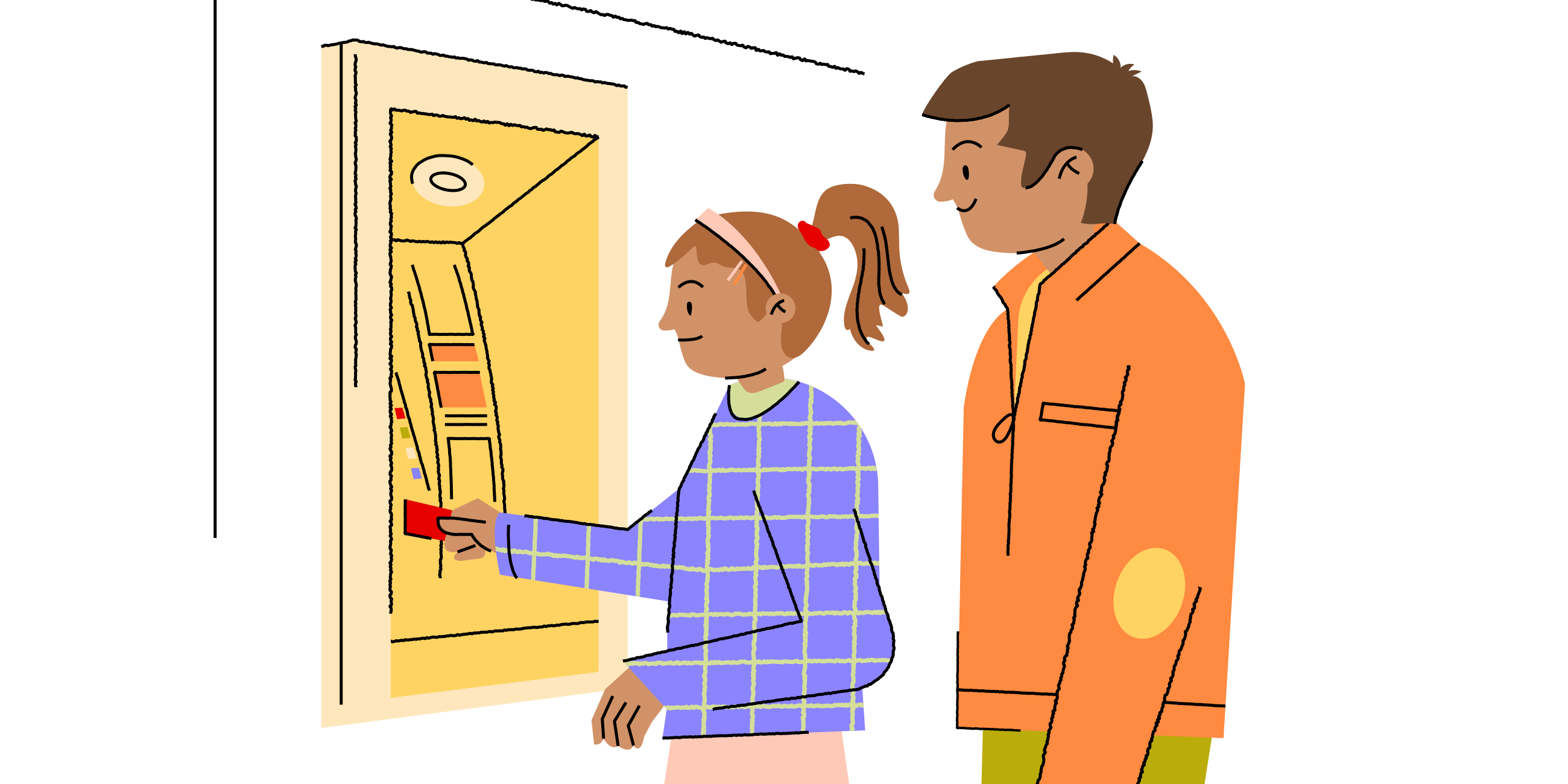
How to help your child make the transition:
The changeover works better when children see the money disappearing from their money box and reappearing in their account as a figure.
It’s quite possible that something will go wrong in the first month. The child will make mistakes, for example by spending their money too quickly. That is also perfectly fine. It is important that you as parents or guardians allow your child to make these mistakes and use them as a learning opportunity.
Talk to your child and ask what went wrong. You should also talk about your own experiences and mistakes – this can strengthen your relationship with the child. However, avoid making extra payments, even if it hurts your child and perhaps you too at the time. In the long term, your child will learn more if they suffer the consequences of overspending.
Do you have the impression that your child has lost track of their spending? Then take a step back together – for example by transferring some of their pocket money or youth wage to their bank account and paying some in cash. For example, the child could continue to receive the portion intended for clothes and shoes in their account, while receiving the amount that corresponds to magazines, leisure activities or personal care products in cash.
Your child can also leave their bank card at home and regularly withdraw a fixed amount to make planned purchases. If this works well for a few months, they can start using their bank card for payments again.
It’s important not to monitor your child day and night. Instead, guide them along the path to independence. Ask your child for their own suggestions for solutions. Perhaps you can find a more suitable option together.

Make an appointment for a non-binding consultation or if you have any questions, just give us a call.
Disclaimer
This publication is for personal information purposes only within Switzerland and is not to be understood as a recommendation, offer or solicitation of an offer for investment or other specific products and services. It is not intended to form investment, legal or tax advice and should not be used as the basis for financial decisions. Before making a decision, you should obtain professional advice.
All the information and opinions contained in this publication come from reliable and trustworthy sources. Nonetheless, UBS does not accept any contractual or implied liability for any incorrect or incomplete information. The views of non-UBS authors are their own opinions and do not necessarily reflect the views of UBS AG and its affiliates. Complete or partial reproduction without the express consent of UBS is not permitted.
© UBS 1998 - 2026. All rights reserved. The key symbol and UBS are among the registered and unregistered trademarks of UBS.