
We’re here for you
Make an appointment for a non-binding consultation or if you have any questions, just give us a call.

header.search.error
What does it mean if the family income is not enough to cover the rent, food or vacations? Children notice from an early age that some families are worse off than others. How can you talk openly about money and values?
At daycare, playgroup or no later than kindergarten, children from very different families and circumstances come together. Some children have siblings, others do not. One classmate lives with only one parent, another also with their grandparents. And some families have more money than others. This raises many questions for children.
It is a great opportunity for them to learn about poverty. Conversations about social inequality allow you to pass on important values to your child.
Even small children notice social differences. They compare other families with their own, as this is what they know best. The differences can be noticeable in all kinds of situations. When a child is always talking about new toys or exclusive summer vacations, a classmate only receives one or two gifts on their birthday, or a child is wearing worn-out hiking boots on a school trip.
In addition, small children are more open about money. This could result in your child casually explaining at the dinner table that one of their playmates is poor, while their best friend is “mega rich”. In these situations, ask why your child thinks that way – usually children have noticed something and drawn their own conclusions. It’s both healthy and important to discuss this with them.
Poverty in Switzerland is not always immediately apparent and is often hidden. However, there are situations in which you and your child may be confronted with it. For example, if someone asks you for money in front of a store or you encounter a homeless person. For many children, such encounters are confusing because they have never come across them before. It’s therefore important to explain that poverty comes in many different forms.

Children often ask questions that are difficult for parents and guardians to answer: “Why is this woman asking for money? Why is this man sleeping on the street?” In most cases, you don’t know the answer yourself – but it’s clear that the person is short of money. Don’t speculate about the specific reasons why they are in this situation.
It’s very important not to avoid the topic of poverty. Instead, you should have an open conversation with your child if they ask about it. Explain that other people’s circumstances and families can be very different, with different needs.
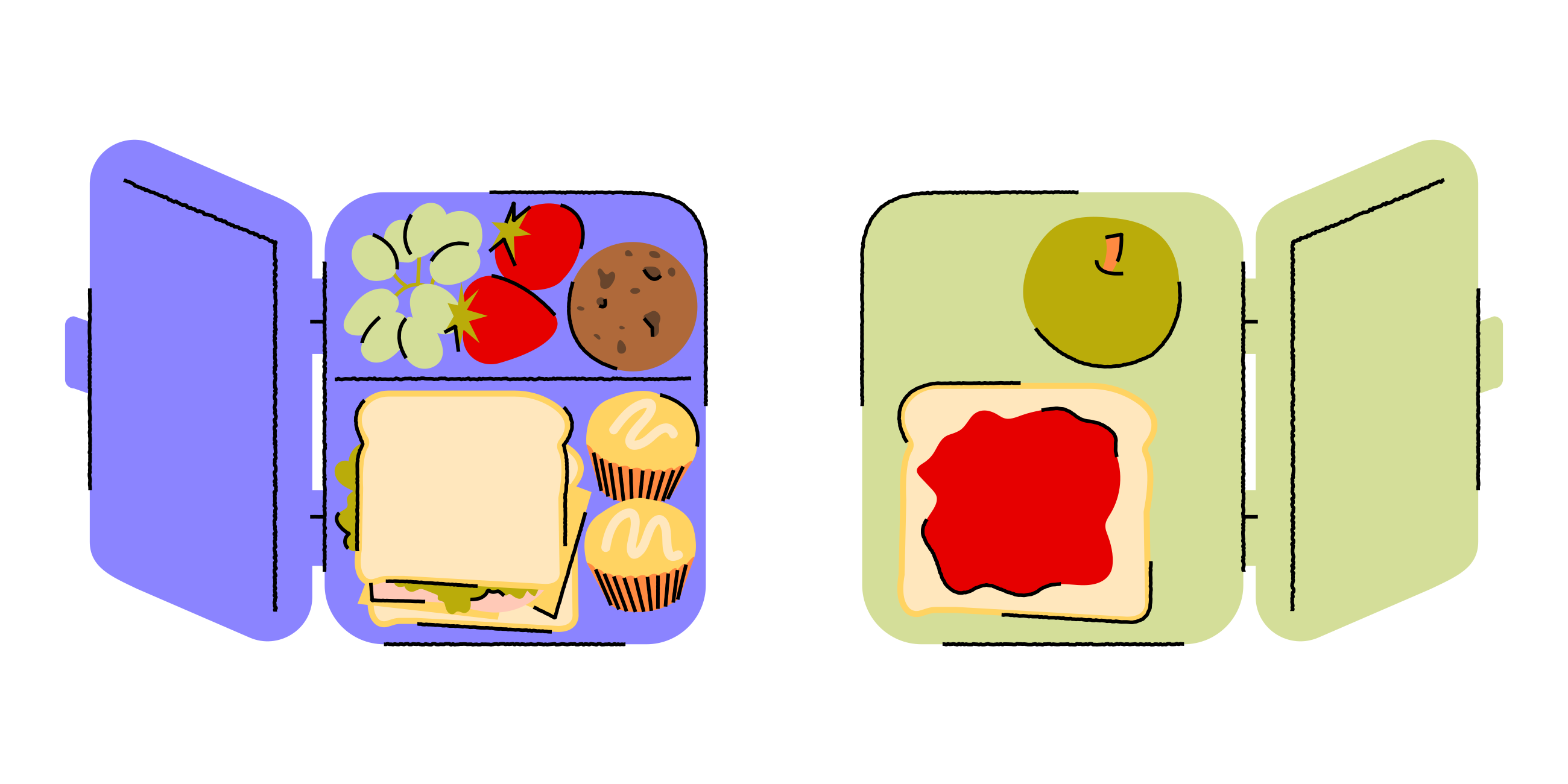
Make it clear to your child that not everyone has the same amount of money for major purchases. Use everyday examples to illustrate this, for example the price of a new bicycle compared to a used one. In the end, both bikes serve the same purpose, but depending on their budget, one family might only be able or willing to afford a used bike, while another can buy a new one without a second thought. Be honest about your own situation too. Helpful visualizations or explanatory videos [video in German] can make these discussions easier for children to understand.
The word ‘rich’ is often used in connection with material things. It’s important to show children that one can be rich in other ways, for example time spent with loved ones or good health.
Actively involve your child in the conversation and ask them what image they have of rich and poor. For example, you could ask:
For many of these questions, there is no right or wrong answer. But it is important to talk about them. Questions about financial inequalities will probably keep coming up, and that’s a good thing – it means your child is actively observing the world around them.
Children need to learn empathy – especially if they have no first-hand experience of difficult circumstances. Work with them to develop their awareness of others in everyday life. Encourage them not to judge prematurely and not to make assumptions about the reasons for others’ situations. It’s helpful to observe and name feelings together. Take your child’s emotions seriously and help them to understand and find the right words for them. This way, they’ll learn to better understand their own feelings and more easily empathize with others.
Self-efficacy means a child understands that their actions make a difference. Everyday spending is a good starting point. Go through your shopping list together and discuss which things are essential and which are merely “nice to have” as a treat or simply because you want them. This helps children to understand that we are always making decisions when we spend money and that it’s important to distinguish between needs and wants. Show your child that you don’t necessarily need money to have a great time. For example, instead of a big birthday party at the circus with a meal afterwards, you could celebrate with just a few friends by doing crafts or going sledding together.
To further strengthen self-efficacy, you could also make a donation box, for example. Look for a purpose or organization that you and your child would like to support, and agree that a small part of their pocket money will go into the donation box.
Make an appointment for a non-binding consultation or if you have any questions, just give us a call.
Disclaimer
This publication is for personal information purposes only within Switzerland and is not to be understood as a recommendation, offer or solicitation of an offer for investment or other specific products and services. It is not intended to form investment, legal or tax advice and should not be used as the basis for financial decisions. Before making a decision, you should obtain professional advice.
All the information and opinions contained in this publication come from reliable and trustworthy sources. Nonetheless, UBS does not accept any contractual or implied liability for any incorrect or incomplete information. The views of non-UBS authors are their own opinions and do not necessarily reflect the views of UBS AG and its affiliates. Complete or partial reproduction without the express consent of UBS is not permitted.
© UBS 1998 - 2026. All rights reserved. The key symbol and UBS are among the registered and unregistered trademarks of UBS.