We’re here for you
Make an appointment for a non-binding consultation or if you have any questions, just give us a call.

header.search.error
How grandparents, parents and godparents can invest financial gifts for childrenwisely – for today and tomorrow.

At a child’s birthday party, the child’s godfather makes a point of stressing that the 200-franc note he is giving the child as a gift is brand new and has never been in circulation before. But your five-year-old daughter probably doesn’t care – if she had her way, she would use the note as a coloring pad.
To ensure that children really benefit from gifts of money and learn something at the same time, parents should actively discuss the gift with them and make decisions together. When saving for a child, it’s also important to involve your child early on and explain things in simple terms. Studies show that over 60% of parents start saving in the first year of their child’s life.
Even in the first few years of their lives, children are not too young to learn how to handle money. The knowledge simply needs to be passed on in a way that is appropriate for their age.
Just like with other gifts, there is no general rule for the amount of money to give a child – it is entirely up to the person offering it. And whether it’s grandma, grandpa or an aunt, they should consider in advance whether the child can actually do something with the money and will understand its value – or whether they would enjoy a physical gift or time spent together more. The following points can be used as a guide:
Preschool to primary school, lower level (1–8 years): At this age, a physical gift or a shared experience is often more suitable for the child – e.g. going out somewhere with their godparent or choosing a toy in the store with their grandparents. Additional deposits, for example directly into a gift savings account, are also possible.
Putting CHF 500 in an envelope for a small child is pointless. It makes more sense to invest the money on behalf of the child and to make it available later for a specific savings goal.
From primary school, middle level (9–11 years): It’s best to give children in primary school money for a specific purpose – this helps them to develop an understanding of savings goals. This is most effective when the money is earmarked for a specific purchase, for example new sneakers or a skateboard.
From secondary school I (12+): At this age, larger amounts can be given to the child for them to make full use of. Ideally, you should still come to a clear agreement about what the money is for so that the child takes responsibility and learns to set priorities.

Money that children receive as a gift is part of the child’s assets. Legally, therefore, it belongs to the child – but it is managed by the parents or legal guardians until the child reaches the age of 18. But what should you do with it exactly? And where is it best to keep the money – in a money box, in an account or in an investment account?
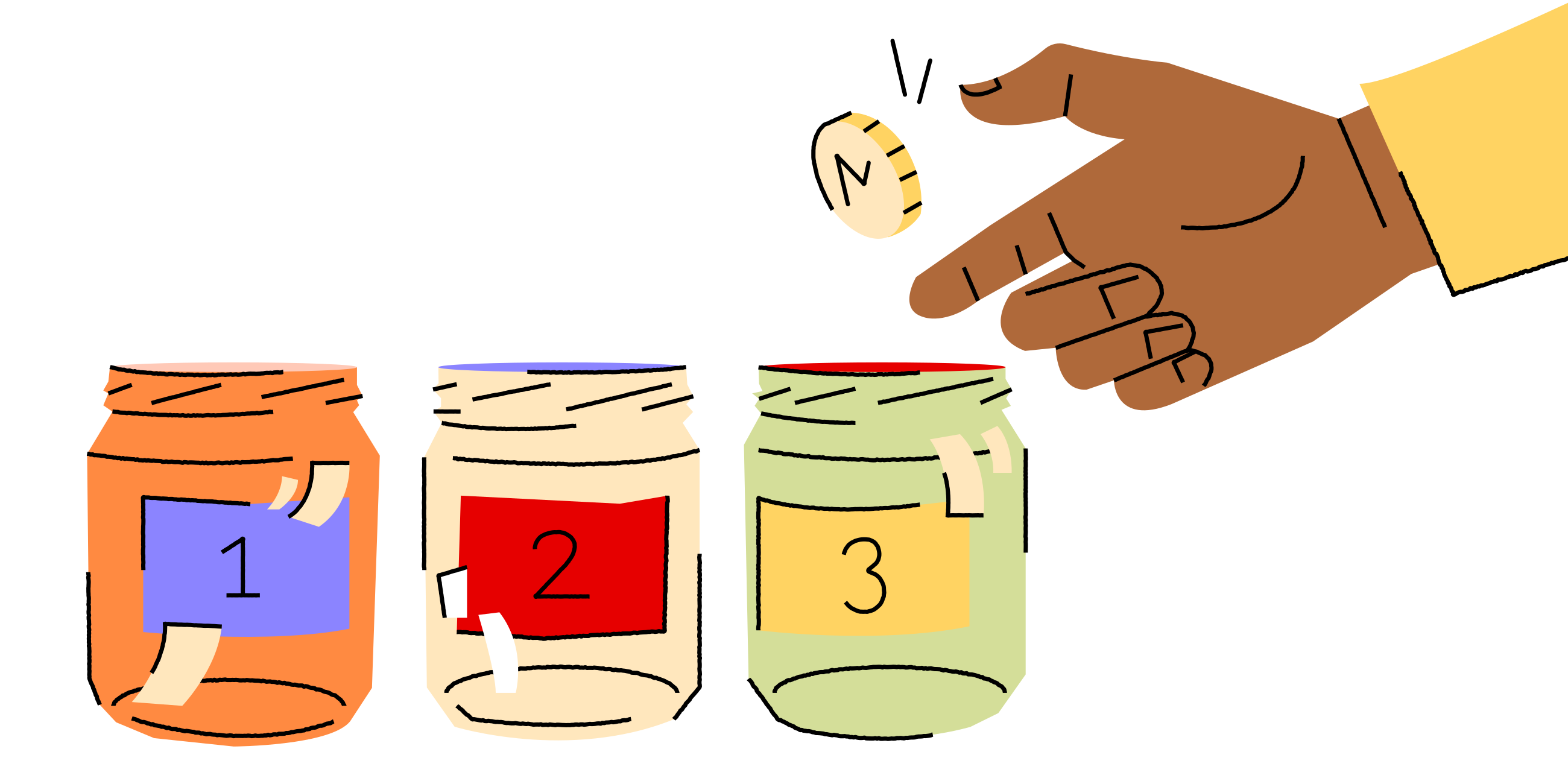
A money box is the easiest way for a child to start saving and can be a valuable learning tool, especially for younger children. It makes saving visible and tangible. Children experience for themselves how the amount changes: if they put coins in, their savings increase – if they take coins out, the amount decreases. This introduces a playful approach to money at an early age.
Some families even use several money boxes – one for spending, one for saving and one for long-term investing.
A gift savings account is an extension of the first step with the money box. It can be opened from birth and is usually in the child’s own name. However, the gift savings account is managed by the parents or the person opening the account until it is transferred to the child.
From the time they start school, children can be present when the money is paid in and learn what happens to it. It’s important that you explain to the child that the money has not “gone”, but is simply being kept safely at the bank. The account can also be easily combined with an introduction to digital finance: if the child has a smartphone, you can use the app to show them how the money in the savings account is growing.
Depending on the bank, gift savings accounts are available with preferential interest rates and little extras. There are often no account management fees. It may also be possible to open an investment fund account in the child’s name – instead of interest, you will get more or fewer fund units depending on the price. This opens up opportunities for returns, but is associated with price fluctuations.
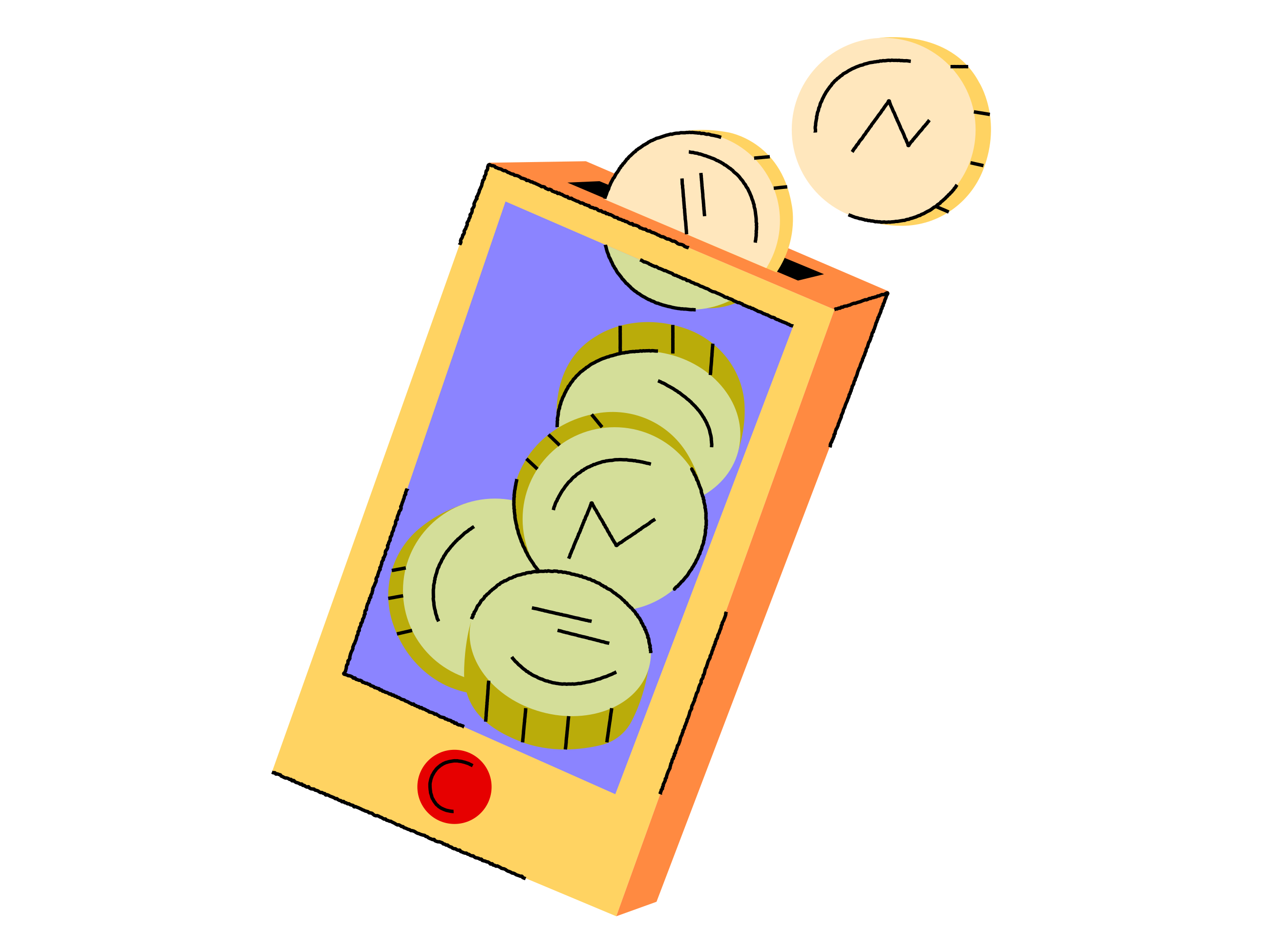
Savings plans allow you to invest money for your child regularly and automatically – starting from small amounts such as CHF 50 per month. You can choose between actively managed investment funds, which are looked after by experts and are broadly diversified, and ETFs (exchange-traded index funds), which are cost-effective, transparent, and again, broadly diversified. Both options help to build wealth in the long term.
Important: Yields are market-dependent. ETFs and investment funds fluctuate in value, which is why a long-term investment horizon is important.
Involve children at an early stage to give them a practical understanding of investing, and explain concepts such as potential returns, risk, fluctuations and the compound interest effect. A good time to start is when children begin using digital devices. Then you can explain directly how digital money works and protect them from unrealistic promises, for example from social media, by providing sufficient information.
| Form of investment | Horizon | Risk | Return opportunities | Flexibility | Cost | Suitability |
|---|---|---|---|---|---|---|
Money box | Very short-term (0–2 years) | Very low | No returns | Very high (cash) | None | Small children, consumer desires, initial experiences with money |
Savings account | Short to medium term (2–4 years) | Very low | Preferential interest on gift savings accounts | High (withdrawal at any time) | None for gift savings accounts | Smaller savings goals, desire for security |
Savings plan (ETF or investment fund) | Medium to long term (>4 years) | Medium to high | Medium to high potential returns | Medium (early withdrawal possible, but not ideal) | Low to medium (TER, potential issuing surcharge), low for investment fund accounts with regular deposits | Education, major purchases |
If you invest regularly over the years and reinvest the interest earned, you can benefit from the compound interest effect. In other words, further interest will be added to the interest as you earn it – so the assets will continue to grow. The higher the interest rate, the more the balance grows via compound interest. This may well be worthwhile over a long investment horizon, for instance until the child comes of age.
What is more, by making regular deposits, you will invest at different rates. Over time, this creates an average entry price that can cushion individual purchases “at the wrong time”. This reduces your risk and supports long-term wealth accumulation – even with small amounts.
The type of financial gift or investment that is right for the child depends on the savings horizon and the purpose of the money: should the money be used at a later date – for the child’s education, a language course or the first big item on their wish list? Then an account or a form of investment such as a savings plan is a good choice. If the money is for something the child is hoping to get quite soon, such as a toy or a bike, it can remain in the child’s money box.
Specify the purpose of the money – for example as a fund for future training or an apprenticeship. This will preserve the idea behind the gift. In UBS E-Banking and Mobile Banking, you can even give each savings goal a name (e.g. “Study 2043”).
Then you can decide whether you want to pay in a one-off amount or make regular contributions to the child’s savings.
When saving for a child, you should also consider the total costs of any investments. The question of risk is just as important. The risks are low for cash in a money box or a savings account, where the main factor is inflation, which reduces the value of the balance over time. It’s different for savings plans: key risks include possible price fluctuations and, when making global investments, currency risk.
In Switzerland, accounts or custody accounts are usually opened in the name of the child, even if the payments are made by the legal guardians, grandparents or godparents.
If you opt for an investment fund or ETF savings plan and the markets fluctuate in the short term, stay calm: don’t sell when prices are low, continue with the plan and only adjust it if goals or life circumstances change. This keeps the strategy stable and increases the chances of long-term success.
You also need to think early on about how to hand over the account to the child. The account will legally be transferred to them when they reach the age of 18. Discuss the objectives, costs and risks involved early on and decide whether the plan should be continued or adapted. This turns the gift into a real step toward financial independence.
Parents shouldn’t wait until a week before their child’s 18th birthday to start talking to them about money. Financial education is a development process that begins years in advance.
Make an appointment for a non-binding consultation or if you have any questions, just give us a call.
Disclaimer
This publication is for personal information purposes only within Switzerland and is not to be understood as a recommendation, offer or solicitation of an offer for investment or other specific products and services. It is not intended to form investment, legal or tax advice and should not be used as the basis for financial decisions. Before making a decision, you should obtain professional advice.
All the information and opinions contained in this publication come from reliable and trustworthy sources. Nonetheless, UBS does not accept any contractual or implied liability for any incorrect or incomplete information. The views of non-UBS authors are their own opinions and do not necessarily reflect the views of UBS AG and its affiliates. Complete or partial reproduction without the express consent of UBS is not permitted.
© UBS 1998 - 2026. All rights reserved. The key symbol and UBS are among the registered and unregistered trademarks of UBS.