We’re here for you
Make an appointment for a non-binding consultation or if you have any questions, just give us a call.

header.search.error
Mountains of building blocks – the mess in your child’s room is getting out of hand. Children rarely feel like tidying toys away. Our tips make it easier to get started and promote financial literacy at the same time.

Are there piles of sweaters of every imaginable color in your bedroom, and a tower of Tupperware boxes getting higher and higher in the kitchen? It’s not the ideal time to ask your child to clear out their room. So set a good example – or even better, make decluttering a joint event where each family member is responsible for their own room. That way, you get a tidier, more organized home, and your child won’t feel like they have to clear up on their own. Instead, they will be participating in a valuable family activity.
Young children need even more help: start off by sorting out their toys together. Older children can sort things out on their own. It’s also worth taking a look at the clothes in their closet.
In addition, clearing out your child’s room can be a good way of addressing consumer issues and drawing attention to the value of objects. Ask them: “How did you end up with this toy? Do you still play with it, and if so, how often? Would somebody else be happy to have it?” This will also lead the conversation on to what to do with each item.

Sorting works best when it becomes a routine. And as with all routines, regular small steps are more useful than one big one. So instead of spending an entire weekend once a year clearing everything out, it’s better to focus on one category every few weeks or months, for example when the seasons change.
This regularity will help your child to understand the importance of decluttering. It will also prevent your child from being overwhelmed by hours of tidying. Instead, they can sort out their toys and clothes in smaller steps.
Once it’s done, you can round off the “clear-out day” in a fun way together, for example with a games evening or your child’s favorite meal. This way, the routine remains a positive memory.
The three-box method can help your child decide what to keep or discard. First, collect up everything you want to sort out. Then go through the individual items with your child:
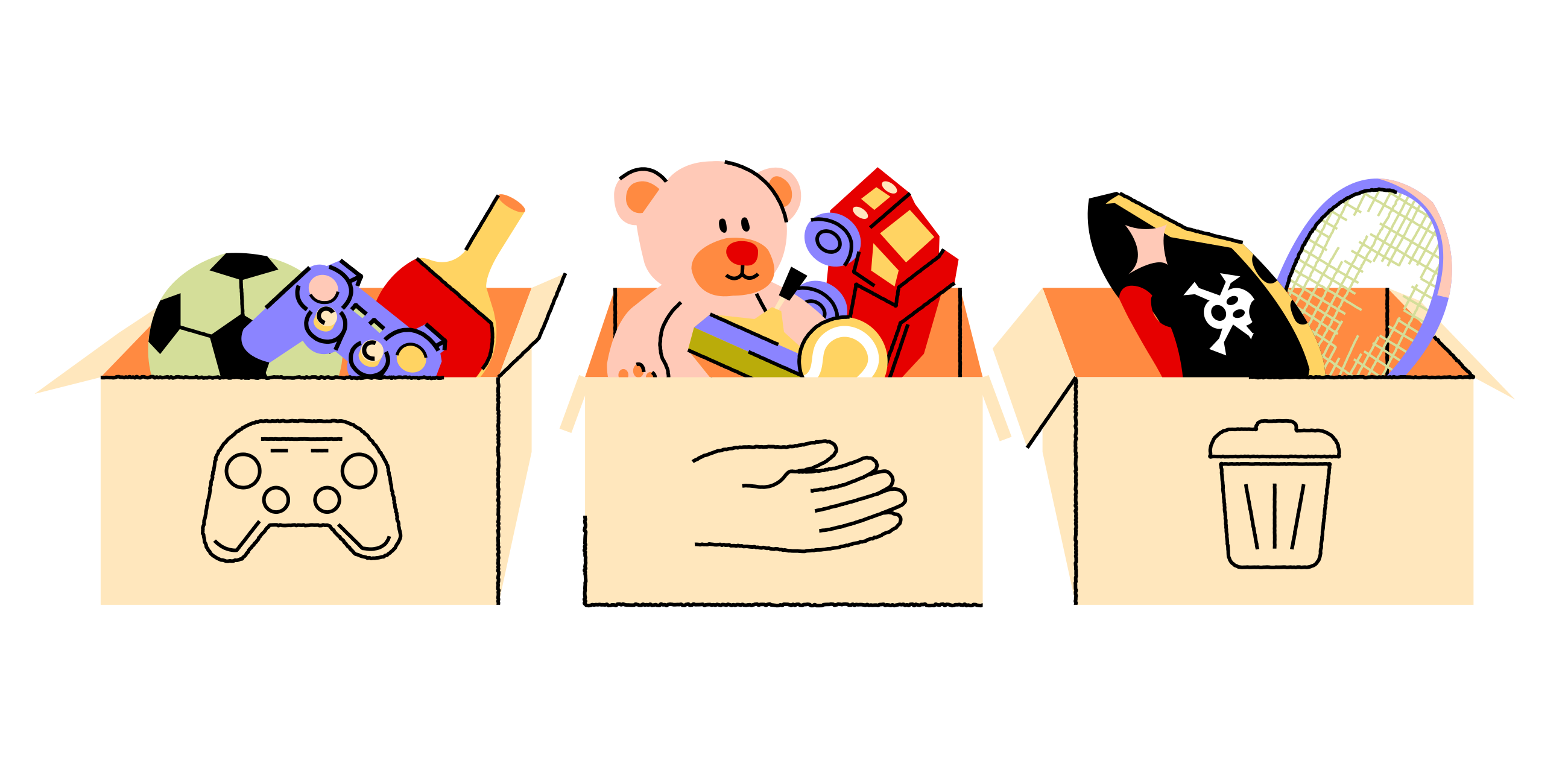
Has everything been checked and sorted? Now it’s time to decide what to do with the items in the “pass on” box. Discuss the different options with your child:
Swapping or selling things is a great learning experience and strengthens your child’s financial literacy.
Whether you decide to give items away or sell them, both help children to understand that things still have value.
If there are items you want to sell, calculate together how much they originally cost and what they are still worth today. This is a valuable experience for children: they learn why it’s important to take care of things. What’s more, it gives them a direct insight into the function of money as a means of exchange.
You should also discuss what should happen with the money if you manage to sell their belongings: Should it go into a family fund or into the child’s money box? Will the amounts for shared toys be divided between siblings?
Important: Take the concept of ownership seriously. If a toy belongs to the child, the proceeds from the sale should also go to the child. If you can’t or don’t want to give the money to the child on a one-to-one basis, explain clearly how the sale will benefit them, for example because you will be able to buy them new clothes.
If children sell something, they should receive the proceeds or a clear equivalent value – otherwise the educational learning effect is lost.
Clearing out together is a good opportunity to reflect on consumer behavior. Discuss how many building blocks, puzzles and pairs of indoor shoes your child really needs, and whether everything always has to be brand new. But then also offer good alternatives: many things can be borrowed temporarily, for example from family or friends or from the library or toy library. You could also see which items could be bought secondhand.
Decluttering also gives your child more space in their room. Children are often overwhelmed when they have too many toys to choose from. To reduce the number a little, you could introduce a “one in, one out” rule: if your child wants something new, they have to get rid of something else first. Or you could put certain toys away temporarily, for instance by storing the wooden train set in a cupboard over the summer. This way, your child will appreciate the toy even more when it comes back.

Make an appointment for a non-binding consultation or if you have any questions, just give us a call.
Disclaimer
This publication is for personal information purposes only within Switzerland and is not to be understood as a recommendation, offer or solicitation of an offer for investment or other specific products and services. It is not intended to form investment, legal or tax advice and should not be used as the basis for financial decisions. Before making a decision, you should obtain professional advice.
All the information and opinions contained in this publication come from reliable and trustworthy sources. Nonetheless, UBS does not accept any contractual or implied liability for any incorrect or incomplete information. The views of non-UBS authors are their own opinions and do not necessarily reflect the views of UBS AG and its affiliates. Complete or partial reproduction without the express consent of UBS is not permitted.
© UBS 1998 - 2026. All rights reserved. The key symbol and UBS are among the registered and unregistered trademarks of UBS.