


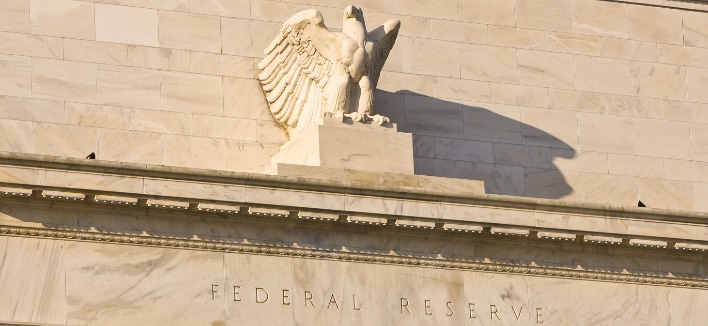
The Fed is likely to hold rates steady in the near term.
- The Federal Reserve left interest rates unchanged at 3.50-3.75% in March, with Chair Jerome Powell stressing that officials would need to see more progress in moderating inflation in the US to ease further.
- The US central bank also raised its inflation and GDP growth projections for 2026.
- Powell added that it was too soon to know the scope and duration of the Iran war's potential effects on the economy.
But we think the Fed’s policy easing bias remains intact.
- We expect slowing core goods inflation in the US in 2H26, while growth is likely to decrease to a near-trend pace amid higher oil prices.
- While the US's March jobs report beat headline expectations on favorable weather and temporary factors, we believe growing signs of labor market vulnerability will open the door to further Fed easing in the fourth quarter.
Lower interest rates strengthen the case for investors to put excess cash to work.
- Investors should consider phasing excess liquidity into diversified portfolios.
- To achieve alternative sources of portfolio income to cash, we identify short- to medium-maturity quality bonds and equity income strategies as appealing.
New this week
The Senate Banking Committee will hear this week from Kevin Warsh, President Trump's nominee to replace Jerome Powell as chair of the Federal Reserve. Warsh has previously argued that a combination of deregrulation and the spread of AI will generate disinflationary forces, permitting lower rates from the Fed. However, he has also argued for a shrinking of the Fed's balance sheet.
Did you know?
- Analysis by the Dallas Fed shows that the incremental price pressure due to rises in energy prices tends to fade quickly after a few months, with core inflation little changed.
- We think bond markets are currently too focused on the short-term inflationary impact of higher energy prices, and not enough on the potential medium-term negative growth impact, which could drive interest rate cuts, nor on the potential for de-escalation.
- Cash tends to underperform other assets over time: Stocks have outperformed cash in 86% of all 10-year periods and 100% of all 20-year periods since 1926.
Investment view
Lower interest rates reduce potential returns on cash. Investors can consider phasing excess liquidity into diversified portfolios. We also like short- and mediium-maturity quality bonds, which can offer a more durable source of income.
