
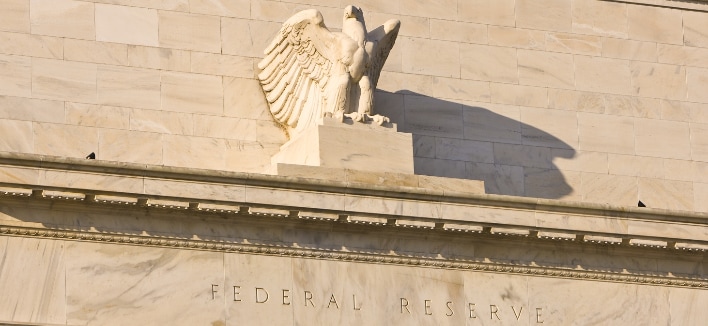
The Fed is likely to hold rates steady until June.
- The Fed held rates steady in January after three consecutive reductions last year, upgraded its GDP growth assessment, and highlighted signs of stabilization in the labor market.
- January's labor report was stronger than expected, with the unemployment rate edging lower to 4.3%.
- Many FOMC participants remain uncomfortable looking past tariff-related inflation pressures in the near term, making it difficult to form a consensus on further rate cuts.
But we believe the Fed has scope to ease by another 50 basis points this year.
- The Fed's guidance signals an inclination to continue lowering rates toward 3%.
- By mid-2026, the path for rate cuts should become easier as 2H GDP growth slows and goods inflation eases. We expect the next rate cut to be in June, followed by a second in September, bringing the policy rate range to 3.00-3.25%.
- A more dovish personnel profile at the Fed Board later this year should support rate cuts.
Lower interest rates strengthen the case for investors to put cash to work.
- Investors should consider phasing excess liquidity into diversified portfolios.
- To achieve alternative sources of portfolio income to cash, we see medium-duration quality bonds and equity income strategies as appealing.
- We also expect lower interest rates and robust corporate earnings to support further gains for equity markets.
New this week
Prices paid to US producers rose in January by more than forecast, with the producer price index rising 0.5% month over month, the most since September. On an annual basis, US producer price inflation eased to 2.9% in January, down from 3% in December 2025.
Did you know?
- Former Fed Governor Warsh's recent comments suggest a preference for lower rate policy. He has said he favors looking through tariff inflation and thinks current productivity trends will be disinflationary. These comments are consistent with our view that the easing cycle is intact.
- Moreover, the seven permanent FOMC board voters, both current and prospective, tend to be moderately more dovish than the median forecast and generally view neutral as closer to 3% or below.
- Cash tends to underperform other assets over time: Stocks have outperformed cash in 86% of all 10-year periods and 100% of all 20-year periods since 1926.
Investment view
Lower interest rates reduce potential returns on cash. We therefore recommend that investors consider phasing excess liquidity into diversified portfolios. We also like quality bonds, which can offer a more durable source of income. Investors under-allocated to equities should consider adding to stocks in our preferred areas.
