


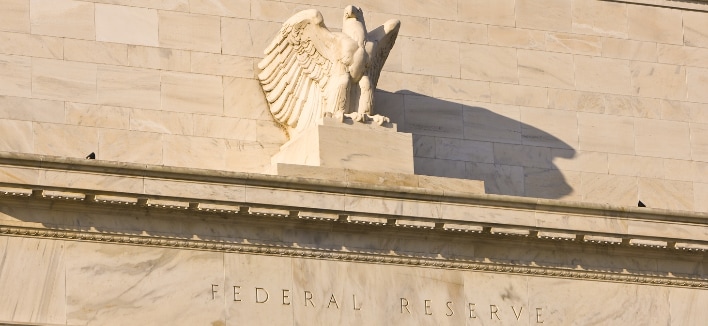
The Fed cut rates again in December.
- The Fed cut policy rates by 25 basis points in December, its third consecutive reduction.
- However, the accompanying statement, press conference, and meeting minutes have clouded the outlook for future rate cuts.
- Given the divisions within the FOMC, the Fed’s updated “dot plot” showed a wide dispersion of views, with no clear consensus on the path for rates in 2026. The median dot shows one rate cut in 2026.
We believe the Fed has scope to continue easing this quarter.
- Our base case is that we will get a final, 25-basis-point rate cut for the cycle by the end of the first quarter.
- US labor market conditions remain soft. The unemployment rate rose to 4.6% in November.
- US inflation is likely to peak in the second quarter, in our view, before stabilizing toward the Fed’s 2% target.
Lower interest rates strengthen the case for investors to put cash to work.
- We recommend that investors phase excess liquidity into diversified portfolios.
- To achieve alternative sources of portfolio income to cash, we see medium-duration quality bonds and equity income strategies as appealing.
- We also expect lower interest rates, robust corporate earnings, and AI tailwinds to support further gains for equity markets over the coming year.
New this week
The economic calendar was relatively empty between Christmas and the end of the year. The only release of note was the minutes of the Fed’s last policy meeting, which concluded with the third 25-basis-point cut of the year on 10 December. The minutes continued to highlight disagreements between top officials on the timing and pace of easing. After the release of the minutes, markets modestly scaled back the likelihood of a rate reduction at the central bank’s January meeting to around 15%.
Did you know?
- Soft-landing rate cuts have historically been positive for stocks, and the Fed’s shift from restrictive to more neutral policy should help extend the bull market.
- In a downside scenario, if the US economy slows sharply, we believe the Fed could cut rates by 200-300bps in 2026.
- Cash tends to underperform other assets over time: Stocks have outperformed cash in 86% of all 10-year periods and 100% of all 20-year periods since 1926, with cumulative returns more than 200 times higher than cash over the long term.
Investment view
Lower interest rates reduce potential returns on cash. We therefore recommend that investors consider phasing excess liquidity into diversified portfolios. We also like quality bonds, which can offer a more durable source of income. Investors underallocated to equities should consider adding to stocks in CIO's preferred areas, including AI, Power and resources, and Longevity.
