Ready for the last module? Let’s go!
In this module, we turn to the third “L” of our advisory approach: “Legacy”, in other words, passing on your wealth. Deciding how to handle your estate and set up your assets for after you’re gone not only influences your own investment choices but also helps the next generation plan theirs.
Passing on wealth is often fraught with emotion. It touches on personal values and the responsibility you feel toward those dear to you – your partner, your family and the next generation. That’s why it’s so important to be clear about your intentions early on and to talk openly with the people who matter most to you.
Our “UBS Wealth Way” approach helps you tackle this process thoughtfully and with structure. Let’s see how.

Don’t wait – plan ahead
Deciding how and when to pass on your assets doesn’t just affect the future, but also the structure of your wealth and your investment strategy today. That’s why it makes sense to include succession planning in your overall financial strategy.
When we talk about Legacy in our advisory approach, we focus on the assets you plan to use to help your loved ones or to contribute to society. The goal is to make deliberate, thoughtful decisions about what you want to pass on – to family, those close to you or to projects and causes you care about. Because the time horizon here is often long, your investment strategy may differ from Liquidity and Longevity.
It’s also important to think about what will happen to your assets after you’re gone – and whether you want to set your own rules. This is where careful estate planning makes all the difference.
The first module explains how the three perspectives – “Liquidity”, “Longevity”, and “Legacy” – work together to structure your wealth.
What happens to my assets if I don’t make a plan?
If you don’t make your own arrangements – by drafting a will, for example – the law of intestate succession, which specifies who receives what portion of your assets, will automatically apply upon your death. Legal heirs include spouses and children, and other relatives may also be considered, depending on your family situation.
Pay attention to the special rules for blended families and unmarried partnerships
Non-traditional family structures like cohabiting couples or patchwork families need extra attention in estate planning. Cohabiting partners are not entitled to inherit anything unless you make special provisions in advance. In blended families, different relationships and expectations often collide, which can complicate estate planning.
That’s why it’s important to plan with intention and clarity. If you don’t make your own decisions in advance, the law takes over and decides how your assets are divided, which may not reflect your wishes.
Your situation | Who inherits? |
Married or in a registered partnership with children |
|
Married or in a registered partnership, no children |
|
Single or not in a registered partnership, with children |
|
Single, not in a registered partnership, and no children |
|
Make the most of your legal options when planning your estate
If you’d like to decide for yourself who inherits your assets, when they receive them and how much they get, an estate plan gives you that control. Here’s what matters: You’re free to decide what happens with the part of your estate called the “free quota”, but you still have to honor the compulsory portions for certain heirs.
What do “compulsory portion” and “free quota” mean?
The compulsory portion guarantees a minimum portion of an inheritance to someone entitled by law, whether or not the deceased wanted them to benefit. Depending on the situation, the people protected by inheritance law are the spouse or registered partner, as well as the children. This portion of your wealth isn’t yours to dispose of as you wish.
The remaining part of your estate is called the free quota. The free quota is the portion you can choose to give as you like, within legal limits.
You only have this flexibility if you actively communicate your decisions, such as through a will or inheritance contract. If you don’t make your own arrangements, the law decides who inherits.
What can you do with the free quota of your estate?
With the free quota, you’re free to do things like:
- make sure your spouse, registered partner or someone you live with is better protected,
- allocate different amounts to your children or heirs,
- choose to include other people or institutions.
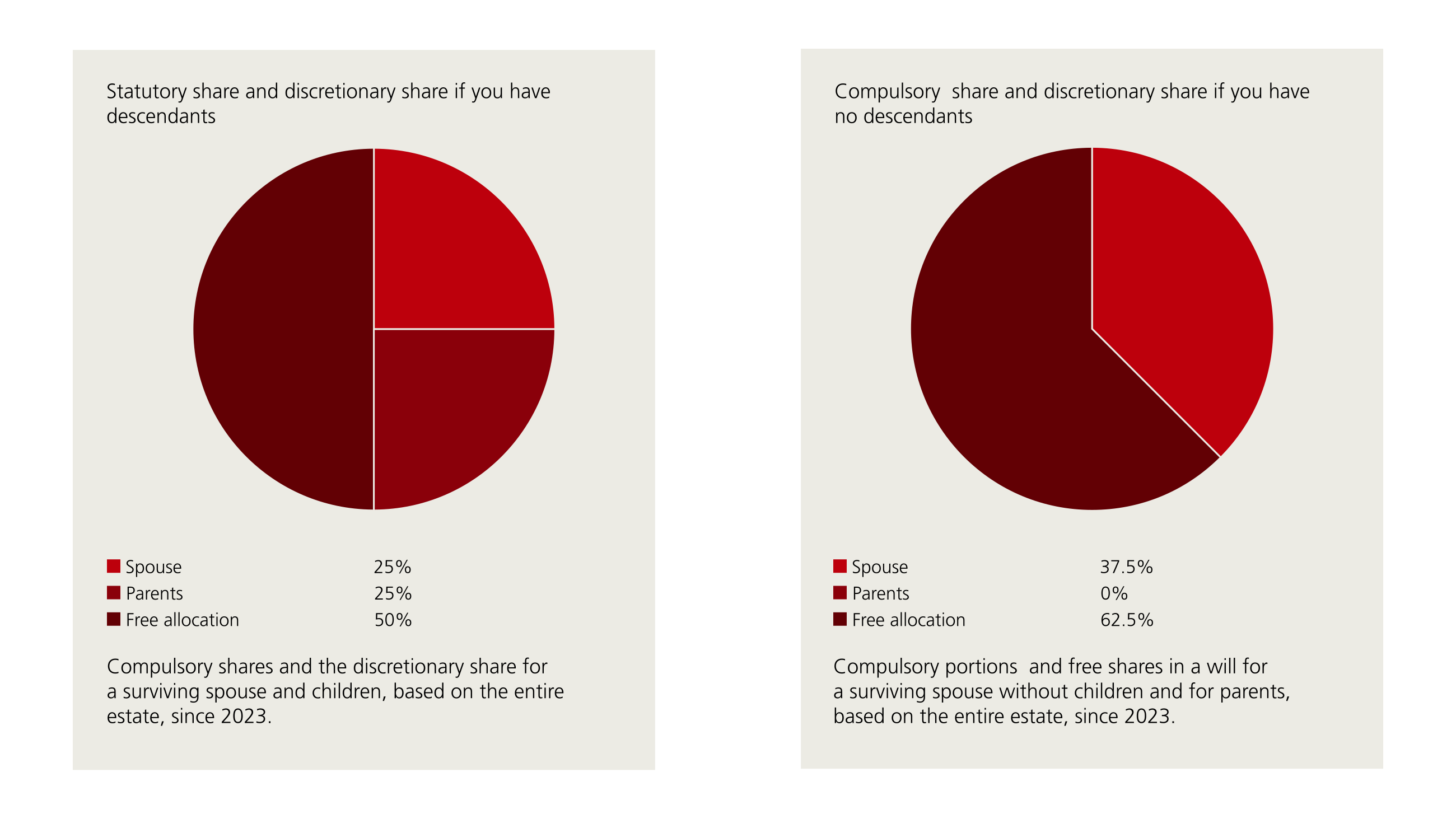
How much freedom you have depends on who your legal heirs are. The graphics below illustrate this:
Compulsory portions and the freely disposable portion according to current Swiss inheritance law:
Passing on assets: during your lifetime and after your death
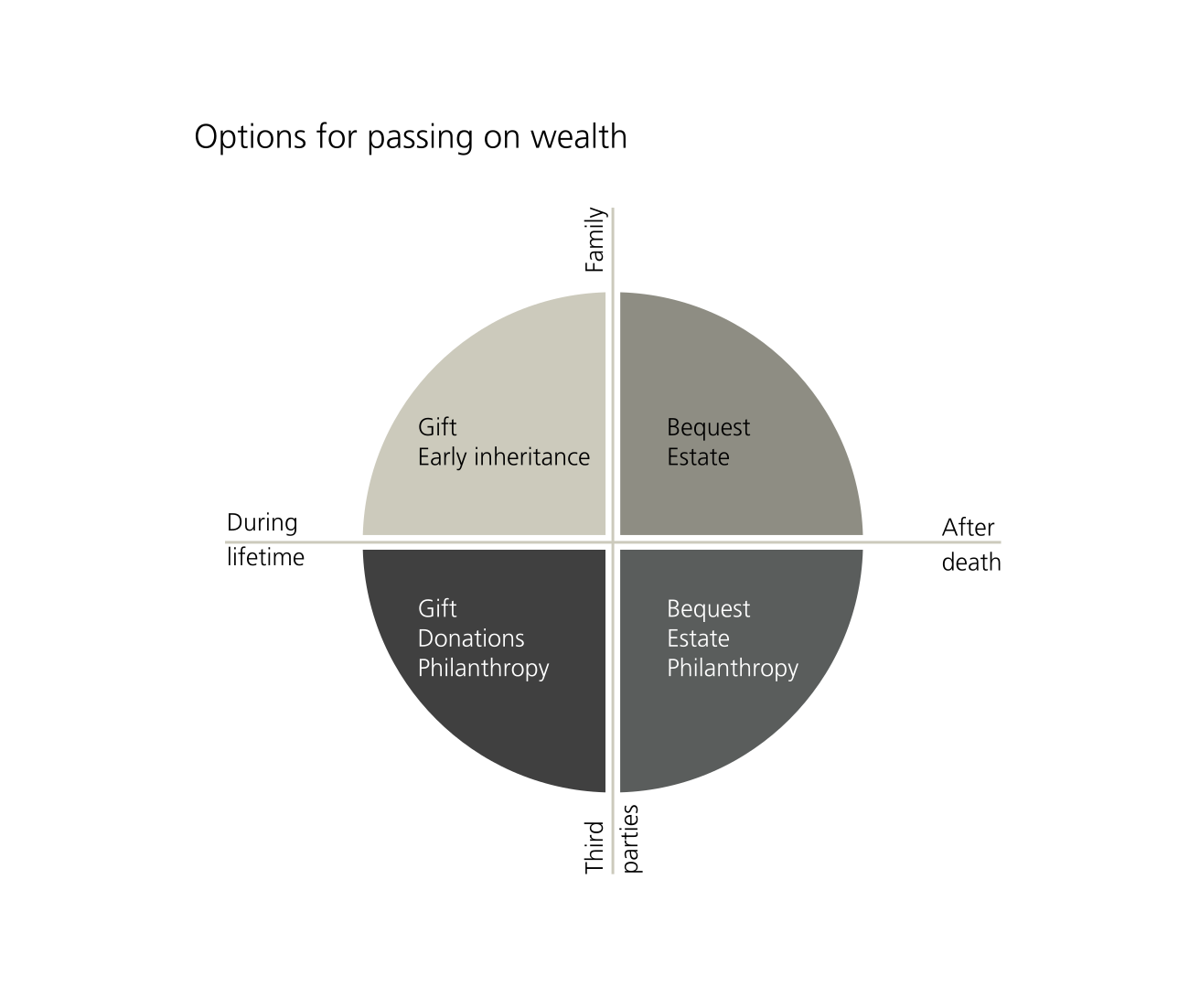
Wealth can be passed on during your lifetime or after you’re gone. Each path leads to a different goal and comes with its own legal, tax and family consequences. They also help you choose which investment strategy is right for you.
The chart below shows these options across two dimensions: timing of the transfer (during your lifetime or after your death) and type of beneficiary (family or others).
Will or inheritance contract: What makes sense and when?
There are various tools available for estate planning. The right option for you depends on your own situation and how much certainty you want.
Will
A will is a personal, one-sided decision about what happens after you die. You decide who gets what from your estate when you pass away. You can change a handwritten will at any time, and you don’t need a notary. However, it must be handwritten , dated and signed.
Inheritance contract
An inheritance contract is made together with all parties involved and is binding for everyone who signs it. It’s especially helpful when you need to balance different interests or want to agree on a solution with everyone involved early on. For an inheritance contract to be valid, it must always be notarized.
Anna’s checklist: essential documents at a glance
If you want to plan ahead, these are the main documents you’ll need:
- Will: decides who gets your assets when you die.
- Contract of inheritance: lays out, in binding terms, what applies to everyone involved when someone passes away.
- Early inheritances, gifts or loans: A written agreement records how assets are transferred.
- Advance care directive: lets you choose who will speak and act for you if you can’t make decisions yourself.
- Patient decree: records your medical wishes if you ever can’t make decisions for yourself.
- Overview of assets: provides clarity and transparency.
These documents should be reviewed regularly and updated when changes occur. Keep them in a central place and let the people who need them know where to find them.
If property is involved: find a solution together
Passing on a property is often more complicated than dividing up cash assets. You can’t split a house in two, and it’s often tied to memories and hopes. For everyone to feel that a solution is fair, it’s important to reach clear agreements.
Common questions include:
- Should one person keep the property and pay out the others?
- What’s the best way to determine the property’s value?
- Is one person taking over the property while another family member is allowed to keep living there?
- Or would selling be the better solution for everyone?
Decisions like these are about more than numbers; they touch emotions, too. That’s why it’s important to talk about these questions early.
Anna’s tips for a constructive family conversation
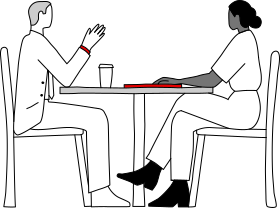
Honest conversations aren’t always easy. But they do build understanding and are often the most important step to prevent future tensions.
The best advice is to:
- share information early, not just when crisis hits,
- get the next generation involved ahead of time and have honest conversations about everyone’s wishes and expectations,
- listen and take different viewpoints seriously,
- aim for transparency, even when you can’t meet every expectation.
In some family situations, a conversation guided by a mediator can help.
Our experts are here to help and happy to advise you on your individual situation.
Clients ask – Anna answers
Clients ask – Anna answers
Good to know
Women’s Wealth Academy
Women’s Wealth Academy
Women who actively take part in financial decisions increase their chances of achieving financial security and are more optimistic about their future. Take your finances into your own hands.
You are here on your personal learning path
Because a personal conversation is worth a lot
Because a personal conversation is worth a lot
What can we do for you? We’re happy to address your concerns directly. You can contact us in the following ways: