Let’s continue - with the third module in the learning path: “Assets”
In the first two modules, you assessed your life situation, your goals and your investor and risk profile. The next step is to develop a suitable investment strategy and implement it consistently.
A good strategy ensures that your assets are invested with clear aims in mind. The risk and return of your investments remain transparent and are aligned with your goals and time horizon. This helps you stay calm even during turbulent market phases and avoid reacting too hastily.
An investment strategy is therefore not a single decision, but rather the interplay of several elements. It links your goals from module 1 with your investor profile from module 2.

Developing and implementing an investment strategy
To invest assets using a structured approach, overarching investment strategies are often employed. They help balance stability, returns and growth and set realistic expectations.
This involves addressing questions such as:
- Which goals should be achieved with which portion of the assets?
- How much volatility is acceptable in each area?
- How can the strategy be implemented and reviewed over time?
Depending on your needs and the desired scope, various forms of support are available to you – such as investment advice or asset management. The advantage of such support is that professional guidance can provide direction, alleviate stress and involve additional specialists as needed.
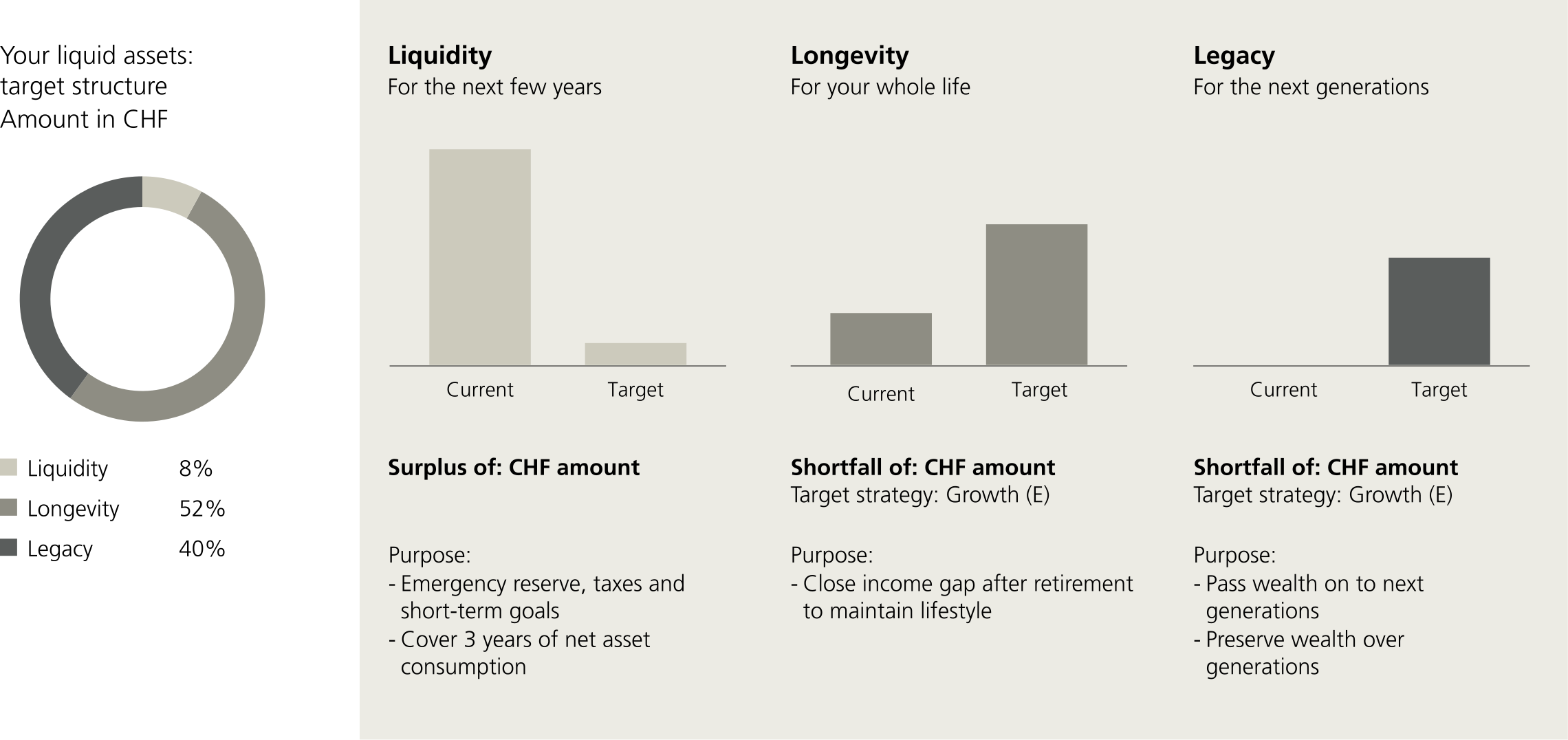
As part of our “UBS Wealth Way” advisory approach, our advisors develop a personalized investment strategy for you based on three key perspectives: liquidity, longevity and legacy. To do so, we define a target structure and establish the desired target state for each of these three perspectives. We then compare this with your current situation.
We subsequently choose the right investment strategy to help you achieve this target step by step.
The following chart illustrates what this might look like in practice.
Example of an individual investment strategy
Let’s now take a look at how we approach this step by step and what such a strategy actually looks like.
UBS Advice or UBS Management – which is right for you?
UBS Advice
With UBS Advice, you make the investment decisions yourself. You’ll be assisted by experts, receive market and product analyses and regularly discuss your strategy. This approach is ideal if you want to be actively involved and make your own informed decisions.
UBS Manage
With UBS Manage, our specialists implement and continuously monitor the agreed strategy. In other words, you delegate your investment decisions to professionals who make them on your behalf within a mutually agreed framework. This solution is ideal if you want to hand over responsibility and benefit from professional implementation.
The best approach depends on your needs, your schedule and how involved you’d like to be. Our advisors would be happy to discuss suitable solutions with you.

A look at real-world practice: six basic strategies for guidance
Different strategies differ primarily in
- the goal they pursue (preserving value or growth),
- the extent of potential fluctuations, and
- the time horizon over which they are best applied.
Below are six model strategies. Important: These are not rigid templates, but rather serve as a guide for discussion and for determining your risk budget.
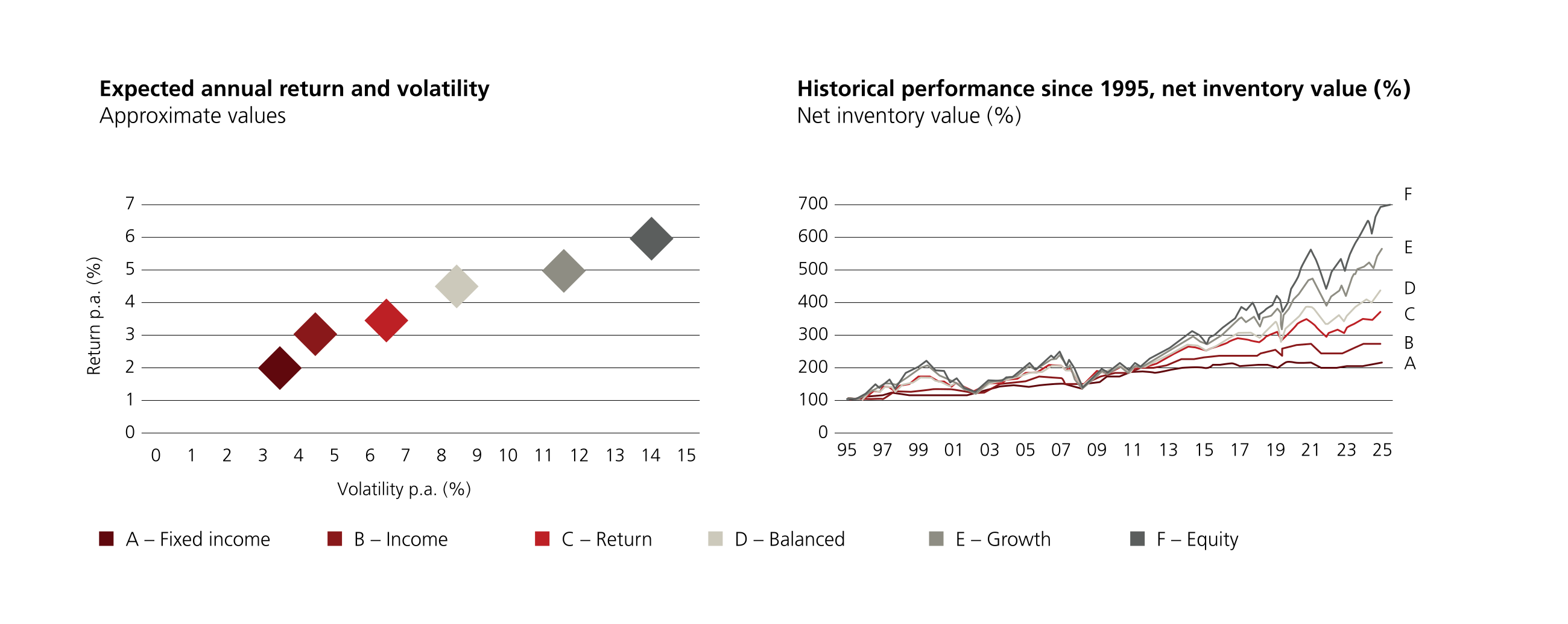
Depending on your chosen strategy, the asset classes in your portfolio will be weighted differently. It often makes sense to implement several strategies simultaneously, depending on the role your assets play across the three dimensions of liquidity, longevity and legacy. Various tailored investment solutions are available to put your chosen approach into effect.
Anna’s glossary: overview of investment solutions

Investing strategically – five investment rules for everyday life
Regardless of the strategy you choose, there are basic principles that help you stay on track in the long term.
1. Diversification
Spreading your investments across asset classes, regions and currencies helps spread risk. This means that individual developments have less of an impact, which can make your overall portfolio more stable. Diversification does not mean avoiding risks, but rather managing them more consciously.
2. Avoid emotional mistakes
Highly volatile markets often trigger uncertainty. During such periods, many investors make decisions based on fear, euphoria or gut instinct. Being aware of these emotional reactions helps you avoid making impulsive decisions.
3. Invest regularly
Investing regularly means spreading your investments out over a period of time. This can help offset short-term market fluctuations and keep the focus on long-term goals.
4. Stay disciplined
It’s not easy for people to stay disciplined when investing. Memories of past gains or losses, habits or seemingly accurate predictions can influence decisions. A clear strategy helps you avoid being led astray and instead stick to your plan consistently.
Would you like to learn more about how to make informed financial decisions? Check out our “Behavioral finance” learning path.
5. Schedule regular reviews
An investment strategy should be reviewed regularly – for example annually or whenever there are major changes in your life. The focus here isn’t on short-term market fluctuations but on whether your goals, time horizon and risk profile still align.
Anna’s checklist: important information for your first consultation
To prepare thoroughly for your consultation, it’s worth considering the following:
- Your decision-making style: Do you prefer to make decisions yourself, or would you rather delegate all or some of them?
- How comfortable you are with market fluctuations: What would you consider “normal”? And at what point would you start to feel anxious?
- Your time horizon for each asset class: Which portion should remain accessible in the short term, and which is intended for the long term?
- The existing structure of your investments: Do you already have custody accounts, funds, ETFs, individual securities or other investments – at UBS or elsewhere?
- Your general conditions: Are there amounts you do not wish to invest, or areas that are important to you, such as sustainability or avoiding certain sectors?
- Your expectations regarding support: How much guidance and support would you like? And what would you like to manage yourself?
If you don’t have a clear answer to everything, that’s perfectly fine. During the consultation, our client advisors will work with you to determine what suits you best and what the next steps should be.

Clients ask – Anna answers
Clients ask – Anna answers
Good to know
Women’s Wealth Academy
Women’s Wealth Academy
Women who actively take part in financial decisions increase their chances of achieving financial security and are more optimistic about their future. Take your finances into your own hands.
You are here on your personal learning path
Because a personal conversation is worth a lot
Because a personal conversation is worth a lot
What can we do for you? We’re happy to address your concerns directly. You can contact us in the following ways: