Assets
Women and finances: start with small amounts
Many women think that investing is only worthwhile if you have a lot of money – but even small steps are enough to build wealth.

header.search.error
Assets
Many women think that investing is only worthwhile if you have a lot of money – but even small steps are enough to build wealth.
Many women have a tight budget in everyday life: housing, transportation, leisure, insurance or unexpected expenses – by the end of the month, it feels like there’s not much left. Investing automatically gets pushed to the bottom of the priority list, and women tend to think: “I’ll look into it when I have more money.”
The “Women’s Perspectives 2026” study reveals that this very feeling is one of the main obstacles: women very frequently cite “a lack of money” as the reason why they are hesitant about investing. At the same time, financial security is very important to them. Many women try to guarantee security by saving money in a bank account or cutting back on their spending as much as possible – instead of allowing their assets to grow over the long term through investments.

Discover key findings and background information on our website – and download the full study.
The study findings also make it clear that women underestimate themselves when it comes to money. They manage household budgets, compare prices and plan expenses for their family and retirement – in short, they make important financial decisions on a daily basis.
This everyday financial literacy provides a solid foundation for investing. If you know how much money is coming in and going out each month, you can also estimate how much you can realistically set aside – even if it’s just a small amount. So the main thing women need isn’t “even more knowledge”, but the confidence to take the next step using the knowledge they already have.
in % women residents of Switzerland aged 16 and over
Multiple mentions possible
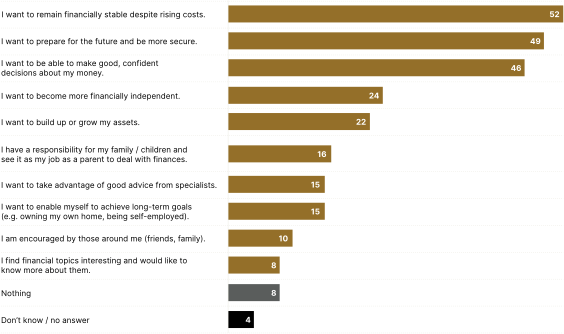
Investing isn’t only a good idea when you suddenly have a large sum of money in your account. On the contrary, even small, regular payments can make a big difference over time. For example, a savings plan allows you to put money in an investment fund or ETF that is broadly diversified across a variety of companies or markets.
Instead of waiting for “the perfect moment”, it can be useful to determine a fixed amount. The ideal amount is one that feels comparable to a streaming subscription or another recurring expense that doesn’t put a noticeable strain on your budget. This turns investing into a habit that’s easy to incorporate into your daily routine.
A savings and investment plan essentially consists of three steps: obtain a clear overview, decide on a fixed amount and set up an automatic transfer.
Define your budget: Keep track of your main sources of income and expenses for one or two months. This will help you determine how much you can realistically set aside on a regular basis.
Set an amount: Start with an amount that feels right to you – even if it seems small. Regular investing over the long term is often more important than how much you pay in each time.
Save and invest automatically: Set up a standing order to a separate savings account or investment account. You can then make regular payments from this account into a broadly diversified investment fund or ETF.
A solid understanding of asset classes, risks and strategies is the foundation for long-term wealth accumulation. Women who understand how financial markets work invest with greater confidence and make informed decisions. The Women’s Wealth learning path explains how women can build their wealth in a structured manner, strategically diversify their investments and build up assets over the long term.
Many women want security and predictability when investing, rather than an “all-or-nothing” approach. The study shows that they consciously weigh up the risks. This isn’t a disadvantage but can help women to choose an investment strategy that fits their personal circumstances.
This involves spreading money across different investments, sectors and regions rather than concentrating on just a few individual companies. The advantage is that you don’t need to have in-depth knowledge of how to evaluate individual companies. Instead, solutions such as investment funds or ETFs are a good option, as they are already diversified and can be tailored to your specific goals.
Invest with UBS and decide how much advice you want from us and what decisions you’d rather make yourself. We look forward to assisting you.
People who wait until they have “enough” money often put off investing for years. Women who regularly invest a small amount make better use of their opportunities. This is how to gradually build up wealth, helping you to reach your long-term financial goals and gain a greater sense of security.
The study also indicates that it is easier for women to start investing when they have access to financial knowledge that takes into account their real-life circumstances, needs and questions. This process is easier with transparent costs, clear information and offers that suit their daily lives. Advice that addresses their specific situation takes the pressure off and provides guidance. This approach allows them to determine step by step what level of risk is appropriate and how even small amounts can be put to good use toward long-term goals.
No one has to be on their own when it comes to investing. By openly addressing questions and seeking guidance on how to choose the right products for your portfolio, you can turn what may initially seem like an abstract topic into a practical way of actively shaping your financial future.
Because a personal conversation is worth a lot
What can we do for you? We’re happy to address your concerns directly. You can contact us in the following ways: