Everyday life
“Mental load” and finances: what matters to women
How mental load shapes women’s attitudes toward financial issues and pension planning in everyday life – and what strategies can make things easier.

header.search.error
Everyday life
How mental load shapes women’s attitudes toward financial issues and pension planning in everyday life – and what strategies can make things easier.
“Women’s Perspectives 2026”, a study by the UBS Worry Barometer, makes it clear: multitasking is a matter of course in the lives of many women. Managing daily life often involves dealing with financial matters and planning for the future.
Many women lead very busy lives. As well as having organizational responsibilities, they often have to make financial decisions – about everything from day-to-day expenses to pension planning and financial security.
Financial burdens are therefore a reality of life for the majority of women in Switzerland, albeit to varying degrees. This is highlighted by a survey of over a thousand women:
This means that nearly two thirds of the women surveyed are having to cope with financial challenges. A significant proportion of the participants also report that financial issues account for a large or fairly large portion of their daily mental load. However, the results also show that financial burdens are often part of a bigger picture: work, family, organizational responsibilities and everyday stress frequently overlap and increase the mental load even more.
The UBS study “Women’s Perspectives” examines how this “mental load” affects financial decisions.

More about the study
Building on the UBS Worry Barometer, the study examines what financial security means to women – and what challenges shape their decisions regarding pension planning and investments. Discover key findings and background information on our website – and download the full study.
“Mental load” – the term describes the constant cognitive and emotional effort needed to manage daily life.
It’s important to remember that “mental load” is often invisible. It isn’t measured in working hours, but in constant mental effort, for instance to plan the grocery shopping, coordinate personal or work-related appointments and manage the household budget.
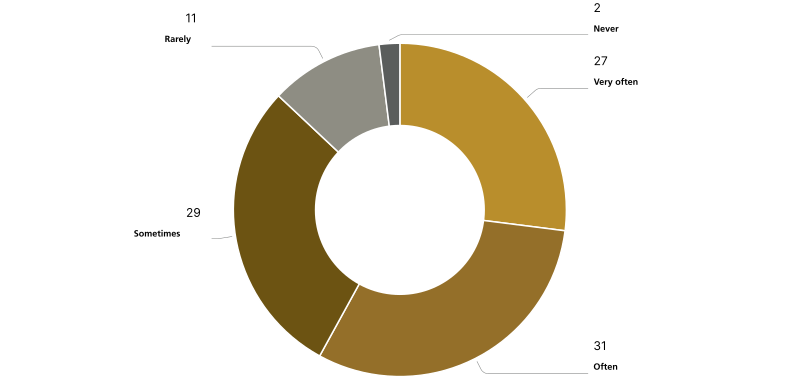
58% of the women surveyed state that they often or very often have to organize or keep track of several things at once, for example. Another 29% experience this at least some of the time. This makes “mental load” a very real issue for many women.
This constant pressure can mean that long-term financial matters or pension planning end up taking a back seat in everyday life. And yet it is precisely this perspective that could help counteract daily stress.
When the mental strain becomes too much – partly because of daily, short-term financial decisions – there is generally little room in everyday life for thinking about long-term financial matters. As a result, they are frequently put off until a later date.
Just under three in ten women feel too busy – either very often or often – to think about their financial future. This is also partly the case for another 28% of respondents. That means that even when women have the will to do so, they often lack the necessary time and resources. Postponing decisions can, in turn, lead to financial uncertainty, which is stressful and further increases the “mental load”.
How often do you feel that you have to organize or keep track of too many things at once in your day-to-day life?
in % women residents of Switzerland aged 16 and over
Consciously ensuring financial security for families
Having a family changes a lot of things – including financial responsibilities. Learn how parents can play an active part in planning for the future, protecting their financial well-being and making financial decisions concerning their family and their children.
How do women respond to financial challenges? The study shows that the initial focus is usually on measures that can be put into practice directly in everyday life. This can include cutting back on expenses, keeping a close eye on the budget or postponing major purchases.
Longer-term issues such as optimizing pension planning or investing are mentioned less frequently. This suggests that measures that can be implemented in the short term are more accessible to many women in their daily lives than long-term financial matters.
The study pinpoints various reasons why many women do not engage more deeply with long-term financial matters such as pension planning, their own assets or investments. Common reasons mentioned include a lack of financial resources, the complexity of the issues involved, uncertainty about investing or a lack of time to explore the subject in depth.
In addition, for many women, financial security is closely linked to a sense of direction and stability. Wealth accumulation is often perceived as something that requires significant financial resources. However, long-term financial planning is also possible step by step and with smaller amounts.
At the same time, the study also proves that this is not the same as a lack of financial literacy. On the contrary, 82% of women rate their money management as good or very good. This indicates that financial matters are often put off not because of a lack of interest, but because they have to compete with so many other priorities in everyday life.
The study findings suggest that clear information and specific next steps make a big difference. After all, many women manage their money in a conscious and responsible way. The important thing now is to address the need for greater clarity on issues such as pension planning, investments and long-term financial planning.
Take finances into your own hands: Women’s Wealth Academy
Through the Women’s Wealth Academy, UBS helps women gain financial literacy in a targeted way and makes long-term financial topics understandable and accessible. Whether it’s pension planning, wealth accumulation or investing, Women’s Wealth offers learning paths, background information and practical content that empower women to make confident, informed financial decisions.
The study also shows that women who say they are good or very good at managing their money are more satisfied with their lives – regardless of whether they invest or have a high income. Consequently, financial literacy has an impact not only because it allows women to engage in strategic financial activities, but above all because it gives women guidance, control and peace of mind in everyday life.
Many women have valuable experience in managing money – for instance from organizing day-to-day finances or managing a budget. Financial planning and wealth accumulation are closely linked to the financial decisions that many women already make as a matter of course on a daily basis.
Wealth accumulation and pension planning don’t have to start with large sums of money: even small, continuous steps are often enough. This underlines the importance of support services that reduce the complexity of financial issues and outline clear steps that women can take. Ultimately, financial security can be a source of relief and provide greater clarity in everyday life.
Because a personal conversation is worth a lot
What can we do for you? We’re happy to address your concerns directly. You can contact us in the following ways: