We’re here for you
Arrange an appointment for a non-binding consultation or if you have any questions, just give us a call.

header.search.error
Financing can be a decisive factor for closing an export deal. Find out what needs to be clarified and ensured before envisaging supplier credit in this type of situation.


Supplier credit is when the exporting company grants its foreign clients contractually agreed payment terms.
In the export business, supplier credit means that a company grants its foreign clients longer payment terms and, in doing so, effectively takes on the role of lender.
Although this type of agreement can serve as a starting point for a business deal, the financing must be examined carefully. This is because the exporting company has to forgo liquidity for the duration of the payment deferral if the payment is made using the company’s own funds. This may mean that the company ends up having to take out a loan itself to ensure its own liquidity. There is also a risk of default.
The best solution in this case is supplier credit. Combined with Swiss Export Risk Insurance (SERV) coverage, supplier credit can benefit both suppliers and their clients. It enables the exporting company to strike a balance between securing liquidity and expanding into new markets.
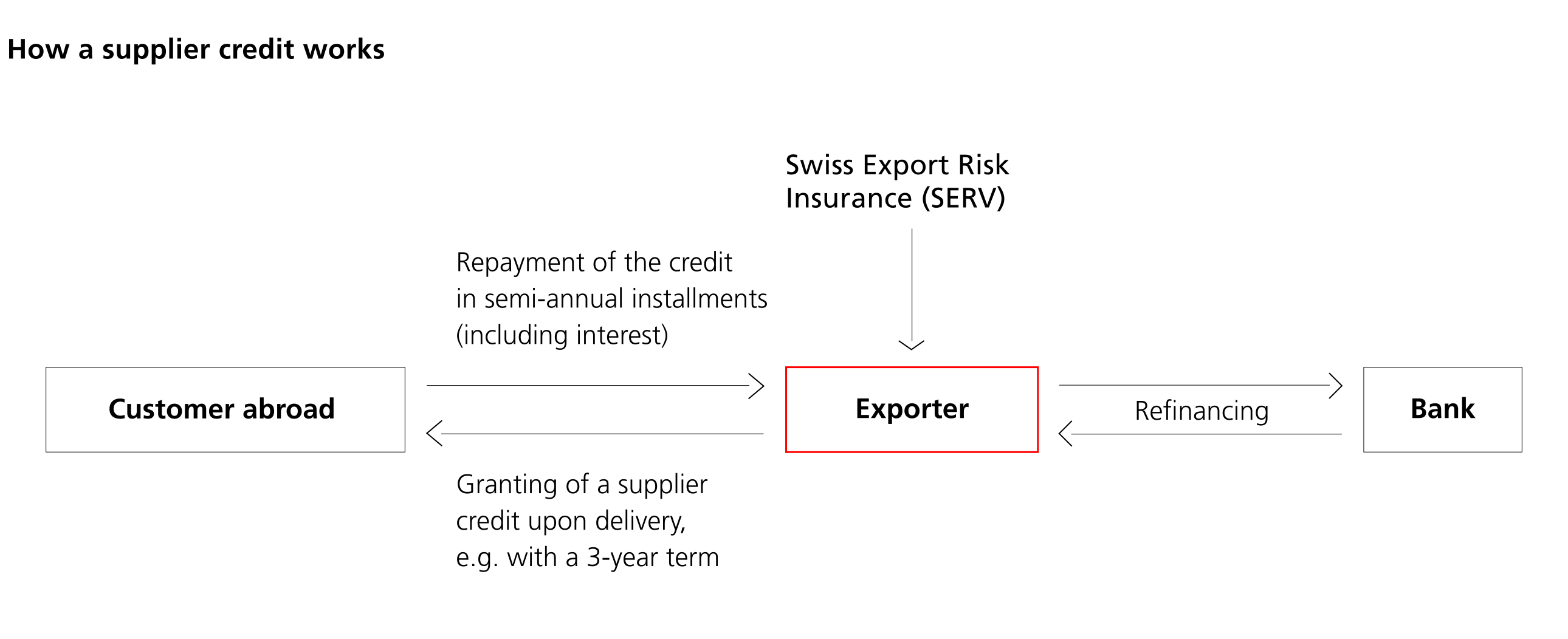
Supplier credit for international clients is a straightforward form of export financing. It is no coincidence that supplier credit has been a proven solution at UBS for decades, as it creates a win-win situation for both parties. The main benefits for you as the company selling the goods or services:
Everything from a single source: UBS is your reliable partner for international business. In addition to supplier credit and other services in the area of trade and export finance, we also offer hedging against currency risks and solutions for international payments.

As soon as your company starts handling funds in foreign currencies, it makes sense to consider foreign currency management. Take the first step with our currency risk check: in just a few clicks, it will indicate whether currency hedging is worthwhile for you.
There are three other parties involved alongside you and the buyer: SERV, UBS and possibly the client’s bank. Roles:
Supplier credit is particularly suitable for export transactions with a value of CHF 0.5 million to 10 million. Managing supplier credit is straightforward, since the financing terms have already been set out in the supply contract.
As with all loans and international transactions, it can be an advantage if you have already established a relationship of trust with your clients and are able to assess their creditworthiness. If SERV considers the client’s creditworthiness to be insufficient, you may need a payment guarantee from the bank as additional security.
The requirements include meeting the conditions specified by SERV and UBS and complying with the regulations of the country of import. The requirements in detail:
To insure your project with SERV, it must meet the following requirements:
In general, SERV insures exports to all countries. There are no restrictions regarding the industry or the goods or services being exported, no minimum size requirements for the exporting company and no minimum contract value. You can find a detailed description of the requirements for taking out insurance on the SERV website.
It’s worth keeping the following two criteria in mind as you proceed with your project:
As an alternative to supplier credit, buyer credit is another proven tool in export financing. This is when UBS provides the buyer with a loan to purchase the exported goods, as the name suggests. This form of financing is primarily intended for goods valued at CHF 20 million or more, as the terms of the contract are negotiated on a case-by-case basis, entailing a considerable workload.
Do you have questions about the regulations and specific conditions applicable to a particular export market? Feel free to contact us; we would be happy to share our expertise and experience with you.

Your goals in focus
Together, we turn your goals into real successes. With our network and specialist knowledge, we provide new impetus for your growth.
Let us transform your ideas into reality.
For export volumes ranging from CHF 0.5 to 10 million, supplier credit is a proven tool that allows exporters to receive the sales price agreed on with the buyer immediately after delivery, even with extended payment terms.
As an alternative to supplier credit, buyer credit is a financing option that is mainly suitable for goods valued at CHF 20 million or more.
Arrange an appointment for a non-binding consultation or if you have any questions, just give us a call.
Disclaimer
This publication is for personal information purposes only within Switzerland and is not to be understood as a recommendation, offer or solicitation of an offer for investment or other specific products and services. It is not intended to form investment, legal or tax advice and should not be used as the basis for financial decisions. Before making a decision, you should obtain professional advice.
Although all information and opinions in this publication derive from sources regarded as reliable and trustworthy, UBS does not accept any contractual or implied liability for any incorrect or incomplete information. The views of non-UBS authors are their own opinions and do not necessarily reflect the views of UBS AG and its affiliates. Complete or partial reproduction without the express consent of UBS is not permitted. To the extent permitted by law, neither UBS nor any of its directors, employees or agents shall be liable for any loss or damage of any kind arising out of or related to the use of this publication. The information and opinions contained in this publication are subject to change at any time without prior notice. UBS reserves the right to modify the services offered, the products and the prices at any time and without prior notice. The content of this publication has not been tailored to the needs and investment objectives of a specific client or addressee and is not adjusted to their personal and financial situation. The products and services described herein may require the signing of agreements. Please note that for the products and services in question the conditions described in the corresponding agreements are decisive. Please read the relevant agreements carefully and contact your UBS client advisor or the responsible wealth planner if you have any questions.
© UBS 1998 - 2026. All rights reserved. The key symbol and UBS are among the registered and unregistered trademarks of UBS.