

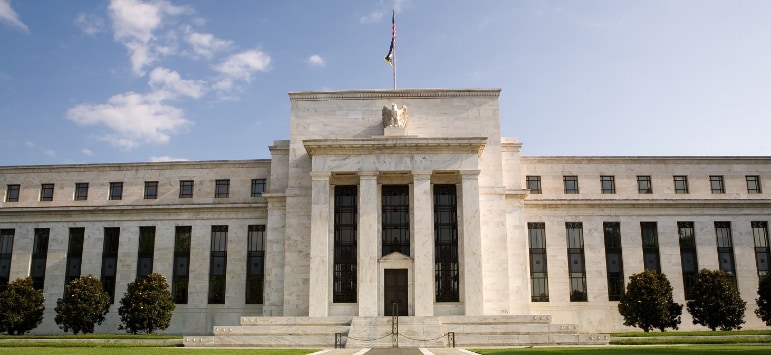
The Federal Reserve is working on an issue that sounds technical, but could have knock-on effects for financial markets: the optimal size of its own balance sheet. A working group is examining how large the balance sheet should be in the future, how it should be composed, and when bond purchase programs should be used at all. What may sound like niche work for central bank specialists could shape interest rates and valuations in equity and bond markets for years—and is therefore also relevant for investors.
Fed Chair Kevin Warsh has established five working groups ("Task Forces for Advancing Monetary Policy"). For markets, the groups focused on communication and balance sheet policy are likely to be particularly important. Changes to communication could primarily influence short-term interest rate volatility. The balance sheet task force, by contrast, is looking into the long-term structure of the bond market. The Fed’s balance sheet has grown substantially in recent years: Securities holdings alone, mainly US Treasuries and mortgage-backed securities (MBS), amount to around USD 6.5tr, while total assets stand at just under USD 6.8tr.
On the liabilities side, the focus is primarily on banks’ reserves. These have risen to around USD 3tr since 2007. One important focus for the task force will be to show how regulatory adjustments and a gradual reduction in the balance sheet can be combined without destabilizing money markets or triggering a sharp rise in interest rates. If reserve-holding requirements were eased, banks would have more funds available to invest in US Treasuries. This could partly cushion upward pressure on yields.
The implications for markets would be varied: A smaller and shorter-duration Fed balance sheet could lead to higher term premiums at the long end of the yield curve. In other words, investors could see higher yields on long-dated government bonds and a steeper curve. At the same time, spreads on MBS and other long-term bonds would likely rise slightly if the Fed were to withdraw from these segments. The Fed would therefore need to proceed cautiously, relying above all on maturing holdings and adjustments to reinvestments rather than actively selling larger volumes of bonds. The experience of the "Taper Tantrum" in 2013, when the reduction in bond purchases quickly drove the yield on 10-year US Treasuries up by more than 135bps, remains fresh in many people’s minds.
What does this mean for investors? Higher long-term interest rates can put pressure on valuations, especially in high-growth, interest-rate-sensitive sectors. At the same time, financials tend to benefit from a steeper yield curve. Another key consideration is that a shorter balance sheet has a restrictive monetary policy effect, but can also create scope for monetary easing through a lower policy rate. Even more important is how the Fed may define its future role as a "backstop" for markets. Bond purchases may once again function primarily as an emergency instrument in recessions or periods of market stress, rather than as broad-based monetary policy support. This points to an environment in which fundamentals and corporate earnings become even more important. From a macroeconomic perspective, we would welcome this development, even if it could lead to higher volatility.
The topic is also relevant for Switzerland. The Swiss National Bank (SNB) has a large balance sheet that has expanded markedly in recent years as a result of foreign-exchange purchases. While the Fed’s balance sheet total corresponds to around one-fifth of the US gross domestic product, the equivalent ratio in Switzerland is more than 100%. If the Fed were to sustainably reduce its balance sheet and thereby set new standards, the question would arise as to whether and how the SNB might follow suit over the medium term. The SNB has always successfully defended its balance sheet policy in the past; due to the structural appreciation pressure on the franc, foreign-exchange purchases play a more significant role in Switzerland than elsewhere. It is hard to imagine that the SNB would want to give up this instrument, although that does not mean possible options could not be discussed.
Our conclusion: The Fed’s balance sheet policy is not a marginal issue, but may become a central building block of the future market environment—with possible knock-on effects for other central banks as well. For investors, it is worth following the task force’s discussions and positioning portfolios so that they are prepared for possible structural changes in the yield curve, even if these are likely to take place gradually.
