
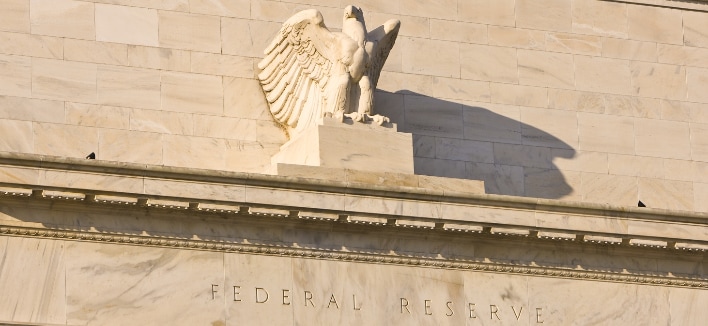
The Fed cut rates again in October, but struck a more hawkish tone.
- The Fed cut policy rates by a further 25bps in October, building on the 25 basis points reduction in September, its first reduction since 2024.
- But Fed Chair Powell said lowering borrowing costs again in December is "far from" a foregone conclusion, a more hawkish tilt than what the market was pricing
A softening labor market gives the Fed scope to continue easing.
- We believe concerns about a weakening labor market are likely to be the primary driver of the Fed’s decision-making, given limited signs of tariff costs passing through.
- We expect US rates to come down by a further 50 basis points by the end of the first quarter of 2026.
With policy rates set to fall further, investors should put cash to work now.
- We recommend that investors phase excess liquidity into diversified portfolios.
- To achieve alternative sources of portfolio income to cash, we see medium-duration quality bonds and equity income strategies as appealing.
- We also expect lower interest rates, robust corporate earnings, and AI tailwinds to support further gains for equity markets over the coming year.
New this week
The Federal Reserve delivered a widely expected 25-basis-point rate cut in October, bringing the federal funds rate to 3.75-4%. This marks the second rate cut of 2025 and brings the total reduction since 2024 to 150bps. The US central bank also confirmed it will stop shrinking its balance sheet on 1 December, as Fed Chair Jerome Powell signaled earlier in the month.US equities dipped, however, while Treasury yields rose, as Powell said lowering borrowing costs again in December is "far from" a foregone conclusion, a more hawkish tilt than what the market was pricing. Investors had also anticipated the end of quantitative tightening to start imminently.
Did you know?
- Soft landing rate cuts have historically been positive for stocks, and the Fed’s shift from restrictive to more neutral policy should help extend the bull market.
- In a downside scenario, if labor market weakness proves to be more severe or durable, we believe the Fed could cut rates by 200-300bps by mid-2026.
- Cash tends to underperform other assets over time: Stocks have outperformed cash in 86% of all 10-year periods and 100% of all 20-year periods since 1926, with cumulative returns more than 200 times higher than cash over the long term.
Investment view
We believe the resumption of the Fed's rate-cutting cycle increases the imperative for investors to put cash to work. We recommend phasing excess liquidity into diversified portfolios. We also continue to like quality bonds, which can offer a more durable source of income. Investors underallocated to equities should consider adding to stocks in CIO's preferred areas, including AI, Power and resources, and Longevity.
