When the old rules no longer apply
Rory Stewart on geopolitics, markets and the risks investors are underpricing


header.search.error
Rory Stewart on geopolitics, markets and the risks investors are underpricing

The following reflections draw on a recent conversation between Rory Stewart, British author, academic and former diplomat and politician, and Barry Gill, Head of Investments, UBS Asset Management, held shortly after the World Economic Forum in Davos. Their discussion, the first in a series of external expert perspectives, ranged across geopolitics, markets and technology. An overarching concern emerged: many of the risks now reshaping the global landscape are not cyclical, but structural – and consistently underappreciated.
Rory Stewart’s key points
Speaking shortly after returning from the World Economic Forum in Davos, Rory Stewart offered a stark assessment of the global mood. Beneath resilient markets and attempts at reassurance, he noted that the world is entering a profoundly different phase – politically, economically and strategically.
National security professionals and business leaders alike appear to be struggling to process the implications of the current US presidency. One of the dominant responses, he observed, has been denial – an effort to minimize events or explain them away. Strong market performance makes this easier. Yet there is also a growing realization that this is not a temporary disruption, but more of a structural break in terms of the global order and how the US sees its role.
Four structural shifts reshaping the landscape
Stewart highlighted four major shifts he thinks investors – and societies more broadly – need to grapple with.
First, the global dominance of liberal democracy is receding. Between the late 1980s and the early 2000s, the number of democracies worldwide doubled, creating a sense that democratic governance would become universal. That assumption has proved fragile. Populism and authoritarianism are on the rise; systems that behave very differently from liberal democracies in their approach to free trade, domestic markets, neighboring states and even their own populations.
Second, the Reagan-Thatcher consensus around globalization and free trade is giving way to protectionism and tariffs. This is not a cyclical adjustment, but a re-orientation of economic policy that reshapes supply chains, pricing power and geopolitical alignment.
Third, the post-war vision of a rules-based international order, anchored in multilateral institutions such as the United Nations, is being replaced by a far more ad-hoc and transactional world. This increasingly resembles a system where power determines outcomes: the strong do what they want, and the weak must adapt.
Fourth, the political center ground itself is eroding. A once-shared consensus about how economies should be managed is fragmenting under the combined pressure of social media and artificial intelligence. The result is greater polarization, faster opinion cycles and more volatile policymaking.
Europe’s dilemma: deregulation over industrial policy
Asked where Europe should focus its reform efforts – amid debates over defense spending, the Draghi report and structural competitiveness – Stewart’s answer was unambiguous: deregulation.
For countries without the world’s reserve currency, struggling with weak growth, high borrowing costs and large welfare bills, he argues that industrial policy is often a false promise. While investments in roads, schools or even defense can be politically attractive, defense spending in particular is fundamentally about preserving the status quo. When it is working well, its benefits are invisible.
By contrast, in his view, making it easier to run and scale businesses offers a more durable route to growth. Lower friction, clearer rules and faster decision-making would do more to revive Europe’s economic dynamism than grand state-led investment strategies.
AI and media: disruption with underpriced risks
Stewart’s most urgent warning, however, concerned AI, not from the perspective of margins and efficiency, but from the standpoint of systemic risk.
AI has moved with extraordinary speed from narrow capabilities such as winning chess or Go games, to large language models that generate fluent argument, narrative and persuasion. Since media is ultimately about language, this represents a total disruption of the information ecosystem. Articles, podcasts and broadcasts can now be produced at unprecedented scale and speed.
The consequences are profound. Time-poor audiences will increasingly be exposed to AI-generated content, and these same tools dramatically lower the barriers to propaganda, misinformation, election interference and public-opinion manipulation. Stewart pointed to real-world examples already underway, including AI-driven cybercrime experiments achieving shocking high success rates.
For investors, his message was clear: the security, safety and even existential risks associated with AI are being severely underpriced. From cyberattacks to bioweapons research, these systems are approaching thresholds that demand far more serious scrutiny. Yet powerful financial incentives are pushing developers to resist pauses or regulation – reinforcing the tension between innovation, monetization and societal risk.
A moment that demands realism
If there was a single thread running through Stewart’s reflections, it was the danger of complacency. Markets may be buoyant, and narratives somewhat reassuring, but the underlying shifts – geopolitical, economic and technological – are structural. Pretending otherwise may be comforting, but it leaves investors, policymakers and institutions dangerously unprepared for the world that is rapidly emerging.
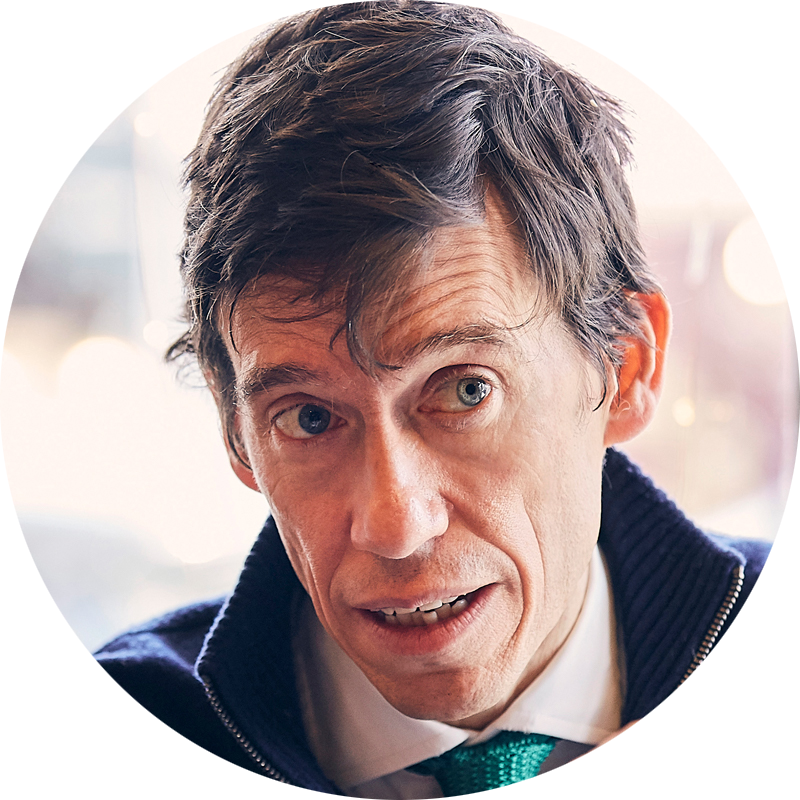
Rory Stewart is the Brady-Johnson Professor of Grand Strategy at Yale University - a former cabinet minister and diplomat and Member of Parliament for Penrith and the Border. He served in Iraq and Afghanistan, was a professor at Harvard University and has written a number of bestselling books including 'Politics on the Edge'. He co-presents the UK's top podcast, 'The Rest is Politics', with Alastair Campbell.
Code : S 01/26 M-003426