

Transforming education for children
Education is one of the most powerful tools for reducing poverty. It narrows gaps in societies (e.g. gender, ethnicity, socio-economic background) and lays the foundation for all young people to reach their full potential. Beyond the value to the individual, education contributes to greater productivity, innovation and economic growth. Investing in education at every level brings positive public returns to governments. The acquisition of skills is increasingly critical in competitive economies, while higher levels of education translate into better health outcomes and greater levels of civic participation.
Through our education portfolio, we support the development of strong learning foundations, from a child’s early years all the way through to securing employment.

The challenges we face
Chronic stress
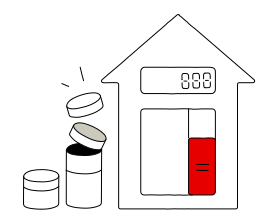
725 million children living in poor households are at risk of experiencing chronic stress due to the burden of poverty
Lack of foundational skills

387 million primary school age children globally were not achieving minimum levels of proficiency in reading and math, even before the pandemic. Most of these children are living in poverty-stricken countries, predominantly in Sub-Saharan Africa.
Unequal access

Out-of-school children are disproportionately located in low, lower-middle income, and conflict-affected countries
Unequal learning

53% of children in low- and middle-income countries were unable to read and understand a simple text by age 10, even before the pandemic
Family life
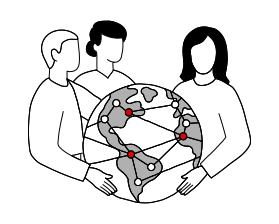
In resource-constrained environments, families do not always have the support and services they need to stabilize, impacting children's ability to learn.

Taking action
Education is one of the largest portfolios and longest-standing focus areas of UBS Optimus Foundation. We seek to deliver long-term and system-wide solutions to a learning crisis that’s leaving more than half of primary-aged children without basic skills. Our work also aims to enable the conditions that lead to better learning. We believe that supporting the most disadvantaged in their foundational years will reduce inequities in education and put the most vulnerable on a path to long-term success.
We build on strong partnerships such as being a founding partner of the Child Learning and Education Facility (CLEF) – a public-private partnership between the government of Côte d'Ivoire, the Jacobs Foundation and fifteen cocoa companies that aims to mobilize up to CHF 110 million to build schools and improve education for children in cocoa-growing regions. UBS Optimus Foundation has also partnered with an outcomes specialist to launch a pioneering initiative which aims to invest USD 100 million in 15 to 20 SDG-aligned outcomes-based programs.
Today, low- and lower-middle-income countries face a yearly financing gap of USD 97 billion to meet their national SDG4 targets. Being linked to a global wealth manager, we can help bridge the gap, providing flexible, patient, ‘fit-for-purpose’ capital across the impact spectrum.

Want to learn more?
Want to learn more?
Learning for life: A guide to bring quality education to all features over 30 experts in education and child development. Inside this guide you’ll find concrete tips on how to embrace a holistic approach and will help you consider the part you’ll play in providing inclusive and equitable quality education and lifelong learning opportunities for all. Download the Learning for life guide today.
Our priority areas

Early childhood education and care
Investing into children’s earliest years is proven to be the most cost-effective, significant, and long-lasting investment into their future. As early childhood is a period of high dependency on adults, this includes working with caregivers to build the conditions that allow them to break the cycle of intergenerational poverty.

Foundational skills through quality education
Foundational skills refer to basic numeracy, literacy, and socio-emotional skills. These skills are acquired in primary education and are the foundations of a child´s education. Because learning is cumulative, if children do not master foundational skills, they will not be able to engage in more advanced topics in later grades and they will stop learning or drop out.

Transition to employment
Our foundation is developing a comprehensive strategy for transition to employment with plans to launch and fund impactful programs by 2025. By providing young people with the skills and opportunities needed for meaningful employment, we aim to create pathways for successful careers and productive lives.
Our approach
Problems
1.Chronic Stress in Early Childhood: 725 million children are at risk of chronic stress due to the burden of poverty, negatively impacting their brain development and learning potential
2. Learning poverty: Pre-pandemic, more than half of children in low- and middle-income countries were unable to read and understand a simple text by age 10
Solutions
1. Develop affordable and scalable high quality Early care and Education (ECE) models with an intergenerational lens
2. Scale proven, child-centered learning that adapts to varying needs and supports children across foundational and socio-emotional domains
3. Adapt accelerated learning for out-of-school children to (re)enter formal schooling
Outcomes
1. Increased equitable access to affordable, high quality nurturing care and education
2. Children meet developmental milestones and master foundational skills at the right age
3. Successful transitions into school, across educational levels, and into employment
4. Empowered parents, educators, and caregivers
Our programs
This is just a sample of the partners we work with – contact us to discover the full portfolio.


Want to get involved?
UBS Transform Collective

Raising children in loving families
The best place for children to grow up is in a family. But despite having families who want to look after them, millions of children live in institutions like orphanages – where they're at more risk of suffering from poor health, education, and prospects. They're also at far greater risk of abuse and trafficking. Solutions that work exist, but they need to be adapted to the local contexts and brought to scale. As part of the UBS Transform Collective, you’ll be working to:
- Enable vulnerable children to grow up safely in nurturing families and communities;
- Redirect millions in donations away from institutions and towards quality family-based care systems;
- Reform child protection systems to better protect children and strengthen families; and
- Reduce the number of children living in institutions (currently around five to six million worldwide).1
1The Lancet (2020): “Institutionalisation and deinstitutionalisation of children 2: policy and practice recommendations for global, national and local actors"
UBS Accelerate Collective

Investing in children's health, education, and the planet they live in
Every child deserves the opportunity to blossom into a well-rounded, healthy adult – equipped with everything they need to thrive in life. But millions of vulnerable children suffer from a lack of access to quality healthcare, education, and environment. Too often, they face a life spent struggling with poor health, poverty and difficulty finding work. Solutions that work exist, but we need to make them more sustainable. As part of the UBS Accelerate Collective, you'll be working to:
- improve the health and education of disadvantaged children worldwide and preserve the planet where they live;
- create a system where innovative ‘social finance’ investments will soon become the first choice for individuals and organizations seeking to solve social and environmental issues. Social finance is a type of investment that gives a vital financial boost to solutions whilst recycling the returns from investment capital, thereby multiplying the effect of your financial contribution. You'll be helping make social finance mainstream, attracting the massive private and commercial investments needed to give children the healthcare, education, and environment they deserve; and
- support social businesses – mentoring, training, and investing in social businesses to help them grow, achieve more impact, and take their solutions to the world.
Get inspired

Meet social entrepreneur Paul Skidmore and learn how he’s creating the best schools for those who need them most through Rising Academies Network, a UBS Optimus Foundation partner.
Paul Skidmore, founder and CEO of Rising Academies
Monocle 24: How can philanthropists ensure impact in education?
To mark United Nations international literacy day, we shone a spotlight on a new UBS guide: ‘Learning for Life: A Guide for Philanthropists and Changemakers to Bring Quality Education to All’. The guide explores how to achieve UN Sustainable Development Goal No 4, which aims to ensure inclusive and equitable quality education and promote lifelong learning opportunities for all. As well as the CEO of the UBS Optimus Foundation, Maya Ziswiler, we hear from education innovator Joe Wolf of Imagine Worldwide, one of the thought leaders and innovators that UBS supports and celebrates through its Global Visionaries programme.


19 Oct 2022
Learning for life: A guide to bring quality education to all
Tom Edwards from Monocle talks to the CEO of the UBS Optimus Foundation, Maya Ziswiler and education innovator and UBS Global Visionary Joe Wolf of Imagine Worldwide to learn more about how philanthropists can ensure inclusive and equitable quality education for all.

Meet our team
1 United Nations (2018). Understanding the IPCC Special Report on 1.5°C. Available at: https://library.wmo.int/doc_num.php?explnum_id=5188. Last consulted: October 23, 2020.
2 1: Intergovernmental Panel on Climate Change (2023). AR 6 Report
3 IPCC. (2014). AR5 Synthesis Report: Climate Change 2014. Retrieved from https://www.ipcc.ch/report/ar5/syr.
4 IPCC. (2014). AR5 Synthesis Report: Climate Change 2014. Retrieved from https://www.ipcc.ch/report/ar5/syr.
Support our partners
Get in touch with us for more information on how to get involved and support our partner programs.
