
(UBS)
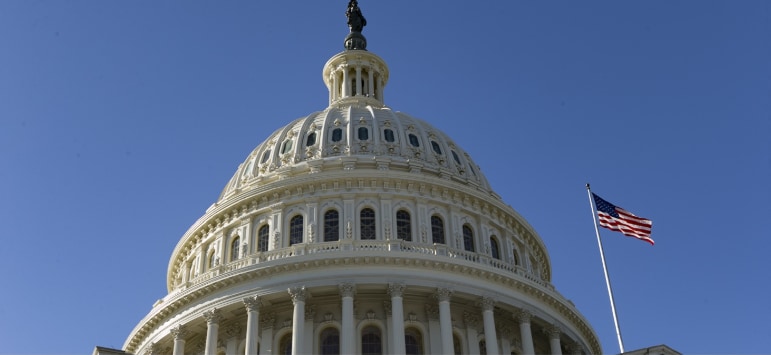
With Democrats set to take control of both chambers in January, Republicans have just a few weeks to advance their remaining legislative priorities and confirm Trump administration nominees before losing their congressional majorities. However, having just won decisive majorities in both chambers, Democrats have little incentive to make significant concessions before assuming control. Republicans face challenges maintaining party unity and attendance among defeated and retiring members. Government funding presents the most immediate test, with the current stopgap measure set to expire on December 11 and the possibility of another shutdown looming. Beyond funding, Congress faces several legislative deadlines and unfinished priorities, though much of that work could, and is likely to be, pushed into next year. Below is a look at the key issues Congress will face over the remaining weeks of the year.
- Government Funding. Government funding will expire on December 11, and lawmakers are divided over a path forward. Republicans are looking to advance several spending bills before losing control of Congress, but Democrats may prefer to extend current funding levels into next year, when they will have greater leverage in negotiations. Disagreements over defense and nondefense spending have continued to complicate negotiations, with proposals for additional defense funding related to the war in Iran emerging as the main sticking point. With limited legislative time remaining and neither party eager to make significant concessions, another short-term funding extension into 2027 is more likely than a comprehensive spending agreement. However, even a temporary extension could prove difficult to negotiate, raising the possibility of another government shutdown.
- NDAA. Congress faces a familiar year-end deadline to pass the annual National Defense Authorization Act (NDAA), though reaching an agreement this year may prove more difficult than usual. As noted above, disagreements over the Trump administration’s handling of the Iran war have complicated negotiations. Meanwhile, the administration has come under renewed scrutiny with Nvidia in the headlines. Provisions related to China may also prove difficult to resolve. Congress has passed the NDAA for 65 consecutive years, but that history does not guarantee its success this year. With several issues still unresolved, lawmakers may need to leave some of the more contentious provisions out of the final bill to reach an agreement before year-end.
- Hegseth Impeachment. The House this week blocked an effort (211-204) to impeach Defense Secretary Pete Hegseth. The resolution, introduced by outgoing Rep. Thomas Massie (R-KY), focused on Hegseth’s handling of the war in Iran and military operations in Venezuela and Yemen. While the effort failed, it is unlikely to be the last time Hegseth faces questions from Congress. Other members of the Trump administration, including Secretary of Commerce Howard Lutnick, are also facing scrutiny from both parties. Democrats are expected to pursue further investigations when they take control of Congress in January.
- Permitting Reform’s Stretch Run. After years of false starts, Congress is closer than ever to a sweeping permitting overhaul, with a bipartisan Senate agreement already in hand and supporters pushing to move it through the lame-duck session. The final stretch may prove the hardest. President Trump’s refusal to embrace wind permitting threatens a key piece of the bargain for Democrats, who had sought assurances that renewable projects would benefit alongside pipelines, transmission lines, and other infrastructure. Meanwhile, Minority Leader, and soon expected to be Speaker, Hakeem Jeffries (D-NY) has little incentive to accept the Senate’s bipartisan agreement after Democrats’ midterm gains. He has already demanded greater House Democratic involvement and raised concerns over environmental protections and tribal sovereignty, and a newly empowered caucus will be wary of giving Trump a major legislative victory on his terms. Washington may finally have the outlines of a permitting deal, but getting from agreement to enactment could still require the hardest compromises yet.
- Reconciliation 3.0. Some conservative House Republicans are pushing for one more reconciliation bill before the new Congress takes power. Their proposal would include additional defense funding, spending cuts, and other Republican priorities, with some Republicans interested in addressing the debt ceiling. However, Republicans remain divided over how to move forward. Republican leadership has expressed doubts about whether they have the votes, and the limited legislative calendar and attendance challenges among departing members further complicate the outlook. Even before the midterms, Republicans struggled to agree on another reconciliation package, and the election results have only made the prospects for passage dimmer.
- Unfinished Business. Congress faces several other year-end deadlines, all of which will be hard for them to meet with the limited window available. December 11 marks the expiration of current highway and surface transportation authorizations as well as the National Flood Insurance Program. Similarly, the funding for certain agricultural programs remains a priority for the Senate Agriculture Committee, particularly with Ranking Member Amy Klobuchar (D-MN) leaving to become governor of Minnesota. December 31 brings additional deadlines for several health care provisions, including Medicare physician payments and community health center funding. The Export-Import Bank also faces an end of the year deadline to renew its authority to approve new financing. Other unfinished priorities include reauthorizing Section 702 of the Foreign Intelligence Surveillance Act (FISA), which expired in June, college sports legislation, and a ban on congressional stock trading. Congress may address some of the more immediate deadlines by attaching extensions to a must-pass year-end vehicle, but much of the remaining agenda could carry over into the next Congress.
