
Key points at a glance
Key points at a glance
- The Residential Attractiveness Indicator compares municipalities within the same region – since most moves take place within a radius of less than 10 kilometers.
- Residential attractiveness depends primarily on the interplay of infrastructure, leisure opportunities, quality of life, and cost of living.
- There are attractive municipalities throughout Switzerland – also outside the major centers.
- A place is attractive when everyday life runs smoothly: Short distances and easy accessibility increase the residential attractiveness of centrally located municipalities.
- However, a high cost of living can also hold back centrally located municipalities in the residential attractiveness ranking.
Zurich, 27 August 2026 – The whole of Switzerland is an attractive place to live, not just in the major urban centers. According to the new edition of the Residential Attractiveness Indicator published by UBS Chief Investment Office Global Wealth Management, the cantonal capitals Solothurn, Fribourg, Sion, Basel, Lucerne, Aarau, Chur and St. Gallen, as well as the medium-sized towns of Vevey and Lugano, are the most attractive residential municipalities in their respective regions for a family with two children and an average income. Zurich and Geneva, Switzerland's two largest cities, are not represented in the top three of their respective regions. The assessment criteria are infrastructure, leisure opportunities and cost of living.
Medium-sized centers often above large centers
Medium-sized centers often above large centers
Most residential moves in Switzerland take place within the immediate area. Around 70 percent of all moves are within a radius of less than ten kilometers. For this reason, the Residential Attractiveness Indicator does not compare municipalities nationwide, but within ten regions aligned with the labor market macro-regions of the Swiss Federal Statistical Office.
A look at the regional rankings shows that medium-sized centers are among the most attractive municipalities in every part of the country. They offer well-developed infrastructure, a wide range of shopping and leisure opportunities, and access to various services, for example in education and childcare. At the same time, most medium-sized centers have living costs that are significantly lower than those in the major centers. Costs in Vevey are around 15 percent below those in Geneva, while in Aarau and Schaffhausen they are 28 percent and 34 percent below Zurich levels, respectively. This favorable balance between location quality and costs makes medium-sized centers attractive places for families to live.
The interplay of location factors is key
The interplay of location factors is key
In addition to centers, many agglomeration municipalities such as Zollikon, Baar, Granges-Paccot, Gaiserwald and Morges also show high residential attractiveness. They benefit from good accessibility and a high quality of life, and often offer lower taxes or housing costs than neighboring centers. Municipalities on the edges of agglomerations or in rural areas, such as La Roche, Düdingen, Erlach, Sissach and Walenstadt, also reach leading positions in their regions. Despite comparatively less developed infrastructure, they often stand out due to their high quality of life and relatively low housing costs.
The attractiveness of a residential location is also strongly influenced by household type and financial means. Households with high incomes tend to place greater emphasis on tax advantages and are better able to absorb higher housing costs. This makes tax-favorable municipalities such as Freienbach, Cologny, Appenzell, St. Moritz and Paradiso attractive, in addition to central locations. Lower-income households are more constrained by the cost of living and therefore more often choose affordable small centers, agglomeration municipalities or rural communities with adequate infrastructure, such as Grenchen, Langenthal, Zofingen, Wattwil and Thusis.
Top-three municipalities in the ten regions
Top-three municipalities in the ten regions
Residential Attractiveness Indicator for a household with an average income and two children
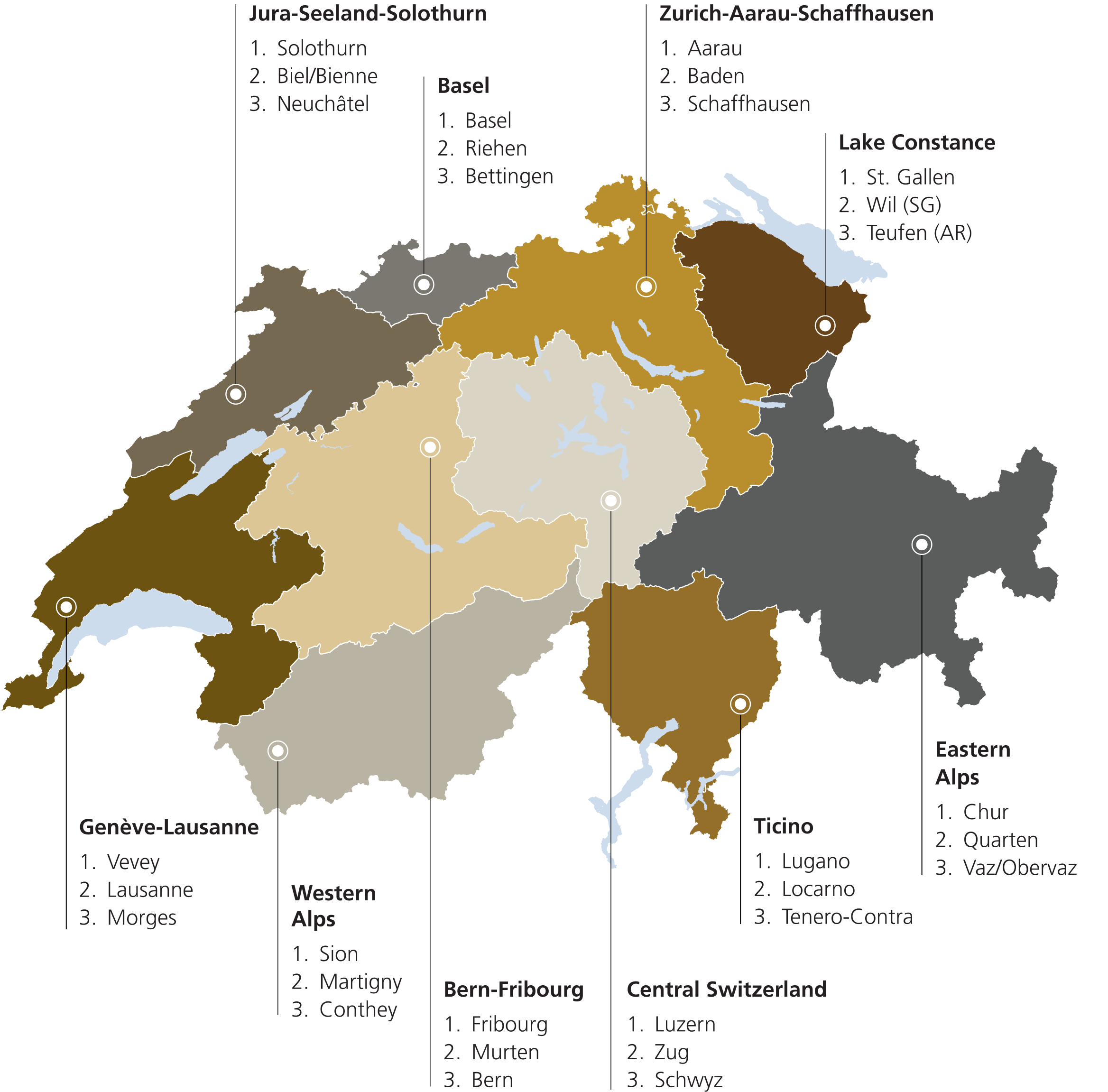
Source: UBS
Affordability can offset location-related disadvantages
Affordability can offset location-related disadvantages
The geographical location of a municipality is a central factor in the choice of residential location. In the Residential Attractiveness Indicator, it is captured through travel times to large, medium-sized and small centers, as well as the size of the catchment area. Municipalities with a large catchment area provide broad access to jobs, while good accessibility to centers makes it easier to use infrastructure and leisure offerings.
High living costs can hold back even centrally located municipalities in residential attractiveness rankings. The annual cost of living for a family with two children in an agglomeration municipality located 10 to 15 minutes by public transport from a major center is, on average, CHF 6,700 below the level of the respective center. In the Zurich region, the cost gap between the city and surrounding area is particularly pronounced: households in agglomeration municipalities at the same public-transport distance save around CHF 11,500 per year compared with the center, and more than CHF 20,000 with a longer public-transport journey of 45 minutes or more. Lower commuter costs, including transport costs and time spent commuting, partly offset the high cost of living in central municipalities. Ultimately, the choice depends largely on individual needs and personal preferences.
Detailed information on the methodology can be found in the report.
UBS Switzerland AG
Media contact
Media contact
Thomas Rieder
Ökonom, CIO GWM
Tel. +41-44-236 87 68
thomas.rieder@ubs.com
Fabian Waltert
Ökonom, CIO GWM
Tel. +41-44-236 87 78
fabian.waltert@ubs.com
Claudio Saputelli
Leiter Swiss & Global Real Estate, CIO GWM
Tel. +41-44-234 39 08
+41-77-448 71 29
claudio.saputelli@ubs.com

